Synonyms
More meanings
Tip: select a single word for meaning & synonyms.
Select multiple words normally to copy text.

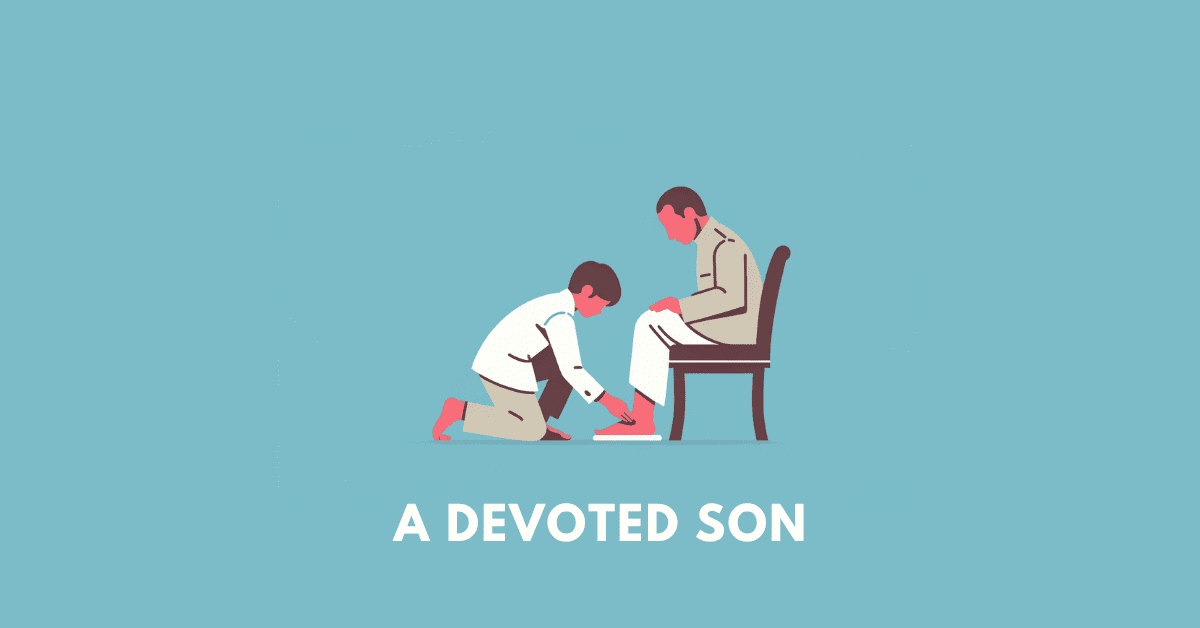
Get summaries, questions, answers, solutions, notes, extras, PDF of Class 11 Voices (English Supplementary reader textbook) chapter A Devoted Son by Anita DesaiJB Priestley which is part of the syllabus of students studying under MBOSE (Meghalaya Board). These solutions, however, should only be treated as references and can be modified/changed.
Rakesh, the son of a vegetable vendor, brings immense pride to his family by topping the country in medical exams. His success triggers a festive celebration in his modest yellow house at the end of a road. Rakesh’s father, Varma, takes great pride in his son’s achievement, emphasizing Rakesh’s respectfulness and humility.
Rakesh continues to excel, earning a scholarship to the USA where he gains further accolades in prestigious hospitals. Despite concerns from his mother and neighbours, he returns home without an American wife, marrying a traditional girl chosen by his mother. This girl, though uneducated, integrates well into the family and does not attempt to make Rakesh live separately. She is described as plump and pretty, fitting comfortably into the household.
Rakesh rises to prominence in his city hospital and eventually opens his own successful clinic, becoming both the best and wealthiest doctor in town. As Varma ages, he retires and soon after, his wife passes away. Rakesh becomes a devoted son, attending to his father’s needs with great care. However, as Varma’s health deteriorates, Rakesh, with his medical expertise, imposes a strict diet and regimen on his father. Varma, accustomed to rich and fried foods, resents this new diet and feels deprived and humiliated. Rakesh’s insistence on controlling his father’s intake, though well-intentioned, is perceived as tyranny by the old man.
Despite Rakesh’s continuous care, Varma feels increasingly embittered. He confides in his old neighbour Bhatia, expressing his distress over being denied his favourite foods. As Varma’s health continues to decline, he becomes despondent, preferring death over the restrictive life imposed by his son.
The story ends with Varma’s outburst against Rakesh’s new tonic, symbolizing his ultimate rejection of his son’s care. Varma’s plea to be left to die underscores the tragic irony of Rakesh’s devotion, which, while exemplary in society’s eyes, becomes a source of suffering for his father. The tale explores themes of filial duty, aging, and the complex dynamics of parental relationships.
1. a. Why did all the neighbours and relatives come to visit Rakesh’s family?
Answer: All the neighbours and relatives came to visit Rakesh’s family because he had topped the medical exam in the country.
b. Mention some of the varied reactions of the visitors.
Answer: Some visitors congratulated the parents and praised Rakesh’s filial behaviour, some were envious and made snide comments about the quality of sweets and the father’s airs, while others acknowledged the family’s achievement and sacrifice with a mix of envy and approval.
2. Tradition was maintained in Rakesh’s family. Give three reasons to prove this.
Answer: First, Rakesh bowed down and touched his father’s feet upon seeing the results. Second, he returned from the USA and married a girl chosen by his mother from their village. Third, he set up his own clinic and took his parents to see it, showing his continued respect and care for them.
3. Describe the daughter-in-law. What was her relationship with her father-in-law like?
Answer: The daughter-in-law was plump, uneducated, placid, complacent, and pretty. She was too good-natured and too lazy to even try and make Rakesh leave home and set up independently. Her relationship with her father-in-law was strained. She smirked at him, refused to give him his favorite food, and made him eat only what Rakesh instructed her to.
4. Old age has its own problems.
a. What was the only pleasure left for the old man?
Answer: Visits from elderly neighbours.
b. How did his friends respond to him?
Answer: They expressed disbelief and sympathy, particularly when he complained about his son not giving him enough to eat.
c. Did he need his friends? Why?
Answer: Yes, because they provided him with emotional support and someone to share his grievances with, which his family no longer did.
d. What complaints did he make to them about his family?
Answer: He complained that Rakesh did not give him enough to eat, that his daughter-in-law taunted him, and that Rakesh forced him to take medicine despite his wishes.
1. ‘The son’s sterling personality and character now underwent a curious sea change.’ Explain why the son’s behaviour towards his father changed. Why did the father’s attitude towards his son alter so dramatically? Do you think his father’s actions were justified?
Answer: Initially, Rakesh was devoted and selfless, caring for his father, his family, and his patients. However, as he grew in success, his approach to his father became more controlling and rigid. He became preoccupied with his medical expertise and felt obligated to regulate every aspect of his father’s life, including his diet. This stemmed from a misguided sense of responsibility, where he perceived his father’s health as a project he had to manage rather than a relationship he had to nurture.
The father’s attitude towards his son changed dramatically because his love and admiration for him were replaced with resentment. Rakesh’s constant interference and control over his father’s life, particularly his diet, stripped him of his autonomy and dignity. His once-loving son transformed into a controlling figure who denied him basic pleasures and made him feel like a patient rather than a father.
Whether the father’s actions were justified is a complex question. While his anger and resentment were understandable given the limitations Rakesh imposed on his life, his bitterness and the way he chose to express his anger were not entirely justifiable. He could have communicated his feelings more directly to his son. However, it is crucial to remember that the father’s frustration stemmed from the son’s excessive control and disregard for his father’s desires. It was a conflict of love and control.
2. ‘It was as though he was straining at a rope, trying to break it, and it would not break, it was still strong. He only hurt himself, trying.’ Explain these lines. What action followed?
Answer: These lines describe the old man’s desperate attempt to break free from the suffocating grip of his son’s control. He wanted to die, but his son’s constant interventions and over-medication kept him alive. He felt trapped in a state of prolonged suffering, unable to escape the suffocating care of his son.
The action that followed was the old man’s defiant rejection of his son’s tonic. He refused to take any more of his son’s medicine, symbolically rejecting his control and embracing his impending death.
3. ‘Then he spat out some words, as sharp and bitter as poison, into his son’s face.” What were the words spoken to his devoted son? Why is there a shift from being a proud father to a father who seemed to hate his son?
Answer: The words the father spat out were: “Keep your tonic – I want none – I want none – I won’t take any more of your medicines. None. Never.” This was his final act of rebellion, rejecting his son’s control and clinging to his desire to die with dignity.
The shift from a proud father to a father who seemed to hate his son was a culmination of resentment and frustration. The father’s initial pride and admiration for his son were eroded by the constant interference and control Rakesh exerted over his life. He felt deprived of his autonomy and dignity, and his love turned into anger and resentment.
4. Though the story suggests a tragic end, do you notice the touches of gentle humour that run through it? Pick words and phrases in the text that make you smile. Why do you think that the author has introduced these touches?
Answer: The story, though tragic, is punctuated by moments of gentle humor, offering a glimpse into the human condition amidst the somber narrative. Phrases like “the old man sat up and the distraught daughter-in-law received a gob of red spittle right on the hem of her new organza sari” and “that smiling, hypocritical pudding in a rustling sari,” evoke humor through subtle irony.
These touches of humor serve to balance the somber tone and prevent the story from becoming too heavy. They highlight the absurdity of the situation, while also revealing the character’s complexities, making them more human and relatable. Furthermore, the author uses humor to create a sense of distance between the reader and the characters, enabling a more objective perspective on the tragic events unfolding.
5. Did Rakesh prove to be a devoted son till the very last days of his father’s life? Discuss.
Answer: Rakesh did prove to be a devoted son till the very last days of his father’s life in terms of his actions. He took care of his father’s health with strictness and dedication, although his methods and the old man’s perception of them caused tension. Rakesh’s devotion, though well-intentioned, led to his father’s misery, highlighting the complexities of familial love and duty.
The irony lies in the title, “A Devoted Son,” because it contrasts with the actions of the protagonist. Rakesh’s devotion is portrayed as a form of control that ultimately leads to a strained and tragic relationship with his father. The title’s irony highlights the complexities of love, duty, and filial responsibility, and the potential for well-intentioned actions to have devastating consequences.
or
Discuss the irony in the title of the story.
Answer: The irony in the title “A Devoted Son” lies in the contrast between Rakesh’s dutiful actions and his father’s feelings of being controlled and deprived. Rakesh’s devotion, though well-intentioned, led to his father’s misery, highlighting the complexities of familial love and duty. While Rakesh believed he was acting in his father’s best interests by strictly managing his diet and health, his father felt stripped of his autonomy and dignity. This juxtaposition between Rakesh’s perception of devotion and his father’s experience of control and deprivation underscores the ironic nature of the title.
1. Imagine you are Rakesh. Write a report stating all the precautions you are taking for the welfare of your father.
Answer: As a devoted son and a qualified medical professional, I am committed to ensuring the well-being of my father. Considering his advanced age and the fragility of his health, I have implemented a comprehensive care plan that prioritizes his physical, mental and emotional needs.
Firstly, I have introduced a strict dietary regimen tailored to his age and health condition. This involves a balanced diet low in saturated fats, sugars and fried foods. I have ensured that all his meals are carefully prepared and monitored to minimize the risk of complications.
Secondly, I have implemented a regular medication schedule to manage his existing conditions. This includes administering prescribed medications for hypertension, arthritis and other ailments. I closely monitor his responses to these medications and adjust them as necessary, based on his individual needs.
Thirdly, I have ensured that he receives regular medical check-ups and consultations to monitor his overall health and address any emerging concerns promptly. These check-ups are conducted by qualified medical professionals and include a range of tests to identify any potential issues.
Fourthly, I have created a comfortable and supportive environment for my father. This includes providing him with a clean, spacious and well-ventilated room. I have also ensured that he has access to entertainment options and social interaction to prevent social isolation.
Finally, I have dedicated a significant portion of my time to provide him with companionship and emotional support. This includes engaging in conversations with him, providing him with updates on family matters and ensuring that he feels loved and cared for.
I am fully committed to ensuring that my father receives the best possible care, utilizing my medical expertise and personal dedication to meet his unique needs. I believe that my efforts will contribute to his well-being and ensure that he enjoys the best possible quality of life in his later years.
2. Imagine you are Rakesh’s father. Describe your feelings as you are now old, and are denied all that you once enjoyed. Describe your changed relationship between your son, daughter-in-law and grandchildren.
Answer: My life has taken a turn I could never have imagined. Once I was a man of my own, with a family I built and a life I lived on my own terms. Now, I am a prisoner in my own home, denied the simple pleasures that once filled my days.
My son, the pride of my life, the one I poured my heart and soul into educating, has become my tormentor. He treats me like a fragile porcelain doll, afraid to let me enjoy a single morsel of food that brings me joy. The halwa, the sweets, the fried fish, all forbidden. I am reduced to a diet of boiled vegetables and tasteless lentil soup.
My daughter-in-law, a woman I never truly knew, has become a symbol of my helplessness. Her smile is a mask, hiding a cruel heart. She follows my son’s orders, denying me even the crumbs that fall from the table. My grandchildren, the little ones I once spoiled with sweets, are now forbidden to bring me any treats. I watch them play, a longing in my heart, as if a vast gulf separates us.
The joy of my life, the warmth of a family, has turned into a cold, calculated regime. My son, the one I dedicated my life to, has become my jailer, his love turned into an iron grip that suffocates my very being. He is a good doctor, they say, but a good son? I doubt it.
Question: ‘It is a strange fact that talent and skill, if displayed for too long, cease to dazzle.’
Answer: Talent and skill, when displayed consistently over a prolonged period, often lose their initial impact. This phenomenon occurs because people become accustomed to a high level of performance and begin to take it for granted. The initial awe and admiration fade as exceptional becomes the new normal. This can lead to a lack of appreciation for the ongoing efforts and achievements of the talented individual. Additionally, the constant display of skill may raise expectations to unrealistic levels, making it difficult for the individual to continue to impress. Therefore, while talent and skill are valuable, their ability to dazzle diminishes over time due to human nature and changing perceptions.
1. When the results appeared in the morning papers, Rakesh scanned them, barefoot and in his _______, at the garden gate. (Pyjamas/Clothes)
Answer: Pyjamas
2. ‘A first division, son?’ his father asked, _______, reaching for the papers. (Beaming/Sad)
Answer: Beaming
3. Bedlam broke loose then. The family _______ and danced. (Wept/Whooped)
Answer: Whooped
4. Rakesh was the first son in the family to receive an _______, so much had been sacrificed in order to send him to school and then medical college. (Education/Journey)
Answer: Education
5. He won a scholarship. He went to the USA where he pursued his career in the most _______ of all hospitals. (Prestigious/Common)
Answer: Prestigious
6. As for his mother, she gloated chiefly over the strange fact that he had not married in America, had not brought home a _______ wife. (Foreign/Local)
Answer: Foreign
7. For some years Rakesh worked in the city hospital, quickly rising to the top of the _______, and was made a director before he left to set up his own clinic. (Administrative organisation/Health sector)
Answer: Administrative organisation
8. However, all this was not accomplished in the wink of an eye. It was the achievement of a _______ and it took up Rakesh’s whole life. (Lifetime/Day)
Answer: Lifetime
9. His father had grown into an old man and _______ from his post at the kerosene dealer’s depot. (Retired/Resigned)
Answer: Retired
10. The old man sighed and lay down in the corpse _______. (Position/Bed)
Answer: Position
11. Rakesh, too, who, on returning from the clinic in the evening, persuaded the old man to come out of his room and take the evening air out in the _______. (Garden/Field)
Answer: Garden
12. One day when the father was really sick, Rakesh marched into the room, not with his usual respectful step but with the _______ stride of the famous doctor. (Confident/Shy)
Answer: Confident
13. Halwa was only the first item to be crossed off the old man’s _______. (Diet/List)
Answer: Diet
14. The meals that arrived for him on the shining stainless steel tray twice a day were _______ to say the least. (Frugal/Abundant)
Answer: Frugal
15. If he called for another helping-in a cracked voice that _______ theatrically-Rakesh himself would come to the door. (Quavered/Sang)
Answer: Quavered
16. There was only one pleasure left to the old man now and those were visits from elderly _______. (Friends/Children)
Answer: Friends
17. ‘At least you have a doctor in the house to look after you,’ sighed Bhatia, having vividly described his _______ to piles. (Martyrdom/Solution)
Answer: Martyrdom
18. ‘Let me be,’ Varma begged, turning his face away from the pills on the outstretched _______. (Hand/Tray)
Answer: Hand
19. ‘Papa, you’re joking,’ his son smiled at him, lovingly. ‘I’ve brought you a new _______ to make you feel better. (Tonic/Medicine)
Answer: Tonic
20. Old Varma tucked his feet under him, out of the _______, and continued to gaze stubbornly into the yellow air of the summer evening. (Way/Sight)
Answer: Way
1. Rakesh scanned the results barefoot and in his pyjamas at the garden gate.
Answer: True
2. Rakesh’s father did not smile when he asked about the exam results.
Answer: False
3. The family was disappointed with Rakesh’s performance in the exams.
Answer: False
4. Rakesh was the first son in the family to receive an education.
Answer: True
5. Rakesh went to the USA to pursue his career in a prestigious hospital.
Answer: True
6. Rakesh brought home a foreign wife from America.
Answer: False
7. Rakesh’s mother was happy because he married a girl from her village.
Answer: True
8. Rakesh did not return to his family’s small yellow house after his success in America.
Answer: False
9. Rakesh’s fame grew dimmer over time because he stopped being successful.
Answer: False
10. Rakesh took his parents to see his new clinic in a sky-blue Ambassador car.
Answer: True
11. The old man was pleased when Rakesh supervised his diet.
Answer: False
12. The meals for the old man were always plentiful and rich.
Answer: False
13. The old man tried to bribe his grandchildren to buy him sweets.
Answer: True
14. Rakesh’s son was punished for bringing sweets into the house.
Answer: True
15. Old Bhatia often came over to visit the old man and discuss their ailments.
Answer: True
16. Rakesh refused to give his father any more food because he wanted to harm him.
Answer: False
17. The old man felt neglected and complained about his treatment to his friends.
Answer: True
18. Rakesh’s father was happy and content with the pills and powders given to him.
Answer: False
19. The old man eventually stopped taking his medicines and told Rakesh to let him die.
Answer: True
20. The story ends with the old man feeling grateful for his son’s care.
Answer: False
1. Where did Rakesh go after winning a scholarship?
Answer: Rakesh went to the USA after winning a scholarship. He pursued his career in the most prestigious hospitals and earned high praise from his American colleagues, which his admiring family relayed with pride.
2. How did the neighbourhood react to Rakesh’s success?
Answer: The neighbourhood reacted with a mix of envy and admiration to Rakesh’s success. Some whispered critical comments about his father’s humble origins, but overall, there was more envy than rancour, acknowledging the remarkable achievement.
3. What was Rakesh’s mother most proud of when he returned from the USA?
Answer: Rakesh’s mother was most proud that he had not married an American woman, as many had feared, but instead married a girl she chose from her own village, showing his respect for family traditions.
4. How did Rakesh’s father describe his son’s achievement to visitors?
Answer: Rakesh’s father proudly told visitors that his son had bowed down and touched his feet after seeing the results, emphasizing this act of respect and humility, which moved many women in the crowd to tears.
5. What did Rakesh do immediately upon returning home from the USA?
Answer: Immediately upon returning home from the USA, Rakesh slipped out of his siblings’ embraces and bowed down to touch his father’s feet, showing his continued respect and humility.
6. Why was the family particularly proud of Rakesh’s educational achievement?
Answer: The family was particularly proud of Rakesh’s educational achievement because he was the first son in the family to receive an education, a significant milestone resulting from many sacrifices made by the family.
7. How did Rakesh’s fame change over time?
Answer: Over time, Rakesh’s fame became less dazzling as people grew accustomed to his success. However, his reputation as the best and richest doctor in town continued to grow, marking a shift from glory to wealth.
8. Describe the old man’s reaction when Rakesh restricted his diet.
Answer: The old man was shocked and reproachful when Rakesh restricted his diet, starting with halwa. He could not believe his son, whom he had raised and educated, would deny him the food he craved, feeling this was unheard of and incredible.
9. What was the old man’s main complaint about his diet?
Answer: The old man’s main complaint about his diet was that it was frugal and lacked the foods he enjoyed. He received dry bread, boiled lentils, and vegetables, with everything fried and sweet removed, which he found highly unsatisfying.
10. How did Rakesh react when he discovered his father bribed the grandchildren for sweets?
Answer: Rakesh reacted with anger and frustration when he discovered his father bribed the grandchildren for sweets. He scolded his father, emphasizing the health risks and the dishonesty this behavior encouraged in his children.
11. What did Rakesh bring his father each morning?
Answer: Each morning, Rakesh brought his father tea in his favorite brass tumbler and read the morning news to him, showing his continued care and dedication despite his father’s lack of response.
12. How did the old man try to get additional food?
Answer: The old man tried to get additional food by bribing his grandchildren to buy sweets for him, offering them coins and instructing them to get sweets from the local shop, despite Rakesh’s strict dietary restrictions.
13. What was the old man’s last request to his son?
Answer: The old man’s last request to his son was to let him die. He was tired of living a life filled with medicines and restrictions, longing for peace, but Rakesh, ever the devoted son, continued to administer treatments in an effort to prolong his life.
14. How did the family celebrate Rakesh’s academic achievement and what was the significance of his achievement?
Answer: The family celebrated Rakesh’s academic achievement with great joy, dancing, and receiving visitors who congratulated them. The house was filled with garlands, sweets, party clothes, and gifts. Rakesh’s achievement was significant because he was the first son in the family to receive an education, marking the fruition of many sacrifices made by his family. His success brought pride and joy to the entire family and community, highlighting the importance of education and hard work.
15. How did Rakesh’s return from the USA influence his family and community’s perception of him?
Answer: Rakesh’s return from the USA greatly enhanced his family and community’s perception of him. He was seen as a successful and devoted son who respected his cultural values by returning home and touching his father’s feet. His decision not to marry an American woman but to marry a girl chosen by his mother reinforced his commitment to family traditions. Rakesh’s success abroad, coupled with his humility and adherence to family values, earned him admiration and respect from his family and neighbours.
16. Describe the relationship between Rakesh’s wife and his father. How did she manage her role in the household?
Answer: Rakesh’s wife had a complex relationship with his father. She was described as plump, uneducated, but old-fashioned and complaisant, easily fitting into the household. She managed her role by not trying to make Rakesh leave his family, thus maintaining harmony. However, there were moments of tension, such as when she refused to give her father-in-law fried fish as per Rakesh’s instructions. Despite this, she mostly played a supportive role, taking care of the old man’s needs, even if it sometimes involved following Rakesh’s strict dietary guidelines for him.
17. How did Rakesh’s fame evolve after setting up his own clinic, and what impact did this have on his father’s health and well-being?
Answer: After setting up his own clinic, Rakesh’s fame initially seemed to grow dimmer as people became accustomed to his success. However, he became known as the best and richest doctor in town, marking a shift from fame to fortune. This evolution in Rakesh’s career had a mixed impact on his father’s health and well-being. While Rakesh’s success provided financial security and medical care, the old man felt increasingly neglected and controlled, particularly regarding his diet and medications, leading to feelings of helplessness and resentment towards his son.
18. In what ways did Rakesh try to care for his father in his old age, and what were the old man’s reactions?
Answer: Rakesh tried to care for his father in his old age by bringing him tea, reading the morning news to him, ensuring he took the evening air, and supervising his diet to maintain his health. Despite Rakesh’s efforts, the old man reacted with frustration and resentment. He felt controlled and deprived, particularly when Rakesh restricted his diet and denied him foods he enjoyed. This led to feelings of bitterness and a sense of being treated harshly by the son he had once been so proud of.
19. How did Rakesh’s father’s health and behavior change as he grew older, and how did the family respond to these changes?
Answer: As Rakesh’s father grew older, his health deteriorated, and he developed numerous complaints, often becoming ill with mysterious diseases. His behavior also changed, becoming more peevish and demanding. He developed a habit of lying still, making the family believe he was seriously ill, only to surprise them by sitting up suddenly. The family, especially Rakesh, responded by providing constant care, including strict dietary control and medication. However, this care often felt restrictive to the old man, leading to resentment and a sense of being overly controlled.
20. Discuss the irony in the title of the story “A Devoted Son” and how it reflects the relationship between Rakesh and his father.
Answer: The irony in the title “A Devoted Son” reflects the complex relationship between Rakesh and his father. While Rakesh is undeniably devoted, providing meticulous care and ensuring his father’s health and well-being, this devotion takes on a controlling and restrictive form. His father, who once took pride in Rakesh’s achievements and respectful behavior, grows to resent the very care that defines Rakesh’s devotion. The title highlights the tension between dutiful care and perceived overreach, illustrating how devotion can be both a source of pride and a point of contention within familial relationships.

Only for registered users