Synonyms
More meanings
Tip: select a single word for meaning & synonyms.
Select multiple words normally to copy text.

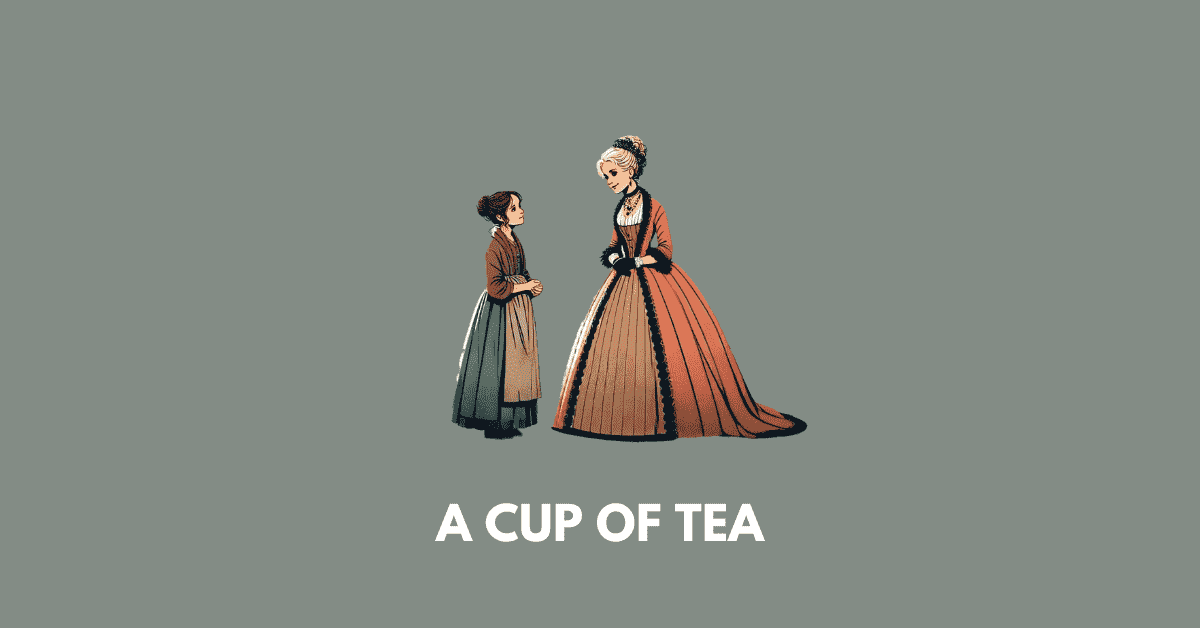
Get summaries, questions, answers, solutions, notes, extras, PDF and guide of Class 12 (second year) Alternative English textbook, Chapter 1: A Cup of Tea, which is part of the syllabus of students studying under AHSEC/ASSEB (Assam Board). These solutions, however, should only be treated as references and can be modified/changed.
“A Cup of Tea” is a short story by Katherine Mansfield, first published in 1922. It revolves around Rosemary Fell, a wealthy, fashionable, and somewhat pretentious woman who enjoys the privileges of her high social status. The narrative provides insight into Rosemary’s character and the dynamics of her life, shedding light on themes of class consciousness and the superficiality of the upper class.
Rosemary, though not traditionally beautiful, compensates with her modernity, intelligence, and sense of style. She is married to Philip, who adores her, and they live a life of luxury. One winter afternoon, while shopping in an exclusive antique store in Curzon Street, Rosemary encounters a poor young girl, Miss Smith, who asks her for the price of a cup of tea. Struck by the romanticism of the situation, reminiscent of a scene from a Dostoevsky novel, Rosemary decides to take Miss Smith home.
Rosemary’s motivation is complex. On the surface, she seems to be acting out of kindness, but her actions are driven by a desire to feel generous and to have a story to tell her friends. She envisions herself as a benefactor, making a real difference in someone’s life. She brings Miss Smith into her lavish home, offering her warmth, food, and shelter.
However, the situation takes a turn when Philip returns home. He is shocked and displeased by Rosemary’s impulsive act of charity. In a subtle yet sharp manner, he points out the impracticality of her actions. To further complicate matters, he comments on Miss Smith’s beauty, inciting a pang of jealousy in Rosemary. This jealousy quickly erodes Rosemary’s superficial benevolence. She decides to send Miss Smith away, offering her money as a consolation.
The story ends with Rosemary’s superficial concern about her own appearance, asking Philip if she is pretty. This ending highlights the superficiality and self-absorption that underlie Rosemary’s character. Mansfield uses Rosemary’s interactions with Miss Smith to expose the fragility of the upper-class’s charitable gestures and the underlying motives of vanity and self-gratification.
“A Cup of Tea” offers a critical look at class distinctions and the superficiality of upper-class charity. Rosemary’s brief encounter with Miss Smith serves as a mirror, reflecting her own insecurities and the hollowness of her attempts at generosity. Mansfield’s narrative style, rich in psychological insight and social commentary, brings to light the complexities of human behaviour and the often hypocritical nature of social pretensions.
1. Miss Smith was a very rich girl.
Answer: False
2. Rosemary was a very compassionate woman.
Answer: False
3. Philip did not want Miss Smith to dine with them.
Answer: True
4. Rosemary had been married for a couple of years.
Answer: True
1. Which Russian author influenced Katherine Mansfield?
Answer: Dostoevsky
2. In which street was Rosemary shopping when she met Miss Smith?
Answer: Curzon Street
3. How many pounds did Rosemary give to Miss Smith?
Answer: Three pounds
4. What is the cost of the enamel box that Rosemary wanted to buy?
Answer: Twenty-eight guineas
5. What is the name of the main character of ‘A Cup of Tea’?
Answer: Rosemary Fell
1. What are the names of the two women characters in the story ‘A Cup of Tea’?
Answer: Rosemary Fell and Miss Smith
2. What kind of a relationship do Rosemary and Philip share in ‘A Cup of Tea’?
Answer: They share a married relationship.
3. How does Philip react towards Miss Smith?
Answer: Philip admires her beauty and disapproves of her staying.
4. Who was Miss Smith? Why did Rosemary send her back?
Answer: Miss Smith was a poor girl. Rosemary sent her back because Philip admired her beauty, causing Rosemary to feel jealous.
5. Why did Philip disapprove of Rosemary’s decision to keep Miss Smith with them?
Answer: Philip disapproved because he found Miss Smith astonishingly pretty and thought it was a mistake.
1. Write a brief character sketch of Rosemary Fell.
Answer: Rosemary Fell is an upper-class woman who is described as “young, brilliant, extremely modern, exquisitely well dressed, amazingly well read in the newest of the new books.” She is not exactly beautiful but compensates for it with her style, fashion, and a life of luxury. Rosemary is generous, yet her generosity often stems from a desire to show off rather than genuine kindness. She enjoys the admiration and attention of her upper-class friends and leads a life filled with social events and shopping sprees in exclusive stores. However, her actions reveal a superficial understanding of the lives of those less fortunate.
2. Describe Rosemary’s encounter with Miss Smith.
Answer: Rosemary encounters Miss Smith one winter evening outside an antique shop. Miss Smith, a poor young girl, asks Rosemary for the price of a cup of tea. Struck by the romanticism of the situation, Rosemary decides to take her home, imagining it to be an adventure akin to something from a Dostoevsky novel. She is eager to help Miss Smith and prove that rich people have hearts and that miracles can happen. Rosemary brings her home, offers her tea and warmth, but the encounter ultimately exposes Rosemary’s superficiality and leads to Miss Smith being sent away with money.
3. How does Katherine Mansfield explore the theme of ‘class difference’ in ‘A Cup of Tea’?
Answer: Katherine Mansfield explores the theme of class difference through the contrasting lives of Rosemary Fell and Miss Smith. Rosemary’s life of wealth, luxury, and social privilege starkly contrasts with Miss Smith’s poverty and desperation. Rosemary’s actions are motivated by a desire to display her generosity rather than genuine compassion, highlighting the superficiality and hypocrisy of the upper class. The story critiques the way the wealthy perceive and treat the poor, exposing the deep social divide and the lack of true understanding and empathy between the classes.
4. Why did Rosemary take Miss Smith home?
Answer: Rosemary took Miss Smith home because she was struck by the romantic and novel-like nature of their encounter. She saw it as an adventure and an opportunity to demonstrate her generosity and kindness. Rosemary was motivated by a desire to show that rich people had hearts and that wonderful things could happen in life. Her intentions were more about fulfilling her own romanticized ideals and impressing her social circle rather than genuinely helping Miss Smith.
1. Examine in detail the various themes explored by Katherine Mansfield in her story ‘A Cup of Tea’.
Answer: Katherine Mansfield’s story ‘A Cup of Tea’ explores several themes:
2. Comment on the significance of the title of the story ‘A Cup of Tea’.
Answer: The title ‘A Cup of Tea’ holds significant meaning in Katherine Mansfield’s story. It symbolizes the simple human need and the basic act of kindness that Miss Smith seeks. However, this simple request becomes a catalyst for exploring deeper social issues. For Rosemary Fell, offering a cup of tea represents an opportunity to display her generosity and elevate her self-image. The title encapsulates the contrast between the apparent simplicity of the gesture and the complex interplay of social dynamics, superficiality, and genuine need. It highlights how a seemingly trivial request can reveal profound truths about character, society, and human nature.
1. Who is the author of “A Cup of Tea”?
Answer: Katherine Mansfield is the author of “A Cup of Tea”.
2. How long had Rosemary Fell been married?
Answer: Rosemary Fell had been married for two years.
3. What is Rosemary’s husband’s name?
Answer: Rosemary’s husband’s name is Philip.
4. Where does Rosemary typically go shopping for flowers?
Answer: Rosemary typically goes shopping for flowers at a shop in Regent Street.
5. What did the poor girl ask Rosemary for when they first met?
Answer: The poor girl asked Rosemary for the price of a cup of tea.
6. How much did the enamel box cost that Rosemary admired?
Answer: The enamel box that Rosemary admired cost twenty-eight guineas.
7. What was the weather like when Rosemary met Miss Smith?
Answer: The weather was rainy and dark when Rosemary met Miss Smith.
8. How did the shopman react to Rosemary’s presence in the antique shop?
Answer: The shopman was very pleased and gratified by Rosemary’s presence in the antique shop.
9. What was Rosemary’s reaction when she heard the price of the enamel box?
Answer: Rosemary was taken aback and hesitant when she heard the price of the enamel box, even though she was rich.
10. How did Rosemary feel when she saw the poor girl in the rain?
Answer: Rosemary felt a strange pang and saw it as an adventure or a scene from a novel when she saw the poor girl in the rain.
11. Why did Philip disapprove of Rosemary’s decision to keep Miss Smith?
Answer: Philip disapproved of Rosemary’s decision because he thought it was impractical and was also struck by Miss Smith’s beauty, which he used to provoke Rosemary’s jealousy.
12. How did Miss Smith initially react to Rosemary’s invitation to come home with her?
Answer: Miss Smith was initially startled and suspicious of Rosemary’s invitation to come home with her.
13. What was Philip’s reaction to seeing Miss Smith for the first time?
Answer: Philip was surprised and curious about Miss Smith, noting her attractiveness and expressing skepticism about Rosemary’s intentions.
14. How did Rosemary try to get Philip’s attention after sending Miss Smith away?
Answer: Rosemary tried to get Philip’s attention by asking him if she was pretty and expressing a desire to buy the little enamel box.
15. What was Rosemary’s final question to Philip at the end of the story?
Answer: Rosemary’s final question to Philip was, “Am I pretty?”
16. Describe Rosemary Fell’s social status and lifestyle.
Answer: Rosemary Fell is depicted as a wealthy, modern, and fashionable young woman. She lives a life of luxury, surrounded by high society, and enjoys shopping for expensive antiques and flowers. Her social gatherings are a mix of important people and artists, and she has the means to travel and indulge in her desires.
17. What impression did the antique shopman have of Rosemary?
Answer: The antique shopman was extremely fond of Rosemary and gratified by her visits. He admired her taste and was eager to please her, often saving special items for her and expressing a genuine love for the things he sold.
18. How does the narrator describe Rosemary’s beauty or lack thereof?
Answer: The narrator describes Rosemary as not exactly beautiful. She is young, brilliant, and exquisitely well-dressed, but her appearance is more interesting than traditionally beautiful. Her charm lies in her modernity and style rather than conventional beauty.
19. What motivated Rosemary to invite Miss Smith to her home?
Answer: Rosemary was motivated by a romanticized notion of helping the poor and creating a thrilling adventure similar to scenes from novels she had read. She wanted to prove that miracles could happen and that the rich could be generous.
20. How does Philip’s opinion about Miss Smith create conflict with Rosemary?
Answer: Philip’s admiration of Miss Smith’s beauty provokes jealousy in Rosemary and exposes the superficiality of her motives. His disapproval of keeping Miss Smith in their home clashes with Rosemary’s initial sense of adventure and generosity, leading to internal conflict.
21. What does Rosemary offer Miss Smith when they first arrive at her home?
Answer: When they first arrive at her home, Rosemary offers Miss Smith tea, sandwiches, bread and butter, and brandy, trying to make her feel comfortable and welcome.
22. How does Miss Smith react to being in Rosemary’s home?
Answer: Miss Smith initially appears dazed and uncomfortable in Rosemary’s luxurious home. She is overwhelmed by the warmth, light, and opulence, contrasting starkly with her own poverty.
23. What realization does Rosemary come to after Philip comments on Miss Smith’s appearance?
Answer: Rosemary realizes that her motives might have been more about showcasing her own generosity and wealth rather than genuine kindness. Philip’s comment about Miss Smith’s beauty stirs her jealousy and leads her to question her actions.
24. How does Katherine Mansfield use the character of Miss Smith to critique societal norms?
Answer: Katherine Mansfield uses Miss Smith to highlight the disparity between the rich and the poor, critiquing the superficial generosity of the wealthy. Miss Smith’s presence exposes the hypocrisy and self-serving nature of Rosemary’s charitable act, revealing societal norms that prioritize appearance and status over genuine compassion.
25. How does the setting of the antique shop contribute to the story’s themes?
Answer: The antique shop setting underscores themes of wealth, luxury, and superficiality. It is a place where Rosemary indulges in her expensive tastes, contrasting with the harsh reality of Miss Smith’s poverty. The shopman’s flattery and the exclusive nature of the shop highlight the social divide.
26. Analyze the character of Rosemary Fell, focusing on her complexities and contradictions.
Answer: Rosemary Fell is a complex character marked by contradictions. She is wealthy, fashionable, and appears generous, but her actions reveal superficiality and a need for validation. Her decision to take Miss Smith home stems more from a romanticized adventure than genuine kindness. Rosemary’s interaction with Miss Smith exposes her insecurities, especially when Philip’s admiration of Miss Smith’s beauty provokes jealousy. Rosemary’s ultimate concern for her appearance and status overshadows her initial charitable intentions, highlighting her inner conflicts and the hollow nature of her social position.
27. Discuss the theme of class consciousness as portrayed in “A Cup of Tea.”
Answer: “A Cup of Tea” portrays class consciousness through the stark contrast between Rosemary Fell and Miss Smith. Rosemary’s wealth allows her to live a life of luxury and indulgence, while Miss Smith’s poverty is evident in her desperate plea for a cup of tea. Rosemary’s romanticized view of helping the poor and her ultimate jealousy when Philip admires Miss Smith’s beauty reveal the superficial and self-serving nature of her actions. The story critiques the insensitivity of the upper class and their inability to truly understand or bridge the gap between social classes.
28. How does Rosemary’s encounter with Miss Smith serve as a turning point in the story?
Answer: Rosemary’s encounter with Miss Smith is a turning point that exposes the superficiality of her generosity. Initially, Rosemary is excited by the adventure and the opportunity to showcase her kindness. However, Philip’s reaction and admiration of Miss Smith’s beauty provoke jealousy and self-doubt in Rosemary. This encounter forces Rosemary to confront her true motives and the reality of her actions, leading her to hastily send Miss Smith away. The turning point reveals the underlying insecurities and contradictions in Rosemary’s character.
29. Examine how the story “A Cup of Tea” reflects the social and economic disparities of its time.
Answer: “A Cup of Tea” reflects the social and economic disparities of its time through the interactions between Rosemary Fell and Miss Smith. Rosemary’s wealth allows her to indulge in luxuries and act on whims, while Miss Smith’s poverty leaves her begging for the price of a cup of tea. The story highlights the insensitivity and superficiality of the wealthy, who view charitable acts as opportunities for self-aggrandizement rather than genuine compassion. The stark contrast between the characters’ lifestyles and the ease with which Rosemary dismisses Miss Smith underscores the deep-rooted class divisions and the lack of true understanding or empathy between the social classes.
30. Explore the significance of the story’s title and how it relates to the main themes of the narrative.
Answer: The title “A Cup of Tea” signifies the seemingly simple and insignificant request made by Miss Smith, which serves as the catalyst for the unfolding events. The story revolves around this request, highlighting themes of class disparity, superficial generosity, and the complexities of human nature. The title underscores the disparity between Rosemary’s luxurious life and Miss Smith’s desperate need. It also reflects the superficial nature of Rosemary’s generosity, as she views the encounter as an adventure rather than a genuine act of kindness. The title encapsulates the central conflict and the critique of social norms, emphasizing the superficiality of appearances and actions.

Only for registered users
Extra question
This aap very helpful to get study’s us
I want some extra additional questions answer
The author that influenced Katherine is Anton Chekov