Synonyms
More meanings
Tip: select a single word for meaning & synonyms.
Select multiple words normally to copy text.

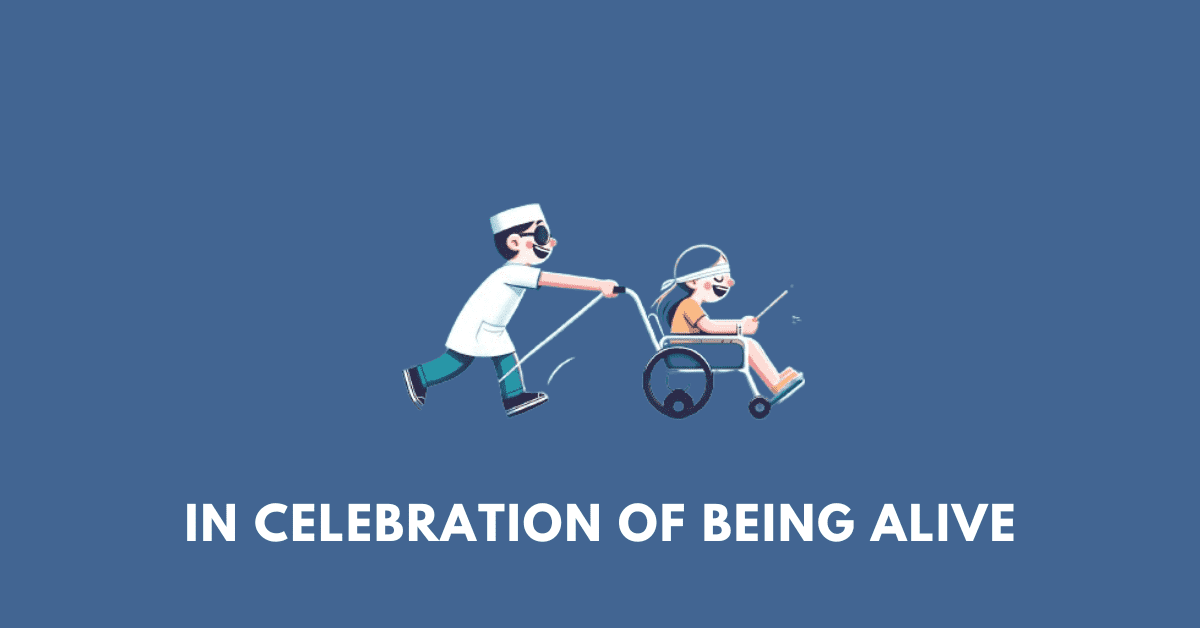
Here, you will find all the answers and solutions of NBSE class 10 Alternative English chapter 4 In Celebration of Being Alive for the academic year 2019-20. Additional questions will be added soon. However, these notes should be used only for references. These materials should be modified/changed as per the needs.
Dr Barnard begins by saying that he could not understand the purpose of suffering. He provides a general idea of the number of children who die or are ill physically or mentally. He also gives us a personal anecdote in which he and his wife were in an accident while crossing a road. Their broken bones had kept them away from their duties for some time. He was angry that it had happened. He could not find comfort in his father’s way of looking at suffering as God way of making us better people. His personal encounter with the suffering of children began with his father showing him the biscuit his brother had bitten before he died as a child with an abnormal heart.
As a doctor, he was particularly moved by the suffering of sick children because they believed that doctors could cure them and accepted their illness and suffering. His anguish changed to the appreciation of life when he saw two children in a children’s hospital racing in a food trolley as if it were a car. One of them was visually challenged and the other had only one arm. The other children in the ward cheered them on just as spectators do in a motor rally. The spirit with which the children used whatever faculties they had to enjoy themselves was an eye-opener to Dr Barnard. He concludes that we learn to value the good things in life because we see so much of the suffering around us.
1. Which of the following words best describes the children Dr Barnard witnessed taking part in the Grand Prix?
Answer: a. Resilient
2. What does Dr Barnard mean by ‘joy in the real sense of the word’?
Answer: b. Looking past your troubles to enjoy every day and everything you have.
3. According to Dr Barnard, why is suffering important?
Answer: d. Because it makes you a better and more sympathetic person
4. Which of the following sentences from the text demonstrates Dr Barnard’s compassionate nature?
Answer: a. But as a doctor, I see nothing noble in a patient\ thrashing around in a sweat-soaked bed, mind clouded in agony.
5. Why do you think Dr Barnard became a cardiothoracic surgeon?
Answer: a. He was torn by the plight of all the suffering children in the world.
1. More and more, as I near the end of my career as a heart surgeon, my thoughts have turned to the consideration of why people should suffer.
a. What gives the speaker the authority to speak knowledgeably about suffering? Give two reasons.
b. What are the lines in the text that tell you that suffering is widespread?
c. What are Dr Barnard’s contributions to the battle against suffering?
Answer: a. The speaker can speak so knowledgeably about suffering because he is a surgeon and he sees people suffering on a daily basis. He knows the agony of their suffering. Further, he also experienced suffering at a personal level when he learned about the unfortunate death of his brother as a child and when he and his wife met with an accident while they were crossing a street.
b. In the beginning, when the author mentions that of the 125 million children born each year, 12 million are unlikely to reach the age of one and another six million will die before the age of five and, of the rest, many will end up as mental or physical cripples, tells us that suffering is universal.
c. Dr Barnard was a cardiothoracic surgeon. He performed the first human heart transplant on 3 December 1967. As a surgeon, he saved the lives of many and later on founded the Christiaan Barnard Foundation to help the underprivileged children around the world.
2. If you can’t, they accept their fate.
a. Who do ‘you’ and ‘they’ refer to?
b. What is the fate that they accept?
c. Why do you think they accept their fate more willingly than others?
Answer: a. Here, ‘you’ refers to the doctors while ‘they’ refers to the suffering children.
b. They accept the fate that they cannot get better and the doctors have tried their best to help them.
c. They accept their fate more willingly than others because they are children and they trust others wholeheartedly. So if the person they trust fails, they assume they cannot get better. Other, on the other hand, cannot trust the doctors the way the children do and they assume there is always something more that can be done.
1. What upset him most about the death of his brother?
Answer: What upset him the most about the death of his brother was that he died as a child suffering much agony because he was born with an abnormal heart which could have been corrected if the technologies in those days were sophisticated enough.
2. Why could he not accept his father’s belief that suffering was God’s way of making us better people?
Answer: He could not accept his father’s belief that suffering was God’s way of making us better people as he could see nothing noble in a patient’s thrashing around in a sweat-soaked bed, mind clouded in agony. Nor could he see any nobility in the crying of a lonely child in a ward at night.
3. What was his changed attitude to suffering?
Answer: After he witnessed the two children in what he described as “Grand Prix of Cape Town’s Red Cross Children Hospital”, who suffered much and yet showed resilience, he had a completely changed attitude towards suffering. He understood that the business of living is the celebration of being alive and he was looking at suffering from the wrong end. The children showed him that it’s not what you’ve lost that’s important but what you have left.
1. What was the cause of Dr Barnard’s ‘gloomy thoughts’?
Answer: Dr Barnard’s ‘gloomy thoughts’ had probably stem from an accident that he had few years ago while he and his wife were hit by a car. They were trying to cross a street after a lovely meal together. The car knocked him into his wife and she was thrown into the other lane and struck by another car coming from the opposite direction. During the next few days in the hospital, he experienced not only agony and fear but also anger. He could not understand why his wife and he had to suffer.
2. As a doctor, why is Dr Barnard upset with sickness?
Answer: Dr Barnard is upset with sickness because suffering seems so cruelly prevalent in the world. He mentioned that of the 125 million children born each year, 12 million are unlikely to reach the age of one and another six million will die before the age of five and, of the rest, many will end up as mental or physical cripples, tells us that suffering is universal. He also was affected by the death of his brother who died while he was still a child and that left a lifetime mark on him.
3. Why is Dr Barnard particularly saddened by sick children?
Answer: Dr Barnard is particularly saddened by sick children because he feels the children trust the doctors and nurses completely. They believe the doctors are going to help them and if they cannot, the children accept their fate. They go through mutilating surgery and afterwards they don’t complain.
1. Complete this table.
| event | thought | feeling |
| a. i. The writer and his wife had an accident. | a. ii. “Why should this happen to us?” | a. iii. Agony and fear; anger at their suffering. |
| b. i. The writer’s father showed him a biscuit his brother had eaten. | b. ii. Reflection on his brother’s suffering and premature death. | b. iii. sadness and regret (a wish that things had been different) |
| c. i. Two young patients had great fun with a breakfast trolley. | c. ii. Realization of the joy and resilience of children despite their suffering. | c. iii. Insight into the celebration of being alive and the importance of focusing on what remains rather than what is lost. |
2. The writer mentions a few people in this text. Who are they? Which of them do you think had the greatest impact on his thinking? Explain.
Answer: The writer mentions several individuals: his wife, father, brother, two young patients (the driver and mechanic from the Grand Prix), and his past self. The two young patients from the Grand Prix likely had the greatest impact on his thinking. Their ability to find joy and laughter despite their severe physical challenges helped the writer to understand that the essence of life is not diminished by suffering but can be celebrated through what remains, shifting his perspective on suffering and the value of life.
3. This text begins with a question and ends with a suggested answer to that question. Write the question and the answer.
Answer: The implied question at the beginning is about the purpose or necessity of suffering, as Dr. Barnard reflects on his career and the pervasive nature of suffering. The suggested answer, found towards the end, is that suffering does not inherently make one a better person; rather, experiencing suffering allows one to appreciate life more fully and understand the importance of what remains, not what is lost. This shifts the focus from suffering itself to the resilience, joy, and celebration of being alive despite the challenges.
4. Complete this line in your own words. The business of living is…
Answer: The business of living is embracing each moment with joy and gratitude, recognising the value of our experiences—both good and bad—as they shape our understanding of life’s true beauty and the strength we possess.
1. Recollect something that you have lost that was very dear to you. How did you react to that loss? How could you have applied Dr Barnard’s message to deal with it?
Answer: (This is just an example. You need to write on your own) I misplaced a priceless family heirloom, a necklace handed down through generations. I felt grief and sadness over the loss, as well as frustration and anger that the necklace had gone missing. I attempted to replace it, but the loss of the necklace was irreversible.
In dealing with this loss, I could have applied Dr. Barnard’s message by recognising that suffering is a part of life but not the only thing. I could try to find joy and meaning in other things, like spending time with loved ones or coming up with new ways to honour and remember the family heirloom. I could also try to find ways to cope with my grief and find solace in the lost object’s memories and emotional connections.
2. Imagine you are one of the boys from the Grand Prix. Write a diary entry talking about your problems and how you found the strength to cope with them.
Answer: (This is just an example. You need to write on your own)
Hi diary,
What has happened to me is unbelievable. I used to play and run around like any other six-year-old boy a few months ago. Now, however, everything has changed. My village was bombed one day, and I was left without an arm. I sometimes feel so frustrated and angry because I can’t do everything I used to be able to. That I’ll never be able to do some things again is difficult to accept.
But despite everything that has happened to me, I have managed to muster the courage to carry on. There are other children in the hospital with me who are also in pain. We all have experienced a lot, but we work hard to maintain our optimism and seek out ways to have fun. The breakfast trolley was commandeered by my friend and me, just like today, and we entertained the other patients. Everyone was giggling and applauding because it was hilarious. Adding a little happiness to everyone’s day was such a wonderful feeling.
I am aware that I still have a long way to go and that I will encounter many difficulties. But no matter what happens, I’m going to keep fighting and find a way to be happy. I am aware that life involves suffering, but I am also aware that this is not all there is to life. I’m not going to let my problems prevent me from enjoying and living my life because there is still so much to do that.
Diary, I appreciate you being a place for me to vent. Having a conversation partner is crucial.
Sincerely,
Michael
3. Dr Barnard’s recollection describes how his attitude towards suffering changed from being negative to positive. Share the story of what you last changed your opinion about with the class. Be sure to mention what caused the change of heart.
Answer: (This is just an example. You need to write on your own) I had always believed that math was boring and difficult, and I had no interest in learning it. However, one day, I had a math teacher who made the subject come alive for me, using interactive examples and engaging activities. I began to see math in a new light and realized that it could be fun and rewarding to learn. This caused a change in my opinion about math and I became more motivated to study and excel in the subject.
The change in my opinion was caused by my experience with a different math teacher who made the subject more engaging and enjoyable. This helped me to see that my previous negative opinion about math was not necessarily true and that there were different ways to approach and view the subject.
1. What profession did Christiaan Barnard have?
A. Pediatrician B. Cardiothoracic surgeon C. Neurologist D. Orthopedic surgeon
Answer: B. Cardiothoracic surgeon
2. What significant medical procedure is Christiaan Barnard known for?
A. Inventing the MRI machine B. Performing the first human heart transplant C. Developing the polio vaccine D. Discovering penicillin
Answer: B. Performing the first human heart transplant
3. Where was Christiaan Barnard from?
A. United States B. Canada C. South Africa D. Australia
Answer: C. South Africa
4. What accident did Christiaan Barnard experience?
A. A boating accident B. A car accident C. A skiing accident D. A bicycle accident
Answer: B. A car accident
5. How did Christiaan Barnard’s brother die?
A. From a genetic disorder B. In an accident C. From an abnormal heart condition D. From a contagious disease
Answer: C. From an abnormal heart condition
6. What did Barnard’s father believe about suffering?
A. It was unnecessary B. It was avoidable with faith C. It ennobles you D. It should be medically treated
Answer: C. It ennobles you
7. How did Christiaan Barnard feel about the suffering of children?
A. Indifferent B. Amused C. Heartbroken D. Inspired
Answer: C. Heartbroken
8. What event changed Barnard’s perspective on suffering?
A. His retirement B. A speech at a medical conference C. Observing children playing D. Winning a prestigious award
Answer: C. Observing children playing
9. What was unique about the “driver” in the Grand Prix story?
A. He was blind B. He had only one arm C. He was a famous racer D. He had won several awards
Answer: B. He had only one arm
10. What was unique about the “mechanic” in the Grand Prix story?
A. He was over 100 years old B. He had superhuman strength C. He was totally blind D. He was a medical doctor
Answer: C. He was totally blind
11. What lesson did Barnard learn from the children in the hospital?
A. Medical skills are paramount B. Suffering is unavoidable C. The joy of living is essential D. Wealth is more important than health
Answer: C. The joy of living is essential
12. How did Barnard describe his feelings in the hospital after the accident?
A. Excited and hopeful B. Agony and fear C. Bored and uninterested D. Happy and relieved
Answer: B. Agony and fear
13. What did Barnard question after his accident?
A. The efficiency of emergency services B. Why he and his wife had to suffer C. The design of roads D. The reliability of cars
Answer: B. Why he and his wife had to suffer
14. What did the child with the disfigured face say after the race?
A. “We should try again.” B. “You know we won.” C. “I want to go home.” D. “Let’s race again tomorrow.”
Answer: B. “You know we won.”
15. What surgery had the “driver” undergone before the Grand Prix?
A. A heart surgery B. A brain surgery C. An arm amputation D. A leg amputation
Answer: C. An arm amputation
16. What realization did Barnard have about living?
A. It’s about accumulating wealth B. It’s a challenge to be faced alone C. It’s the celebration of being alive D. It’s about avoiding suffering
Answer: C. It’s the celebration of being alive
17. What did Barnard’s father attribute suffering to?
A. Bad luck B. Karma C. God’s will D. A test of faith
Answer: C. God’s will
18. How did Barnard feel about his father’s view on suffering?
A. He agreed completely B. He found it outdated C. He was uncertain D. He couldn’t accept it
Answer: D. He couldn’t accept it
19. What did Barnard find particularly heartbreaking?
A. Adult patients in pain B. Elderly people without family C. Children’s suffering D. The cost of healthcare
Answer: C. Children’s suffering
20. What did the incident with the breakfast trolley demonstrate?
A. The importance of hospital security B. Children’s ability to find joy despite suffering C. The need for better medical equipment D. The effectiveness of physical therapy
Answer: B. Children’s ability to find joy despite suffering
1. What happened to the author and their wife in the accident mentioned in the story?
Answer: In the accident, the author was hit by a car and knocked into their wife, who was then struck by another car coming from the opposite direction. The author suffered eleven broken ribs and a perforated lung, and their wife had a badly fractured shoulder.
2. How does the author’s father explain suffering?
Answer: The author’s father explains suffering as God’s will and a way for God to test people, saying that suffering ennobles and makes one a better person.
3. How does the author, as a doctor, view suffering?
Answer: As a doctor, the author finds suffering to be heartbreaking, especially when it affects children. They do not see any nobility in a patient’s agony or a child’s cries of pain.
4. What is the author’s first experience with the suffering of children?
Answer: The author’s first experience with the suffering of children was when their father showed them a half-eaten, mouldy biscuit with tooth marks on it and told them about their brother, who had died from an abnormal heart before heart surgery was possible.
5. What event opened the author’s eyes to something they were missing in their thinking about suffering?
Answer: The event that opened the author’s eyes to something they were missing in their thinking about suffering was the “Grand Prix” at Cape Town’s Red Cross Children’s Hospital, where two young patients commandeered a breakfast trolley and put on a show for the other patients.
6. Who were the two young patients in the “Grand Prix” and what were their injuries?
Answer: The two young patients in the “Grand Prix” were a seven-year-old mechanic and a driver who was missing an arm. The mechanic had suffered severe third-degree burns and lost both his eyes in an accident, and the driver had lost an arm in a bombing.
7. What lesson did the author learn from the “Grand Prix” event?
Answer: The lesson that the author learned from the “Grand Prix” event was that despite their suffering, these children were able to find joy and laughter, which provided solace and helped the author understand that suffering is not the only thing in life.
8. What does the author mean when they say “Suffering is not the only thing in life”?
Answer: When the author says “Suffering is not the only thing in life,” they mean that while suffering is a reality and cannot be avoided, it is not the only aspect of life and there can still be joy, laughter, and other positive experiences even in the midst of suffering.
9. What is the significance of the mouldy biscuit with tooth marks in the story?
Answer: The mouldy biscuit with tooth marks represents the suffering of the author’s brother, who died from an abnormal heart before heart surgery was possible. It is the last biscuit the brother ate before his death and serves as a reminder of his suffering.
10. How does the author’s profession as a heart surgeon relate to their thoughts on suffering?
Answer: As a heart surgeon, the author has likely witnessed and been involved in treating patients who are suffering from various medical conditions. This experience may have contributed to their thoughts on suffering and their desire to understand and alleviate it.
11. How do the children in the hospital ward react to suffering and medical treatment?
Answer: The children in the hospital ward are described as having total trust in doctors and nurses, believing that they will help them. If they cannot be helped, the children accept their fate and go through mutilating surgery without complaint.
12. How does the “Grand Prix” event show that suffering is not the only thing in life?
Answer: The “Grand Prix” event shows that suffering is not the only thing in life because despite their injuries and medical conditions, the two young patients were able to find joy and laughter and put on a show for the other patients, bringing them happiness and entertainment.
13. What is the role of the nurse in the “Grand Prix” event?
Answer: The nurse’s role in the “Grand Prix” event is to leave the breakfast trolley unattended, allowing the two young patients to commandeer it and put on a show. The nurse eventually scolds the patients and puts them back to bed after the show is over.

Only for registered users
I m Suraj I want to use this app