Synonyms
More meanings
Tip: select a single word for meaning & synonyms.
Select multiple words normally to copy text.

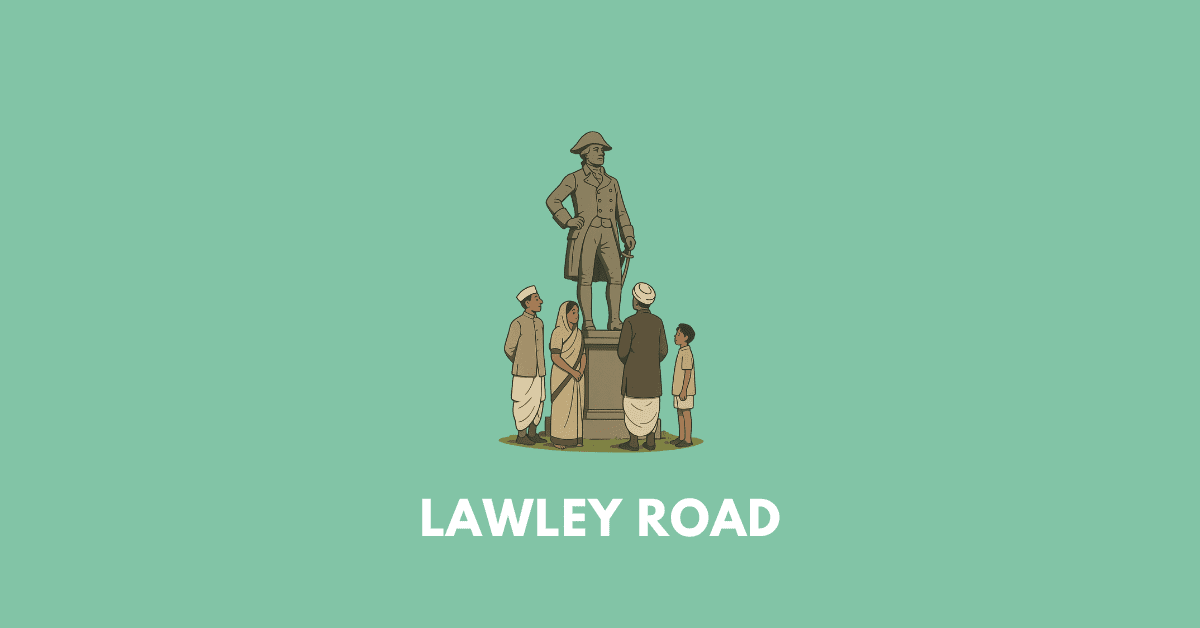
Get summay, questions, answers, solutions, notes, extras, PDF, competency-based questions of R.K. Narayan’s story Lawley Road: ISC Class 11 Modern English (Goyal Brothers Workbook), which is part of the present syllabus. These solutions, however, should only be treated as references and can be modified/changed.
A man tells a story about the town of Malgudi. For a long time, the town’s Municipality did very little. After India gained its independence in 1947, the Municipal Chairman felt inspired to do something great. First, he led the Council to rename all the streets in town to honor the new nation. This created much confusion. Many streets were given the same name, so mail went to the wrong places and people could not give directions to their own homes. The town’s old landmarks were gone.
Not satisfied, the Chairman decided to remove a large statue of Sir Frederick Lawley. The Council believed Lawley was a cruel ruler from the past. The statue, however, was very strong and tall. When the story says it stood with the “firmness of a mountain,” it means it was incredibly solid and difficult to move. The Chairman offered the statue to the narrator, a local journalist, for free if he could remove it. The narrator accepted, thinking he could sell the metal and make a profit. After much difficulty and expense, including using dynamite, he managed to move the statue to his small house.
Soon after, the Chairman arrived with terrible news. They had been mistaken about the statue. This Sir Frederick Lawley was a different man who was very good. He had helped build Malgudi, established its first cooperative society, and even died trying to save villagers from a flood. When the public learned the truth, they became angry at the narrator for taking the statue. They protested outside his house, demanding its return.
The narrator was stuck with the huge statue in his home for six months. He finally came up with a solution. He suggested that the Chairman buy his house to be used as a National Trust, allowing the statue to remain where it was. The narrator reminded the Chairman of his past “blanket gains,” which refers to the large amount of money the Chairman had made, and suggested this would be a good use for it. The Chairman agreed. He bought the house from the narrator as a gift to the nation and announced that the street, Kabir Lane, would be renamed Lawley Road.
1. Who is the narrator of the story Lawley Road?
(a) Municipal Chairman
(b) The Talkative Man
(c) A British official
(d) A government officer
Answer: (b) The Talkative Man
2. What does the renaming of streets symbolise in the story?
(a) The need for change in governance
(b) A celebration of patriotism
(c) Blind nationalism and lack of planning
(d) A shift towards modernity
Answer: (c) Blind nationalism and lack of planning
3. How does the Municipal Chairman’s decision-making reflect his leadership?
(a) Wise and well-planned
(b) Rash and impulsive
(c) Honest but ineffective
(d) Corrupt and selfish
Answer: (b) Rash and impulsive
4. How does the story criticise political decision-making?
(a) It shows the importance of leadership
(b) It highlights the foolishness of impulsive leaders
(c) It portrays politicians as patriotic
(d) It shows how change improves society
Answer: (b) It highlights the foolishness of impulsive leaders
5. How does the story show the dangers of acting on assumptions?
(a) The Chairman made an uninformed decision
(b) The public was well-researched
(c) The Talkative Man corrected history
(d) The renaming process was democratic
Answer: (a) The Chairman made an uninformed decision
6. Read the two statements given below and select the appropriate relation between them.
Statement A: The Municipal Chairman was eager to do something grand to celebrate India’s independence.
Statement B: He decided to rename the streets and parks of Malgudi.
(a) Statement B is similar to Statement A.
(b) Statement B is a condition for Statement A.
(c) Statement B is the reason for Statement A.
(d) Statement B is the result of Statement A.
Answer: (d) Statement B is the result of Statement A.
7. Read the following two statements and select the correct relation between them.
Statement A: The public initially supported the removal of Lawley’s statue.
Statement B: The public later demanded that the statue be restored.
(a) Statement B contradicts Statement A.
(b) Statement B is the result of Statement A.
(c) Statement B is similar to Statement A.
(d) Statement B is a condition for Statement A.
Answer: (a) Statement B contradicts Statement A.
8. Read the two statements below and determine their relationship.
Statement A: The Municipal Council assumed that Sir Frederick Lawley was a tyrant.
Statement B: They decided to remove his statue from the town.
(a) Statement B is similar to Statement A.
(b) Statement B is a condition for Statement A.
(c) Statement B is the reason for Statement A.
(d) Statement B is the result of Statement A.
Answer: (d) Statement B is the result of Statement A.
9. Which literary device is used in the story to highlight the inefficiency of political decision-making?
(a) Irony because the renaming of streets causes confusion instead of national pride.
(b) Symbolism because the statue represents colonial oppression.
(c) Personification because the statue is described as if it has emotions.
(d) Foreshadowing because the narrator hints at future events.
Answer: (a) Irony because the renaming of streets causes confusion instead of national pride.
10. Which one of the following statements best expresses a theme of the story?
(a) Political decisions made without practical thinking can create unnecessary problems.
(b) History should always be erased to build a new future.
(c) National pride can only be shown through changing public places.
(d) All leaders always make the right choices for their country.
Answer: (a) Political decisions made without practical thinking can create unnecessary problems.
11. Why did the Chairman assume that removing the statue of Sir Frederick Lawley was necessary?
(a) He believed Lawley was a tyrant
(b) The public requested it
(c) The British government ordered its removal
(d) It was blocking the road
Answer: (a) He believed Lawley was a tyrant
12. Who was Sir Frederick Lawley?
(a) A ruthless British ruler
(b) A British officer who helped develop Malgudi
(c) A fictional character created by the Chairman
(d) The Municipal Chairman’s friend
Answer: (b) A British officer who helped develop Malgudi
13. What does the Talkative Man’s decision to sell the statue reveal?
(a) He was financially struggling
(b) He prioritized profit over historical significance
(c) He wanted to donate it to a museum
(d) He wanted to keep it as a souvenir
Answer: (b) He prioritized profit over historical significance
14. Why is the Talkative Man an important character in the story?
(a) He represents opportunism and self-interest
(b) He leads the independence movement
(c) He is a historian
(d) He is a trusted advisor to the Chairman
Answer: (a) He represents opportunism and self-interest
1. In the short story, Lawley Road, the Talkative Man took ownership of the statue because ______
Answer: he saw it as a business opportunity to make a profit by selling it.
2. In the short story, Lawley Road, the Talkative Man struggled to move the statue because ______
Answer: it was immensely large and heavy, set on a solid foundation that required a large crew, several days of hard labor, and even dynamite to dislodge.
3. In the short story, Lawley Road, the Talkative Man’s decision to take the statue reveals his opportunism because ______
Answer: his priority was not patriotism but the chance to make a personal profit by selling the statue’s metal or the entire statue itself.
4. In the short story, Lawley Road, the people of Malgudi were easily influenced because ______
Answer: they did not question facts or think for themselves, instead blindly following the lead of politicians and quickly changing their opinions based on the prevailing mood.
5. In the short story, Lawley Road, the Municipal Chairman’s character highlights political inefficiency because ______
Answer: his decisions were hasty, poorly planned, and driven by a desire for public praise rather than genuine progress, which ultimately created chaos and confusion for the citizens.
6. In the short story, Lawley Road, the final outcome of the story reflects irony because ______
Answer: the initial patriotic mission to erase a British official’s name from the town resulted in a road being named “Lawley Road” in his honor, giving him even greater prominence.
7. In the short story, Lawley Road, the story is a satire on government leadership because ______
Answer: it humorously criticizes how leaders focus on symbolic but unnecessary actions, like renaming streets, to appear important, rather than performing their actual duties effectively.
8. The people initially ignored the statue of Sir Frederick Lawley but later demanded its reinstatement because ______
Answer: they discovered that their initial belief was wrong; Lawley was not a cruel tyrant but a kind and helpful leader who had greatly contributed to the development of their town.
9. The Municipality received several protest letters about the removal of the statue because ______
Answer: various historical societies corrected the public record, revealing that Sir Frederick Lawley was a benevolent figure who helped build Malgudi, not the cruel ruler he was assumed to be.
10. The removal of the statue was seen as a patriotic act at first, but later it became controversial because ______
Answer: it was revealed that the act was based on a misunderstanding of history; Sir Frederick Lawley was a benefactor to the town, not a cruel symbol of British rule.
11. The crowd started protesting outside the Talkative Man’s house because ______
Answer: they learned the truth about Sir Frederick Lawley’s good character and demanded the statue be restored, viewing the Talkative Man as an enemy trying to profit from a historical hero.
12. The Municipal Chairman’s actions reflect political opportunism because ______
Answer: they are consistently driven by self-promotion and the desire to maintain his powerful position, rather than by a genuine concern for the town’s welfare.
1. What events led to the decision to remove Sir Frederick Lawley’s statue? Write your answer in about 100-150 words, incorporating the following details:
(a) The Municipal Council’s motivations behind the removal.
(b) The initial public reaction to the removal.
Answer: The decision to remove the statue of Sir Frederick Lawley was part of the Municipal Chairman’s “nationalizing mission” after India gained independence. Following the renaming of streets, the Chairman became restless again and sought another grand gesture. The Council unanimously resolved to remove the statue, believing it was an insult to their freedom. Their motivation was based on the unearthed history that portrayed Lawley as a cruel tyrant, a combination of Attila, Nadir Shah, and Machiavelli, who subjugated Indians. The statue was condemned as it reminded the people of the cruelty of the Britishers during their rule.
The initial public reaction was one of strong support for the removal. The townspeople, who had previously overlooked the statue, now condemned it. They dropped their normal occupations and loitered around the statue, wondering how they could have tolerated it for so many years. They immediately agreed with and approved of the decision, imagining Lawley to be a very cruel leader who had been violent towards their ancestors.
2. Why did the Municipal Chairman feel dissatisfied even after renaming the streets? Write your answer in about 100-150 words, incorporating the following details:
(a) The Chairman’s initial enthusiasm and sense of achievement.
(b) His realization of the limitations of symbolic actions.
Answer: Initially, the Municipal Chairman was filled with enthusiasm and a sense of achievement after renaming the streets. He looked down benignly from his balcony, feeling gratified with his inspired work and muttering that they had done their bit for the great occasion of independence.
However, his satisfaction was short-lived. About a week later, he became quite dispirited, feeling that they had not done enough to mark the great event. He realized the limitations of his symbolic actions as the renaming project led to chaos and confusion. Many roads ended up with the same name, which made it difficult for people to find their way around town or for letters to be delivered. The town became a wilderness with all its landmarks gone. This failure and his restlessness made him look for fresh fields of action, leading to the decision to remove the statue.
3. How did the public perception of Sir Frederick Lawley change throughout the story? Write your answer in about 100-150 words, incorporating the following details:
(a) The public’s indifference to the statue before its removal.
(b) The shift in opinion after learning about his actual contributions.
Answer: Before the Municipal Council decided on its removal, the public was completely indifferent to the statue of Sir Frederick Lawley. It was often overlooked by the citizens of Malgudi and went unnoticed for many years. People had become so used to it that they never bothered to ask whose it was or even to look up; it was generally just used by birds as a perch.
The public’s perception changed completely after they learned the truth about his actual contributions. Following the removal, historical societies protested, and it was revealed that Lawley was not a cruel ruler but a kind man who had played a great role in Malgudi’s development. He had built irrigation systems, founded the first cooperative in India, and died while saving villagers. When this new information spread, the same citizens who had celebrated the removal now demanded that the statue be restored. Angry crowds protested outside the narrator’s house, viewing him as an enemy.
4. What does the story Lawley Road reveal about the nature of political decisions? Write your answer in about 100-150 words, incorporating the following details:
(a) How political leaders make impulsive decisions to gain popularity.
(b) The irony in how history can be misrepresented or misunderstood.
Answer: The story reveals that political decisions are often impulsive and driven by a desire to gain popularity rather than by rational thought. Political leaders in the story make hasty decisions, such as renaming streets and removing the statue, to appear important and patriotic. These actions are shown to be driven by personal ambition and a concern for self-image, leading to unnecessary problems for the public instead of ensuring progress or solving real issues.
The story also reveals the irony of how history can be misrepresented or misunderstood for political purposes. The biggest irony is that Sir Frederick Lawley, who was removed for being a symbol of cruel British rule, was actually a kind and forward-thinking leader who helped develop Malgudi. This shows how history is often judged based on unverified rumours and changed for personal and political reasons, and how easily public opinion can be misled by such actions.
5. How does Lawley Road use satire to comment on governance and leadership?
Answer: The story uses satire to critique political opportunism, the inefficiency of government, and the fickleness of the public. It humorously points out how leaders often engage in unnecessary actions to seem important, such as renaming streets or removing statues without proper understanding.
The Chairman’s leadership style is a primary target of this satire. He is depicted as a leader who makes hasty and rash decisions driven by a desire for public praise and self-promotion rather than the actual welfare of the town. His “nationalizing mission” to rename streets and remove Sir Frederick Lawley’s statue is poorly planned and executed without checking the facts. These actions, meant to showcase his patriotism and leadership, instead create chaos and confusion for the citizens, showing that he cares more about his self-image than about doing real, effective work.
The broader message about governance is a critique of how governments and their officials often focus on symbolic gestures instead of solving real problems. The story satirizes the slow, inefficient, and self-serving nature of bureaucracy. Leaders are shown to be more interested in maintaining power and a positive public image than in making practical improvements for society. Through irony and exaggeration, the story comments on the foolishness of such leadership and the gullibility of the public that follows them.
6. How does the title Lawley Road become ironic by the end of the story?
Answer: The original purpose of the Municipal Council’s actions was to remove all traces of British colonial influence from Malgudi to celebrate India’s independence. This “nationalizing mission” specifically targeted the statue of Sir Frederick Lawley, a British official, who was mistakenly believed to be a cruel tyrant. The goal was to erase his name and legacy, which were seen as an insult to the nation’s freedom.
The decision backfired completely. The entire effort to remove the statue was based on a historical misunderstanding. It was later revealed that Sir Frederick Lawley was, in fact, a kind and forward-thinking administrator who had contributed significantly to the development of Malgudi. The public, which had initially supported the statue’s removal, reversed its opinion and demanded its restoration. The ultimate irony, which gives the title its meaning, occurs at the end. After all the chaos, expense, and patriotic fervor aimed at eliminating Lawley’s name, the Municipal Council resolves to change the name of Kabir Lane to “Lawley Road” in his honour. Thus, the very name they sought to erase is permanently established, making their initial mission entirely pointless and ironic.
7. How did the media contribute to the controversy in Lawley Road?
Answer: The newspapers played a significant part in shaping and shifting public opinion throughout the story. Initially, the narrator, who works as a journalist, helps the Municipal Chairman by publishing idealized and favorable reports about municipal affairs. After he removes the statue, he sends a ten-inch story to his paper, publicizing his own role in the “patriotic” act.
The media’s coverage dramatically affected the final decision by first building up the controversy and then resolving it. When historical societies began to protest the statue’s removal, newspapers all over the country picked up the story. They published the true history of Sir Frederick Lawley, revealing his benevolent character and his contributions to Malgudi. This widespread media coverage completely changed the public’s perception. The same citizens who had celebrated the removal were now infuriated and, influenced by the news, began protesting for the statue’s return. This media-fueled public pressure cornered the Chairman, forcing him to find a solution to save his political position, which ultimately led to him buying the statue and renaming a road in Lawley’s honour.
8. In the short story, Lawley Road, what does the Talkative Man’s behaviour reveal about human nature?
Answer: The Talkative Man’s personality is shown to be witty, clever, and resourceful. However, his most defining traits are being an opportunist who is ambitious and money-minded. He is not driven by any genuine national or patriotic feelings; his main priority is always personal profit. His greed is clear when he accepts the statue not as a service to the nation but as a business opportunity, immediately calculating how much he could earn by selling it.
His actions reflect a strong sense of opportunism and adaptability. He first uses his position as a journalist to gain favour with the Chairman. He then quickly seizes the chance to acquire the statue for free, seeing it as a simple way to make a large profit. When his plan fails and he is met with public anger and legal threats, he does not despair. Instead, he adapts to the difficult circumstances. He cleverly turns the crisis into a new opportunity by persuading the Chairman to buy his house along with the statue, thereby solving his problem and recovering his expenses. This behaviour reveals a common aspect of human nature: the tendency to prioritize self-interest and to adapt resourcefully to any situation for personal benefit.
1. How does the renaming of streets in Malgudi reflect the chaos of post-independence patriotism? Write your answer in about 250 words, referring closely to the renaming process and its consequences.
Answer: The renaming of streets in Malgudi reflects the chaos of post-independence patriotism by showing how poorly planned, symbolic gestures, driven by political ambition, can lead to widespread confusion instead of progress. After India gained independence, the Municipal Chairman felt the need to do something great to mark the event. He called an Extraordinary Meeting of the Council, where they decided to nationalize the names of all streets and parks to honour Indian leaders.
The process itself was chaotic and revealed the leaders’ lack of foresight. For example, Coronation Park was renamed Hamara Hindustan Park. However, when it came to roads, the plan fell apart. Mahatma Gandhi Road was the most sought-after name, with eight different ward councillors vying for it. Others wanted to name roads after Nehru or Netaji Subash Bose. With tempers rising, the Council made the irrational decision to give the same name to four different streets.
The consequences of this hasty decision were immediate and disruptive. The town became unrecognizable as old, familiar names like Market Road and Chitra Road disappeared. In their place, the names of ministers and Congress Working Committee members were repeated in multiple locations. This created immense hardship for the citizens. Letters were delivered to the wrong addresses, and people were unable to give directions or even state where they lived. The town was described as a wilderness with all its landmarks gone, a clear illustration of how misdirected patriotism and a focus on symbolic actions over practical solutions created chaos rather than celebrating freedom meaningfully.
2. “The Chairman’s enthusiasm for removing the statue of Sir Frederick Lawley was driven more by impulsive patriotism than rational decision-making.” Comment on how the Municipal Council’s decision led to unintended complications. Write your answer in about 250 words, analysing their motivations and the eventual outcome.
Answer: The statement that the Chairman’s enthusiasm for removing the statue was driven by impulsive patriotism is accurate. His decision was not based on rational thought or historical facts but on a restless desire to perform another grand, nationalistic act after the street-renaming initiative. The motivation of the Municipal Council was to erase what they perceived as a symbol of British tyranny. Without any proper research, they unearthed a false history, branding Sir Frederick Lawley as a cruel ruler, a combination of Attila the Hun, Nadir Shah, and Machiavelli. They believed removing his statue was a patriotic duty to cleanse the town of a hateful reminder of the colonial past.
This impulsive decision, however, led to a series of unintended and ironic complications. After the narrator, the Talkative Man, went through great expense and effort to remove the statue, the truth was revealed. Historical societies protested, clarifying that this Sir Frederick Lawley was, in fact, a great benefactor who had developed Malgudi, established India’s first cooperative society, and died a hero saving villagers. The government then ordered the statue to be reinstated. The public, who had initially supported the removal, completely reversed their opinion and began protesting against the narrator, demanding the statue’s return. The narrator was now seen as an enemy and faced legal action under the Ancient Monuments Act.
The eventual outcome was a complete reversal of the Council’s original intent. To resolve the mess, the Chairman had to use his own funds to purchase the narrator’s house and convert it into a park for the statue. In the final, most significant irony, the Council resolved to change the name of the street, Kabir Lane, to Lawley Road, thereby immortalizing the very man whose legacy they had impulsively tried to erase. This demonstrates how actions based on blind patriotism without rational thought can backfire, leading to absurd and complicated results.
3. With reference to “Lawley Road,” show how the narrator’s decision to take the statue highlights his entrepreneurial spirit and eventual frustration. Write your answer in about 250 words, explaining his motivations and the challenges he faced.
Answer: The narrator’s decision to take the statue of Sir Frederick Lawley clearly highlights his entrepreneurial spirit, as his motivations were driven purely by the prospect of financial gain rather than any patriotic sentiment. As an opportunistic journalist, the Talkative Man was always on the lookout for ways to profit. When the Municipal Chairman offered him the statue for free if he removed it at his own cost, he immediately saw it as a business opportunity. He calculated the affair as a pure investment, estimating he could spend five thousand rupees on its removal and sell the three tons of metal for six thousand. He even considered the more ambitious plan of selling the entire statue to the British Museum or Westminster Abbey. This profit-driven calculation is a testament to his entrepreneurial nature.
However, his venture was beset with challenges from the very beginning. The physical task of removing the statue proved far more demanding than he had anticipated. He had to borrow money, recruit a team of fifty coolies, and even after ten days of hacking at the pedestal, he had to resort to using dynamite. Transporting the massive statue to his house was a three-day nightmare that caused immense public confusion and traffic jams.
His entrepreneurial dream ultimately turned into deep frustration. The greatest challenge arose when the historical truth about Sir Lawley was revealed. Instead of being celebrated, the narrator was condemned by the public, who picketed his house and accused him of trying to black-market a national hero’s statue. He faced legal prosecution under the Ancient Monuments Act and was left with a giant, unsellable statue occupying his small house. His initial optimism gave way to despair as he longed to be able to stretch himself fully in his own house again. His journey from a hopeful entrepreneur to a frustrated man trapped by his own scheme shows the ironic consequences of his profit-seeking actions.
4. “The Talkative Man’s scheme to remove the statue seemed like an easy profit but turned into a nightmare.” Examine the series of events that led to his downfall and how they reflect irony in the story. Write your answer in about 250 words, focusing on the unintended consequences of his actions.
Answer: The Talkative Man’s plan to profit from removing the statue of Sir Frederick Lawley quickly devolved into a nightmare due to a series of unforeseen complications. Initially, he viewed the Municipal Chairman’s offer as a great business opportunity, planning to sell the statue’s metal or the entire monument to a museum. However, the task proved far more difficult and expensive than he had anticipated. He had to borrow money, hire a team of fifty men, and even use dynamite to dislodge the statue, a process that took several days of hard labour. Transporting the massive statue to his house was another ordeal, causing immense traffic disruption and public spectacle.
The true nightmare began after the statue was in his possession. The narrator’s expectation of being appreciated by the citizens was shattered when historical societies protested the removal. It was revealed that Sir Frederick Lawley was not a tyrant but a benevolent figure who had greatly contributed to Malgudi’s development. This revelation led to a complete reversal of public opinion. The same citizens who had supported the removal now paraded outside the narrator’s house, demanding the statue’s return and accusing him of trying to sell a national hero on the black market. He faced legal prosecution under the Ancient Monuments Act and was left with a huge, unsellable statue occupying his home, causing him great personal inconvenience and financial ruin. The irony is that his entrepreneurial scheme, meant to bring him easy profit by removing a supposed symbol of oppression, resulted in him losing money, facing public outrage, and being stuck with the statue of a man who was now celebrated as a hero.
5. Discuss how satire is used in “Lawley Road” to critique blind nationalism. Write your answer in about 250 words, identifying key moments that highlight the situation.
Answer: “Lawley Road” uses satire to critique blind nationalism by humorously exposing the foolishness of actions driven by misinformed patriotic fervour rather than logic and real understanding. The story makes fun of exaggerated patriotism where people perform acts in the name of nationalism without proper thought. One key moment is the Municipal Chairman’s decision to “nationalize” the town by renaming all streets and parks. This hasty, ill-planned decision, meant to honour Indian leaders, results in chaos and confusion, as multiple roads end up with the same name, making life difficult for the citizens. This satirizes how leaders often focus on symbolic gestures to appear important instead of addressing real issues.
The central satirical event is the removal of Sir Frederick Lawley’s statue. The decision is driven by the blind assumption that as a British official, Lawley must have been a cruel ruler. The council and the public, without checking any facts, condemn him and celebrate the removal of his statue as a patriotic victory. The story satirizes this herd mentality when, upon learning the truth about Lawley’s good deeds, the public completely reverses its stance and demands the statue’s restoration. This sudden shift highlights how easily public opinion can be swayed and how their patriotism is superficial. The ultimate satirical critique comes at the end, when the council, in a final ironic twist, officially names a road “Lawley Road,” thereby immortalizing the very British figure they had tried to erase in their initial wave of nationalist enthusiasm.
1: What was the new name given to Coronation Park?
A. Mahatma Gandhi Park
B. Nehru Park
C. Hamara Hindustan Park
D. Lawley Park
Answer: C. Hamara Hindustan Park
2: How much was the narrator paid for his news reports by the upcountry paper?
A. Two rupees for every word
B. Ten rupees per story
C. Two rupees for every inch of published news
D. A fixed monthly salary
Answer: C. Two rupees for every inch of published news
3: What was the lowest tender received by the Municipality for removing the statue?
A. Ten thousand rupees
B. Five thousand rupees
C. Fifty thousand rupees
D. Six thousand rupees
Answer: C. Fifty thousand rupees
4: How many coolies did the narrator recruit to help remove the statue’s pedestal?
A. Twenty
B. Ten
C. A dozen
D. Fifty
Answer: D. Fifty
5: What was the profession of the Municipal Chairman before he entered politics?
A. A lawyer
B. A journalist
C. A supplier of blankets to the army
D. A contractor
Answer: C. A supplier of blankets to the army
6: According to the later-revealed history, how did Sir Frederick Lawley die?
A. He was killed during the Mutiny
B. He died of old age in Malgudi
C. He died in the Sarayu floods while saving villagers
D. He returned to Britain and died there
Answer: C. He died in the Sarayu floods while saving villagers
7: What was the original name of the lane that was eventually renamed Lawley Road?
A. Chitra Road
B. Market Road
C. Vinayak Mudali Street
D. Kabir Lane
Answer: D. Kabir Lane
8: What tool did the narrator finally use to bring the statue down from its pedestal?
A. A large crane
B. Dynamite
C. A hundred coolies with ropes
D. A specially designed carriage
Answer: B. Dynamite
9: What did the narrator offer to do with the statue to anger the protesting public?
A. Donate it to the British Museum
B. Melt it down for scrap metal
C. Put a placard on his door offering it for sale
D. Break it into smaller pieces
Answer: C. Put a placard on his door offering it for sale
10: What historical figure was Sir Frederick Lawley initially compared to?
A. Queen Victoria
B. Warren Hastings
C. Attila the Hun
D. Emperor Asoka
Answer: C. Attila the Hun
11: What did Sir Frederick Lawley establish that was the first of its kind in India?
A. The first Municipality in Malgudi
B. The first cooperative society
C. The first English-medium school
D. The first railway line to Malgudi
Answer: B. The first cooperative society
12: Which of the following was NOT a name sought after by the councillors for the roads in Malgudi?
A. Nehru Road
B. Netaji Subash Bose Road
C. Mahatma Gandhi Road
D. Victoria Road
Answer: D. Victoria Road
13: Which of the following was NOT a consequence of renaming the streets in Malgudi?
A. Letters were delivered to the wrong addresses.
B. People were unable to give directions.
C. The town became unrecognizable.
D. The Municipal Chairman was praised by everyone.
Answer: D. The Municipal Chairman was praised by everyone.
14: Which of the following is NOT a true fact about the historical Sir Frederick Lawley?
A. He helped build the town of Malgudi.
B. He established a canal system from the Sarayu river.
C. He was a cruel tyrant who subjugated Indians with the sword.
D. He advised the British Parliament to involve more Indians in government.
Answer: C. He was a cruel tyrant who subjugated Indians with the sword.
15: The narrator’s plan to profit from the statue did NOT include which of the following ideas?
A. Selling it as scrap metal for six thousand rupees.
B. Selling it to the British Museum.
C. Selling it to Westminster Abbey.
D. Keeping it in his house as a family heirloom.
Answer: D. Keeping it in his house as a family heirloom.
16: Which of the following was NOT a problem the narrator faced while transporting the statue?
A. The carriage getting stuck at inconvenient angles.
B. The blinding heat of the day.
C. The crowd following and uttering jokes.
D. The Municipal Chairman refusing to provide a permit.
Answer: D. The Municipal Chairman refusing to provide a permit.
17: The public’s reaction to the statue controversy did NOT include which of the following actions?
A. Demanding the statue back.
B. Parading in front of the narrator’s house shouting slogans.
C. Physically attacking the narrator.
D. Picketing the narrator’s house in non-violent relays.
Answer: C. Physically attacking the narrator.
18: Which of the following historical figures was Sir Frederick Lawley NOT compared to in the story?
A. Nadir Shah
B. Machiavelli
C. Warren Hastings
D. Attila the Scourge of Europe
Answer: C. Warren Hastings
19: The Municipal Chairman’s actions were NOT driven by which of the following motivations?
A. A desire for public praise and recognition.
B. A genuine interest in historical accuracy.
C. A need to do something “great” to mark independence.
D. A wish to secure his political position.
Answer: B. A genuine interest in historical accuracy.
20: The narrator describes how, for years, the drains in Malgudi “ebbed and flowed and generally __________.”
A. were cleaned by the council
B. looked after themselves
C. created a health hazard
D. were ignored by the wind
Answer: B. looked after themselves
21: The Municipal Chairman became restless after the initial celebrations and looked for __________ of action.
A. new methods
B. fresh fields
C. different kinds
D. other areas
Answer: B. fresh fields
22: The narrator took on the task of removing the statue, calculating the whole affair as a pure __________.
A. patriotic duty
B. public service
C. investment
D. nuisance
Answer: C. investment
23: After the truth was revealed, the narrator was served a notice of prosecution under the __________ Act.
A. Historical Monuments
B. Town Preservation
C. Ancient Monuments
D. National Heritage
Answer: C. Ancient Monuments
24: The narrator suggested the Chairman should relieve himself of some of his old __________ gains to buy the house.
A. political
B. blanket
C. wartime
D. illegal
Answer: B. blanket
25: The narrator seated the agitated Chairman on the __________ of the tyrant’s statue in his house.
A. head
B. feet
C. chest
D. sword
Answer: C. chest
26: The statue of Sir Frederick Lawley stood at the corner of Lawley Extension and __________ Road.
A. Market
B. North
C. Chitra
D. Kabir Lane
Answer: A. Market
27: The narrator feared he might become __________ in a fortnight because the removal process was so slow and expensive.
A. famous
B. unpopular
C. bankrupt
D. tired
Answer: C. bankrupt
28: Statement A: The Municipal Council assumed that Sir Frederick Lawley was a tyrant.
Statement B: They decided to remove his statue from the town.
A. Statement B is a contradiction of Statement A.
B. Statement A is the result of Statement B.
C. Statement B is the result of Statement A.
D. Statement A and Statement B are unrelated.
Answer: C. Statement B is the result of Statement A.
29: Statement A: The public initially supported the removal of Lawley’s statue.
Statement B: The public later demanded that the statue be restored.
A. Statement B contradicts Statement A.
B. Statement B is a logical continuation of Statement A.
C. Statement B is the reason for Statement A.
D. Statement A and Statement B are similar.
Answer: A. Statement B contradicts Statement A.
30: Statement A: The narrator published a ten-inch story in his paper about removing the statue.
Statement B: He received a sheaf of telegrams from historical societies protesting the removal.
A. Statement A is the cause of Statement B.
B. Statement B is the cause of Statement A.
C. Statement A contradicts Statement B.
D. The two statements are independent of each other.
Answer: A. Statement A is the cause of Statement B.
31: Statement A: The Municipal Chairman was eager to do something grand to celebrate India’s independence.
Statement B: He decided to rename the streets and parks of Malgudi.
A. Statement B is a condition for Statement A.
B. Statement B is a contradiction of Statement A.
C. Statement A is the result of Statement B.
D. Statement B is the result of Statement A.
Answer: D. Statement B is the result of Statement A.
32: Arrange the following events in the correct chronological order:
(i) The narrator acquires the statue of Sir Frederick Lawley.
(ii) The Municipal Council renames the streets of Malgudi.
(iii) The truth about Sir Frederick Lawley’s contributions is revealed.
(iv) The Chairman buys the narrator’s house to turn it into a National Trust.
A. (i) → (ii) → (iv) → (iii)
B. (ii) → (i) → (iii) → (iv)
C. (ii) → (iii) → (i) → (iv)
D. (iii) → (ii) → (i) → (iv)
Answer: B. (ii) → (i) → (iii) → (iv)
33: Select the option that lists the events in their correct order:
(i) The narrator uses dynamite to dislodge the statue.
(ii) The Chairman offers the statue to the narrator for free.
(iii) The narrator borrows money from his father-in-law.
(iv) The narrator hires fifty coolies who hack at the pedestal for ten days.
A. (ii) → (iii) → (iv) → (i)
B. (i) → (ii) → (iii) → (iv)
C. (ii) → (iv) → (i) → (iii)
D. (iv) → (i) → (iii) → (ii)
Answer: A. (ii) → (iii) → (iv) → (i)
34: Choose the option that lists the sequence of events in the correct order:
(i) The public pickets the narrator’s house, demanding the statue back.
(ii) The townspeople loiter around the statue, wondering how they tolerated the “tyrant” for so long.
(iii) The narrator feels sorry for the statue lying on its back on the roadside.
(iv) The narrator’s house is sold to the Chairman.
A. (iii) → (ii) → (i) → (iv)
B. (ii) → (iii) → (i) → (iv)
C. (i) → (ii) → (iv) → (iii)
D. (ii) → (i) → (iii) → (iv)
Answer: B. (ii) → (iii) → (i) → (iv)
35: What is the dominant literary device used in the story, where events unfold contrary to expectations, such as a statue removed for being a tyrant’s being reinstated as a hero’s?
A. Metaphor
B. Simile
C. Irony
D. Personification
Answer: C. Irony
36: The statement, “The statue stood with the firmness of a mountain,” is an example of what literary device?
A. Personification
B. Metaphor
C. Allusion
D. Hyperbole
Answer: B. Metaphor
37: The overall tone of the story can best be described as:
A. Tragic and mournful
B. Humorous and satirical
C. Serious and didactic
D. Romantic and sentimental
Answer: B. Humorous and satirical
38: The phrase “The town became a wilderness with all its landmarks gone” serves as a metaphor for what?
A. The physical destruction of the town
B. The loss of order and the chaos created by the renaming of streets
C. The town’s return to a natural state
D. The narrator’s personal confusion
Answer: B. The loss of order and the chaos created by the renaming of streets
39: The reference to “Attila, the Scourge of Europe, and Nadir Shah, with the craftiness of a Machiavelli” is an example of:
A. Symbolism
B. Allusion
C. Simile
D. Foreshadowing
Answer: B. Allusion
40: The description of the drains that “ebbed and flowed and generally looked after themselves” is an example of:
A. Metaphor
B. Simile
C. Personification
D. Irony
Answer: C. Personification
1. How did the Municipal Chairman’s attempt to nationalize Malgudi create chaos? You are required to answer in 100-150 words by incorporating the following details:
Answer: The Municipal Chairman’s attempt to nationalize Malgudi created chaos through his decision to rename all the streets and parks with patriotic names to honour Indian leaders. For example, Coronation Park was renamed Hamara Hindustan Park. This was done with poor planning and led to widespread confusion.
This decision resulted in significant problems for citizens and services. Many ward councillors chose the same names of freedom fighters for several different roads. As a result, many roads ended up with the same name, making it very difficult for people to find their way around town. It also became hard to find houses and for letters to be delivered correctly, creating a lot of hardship for everyone.
2. Why did the Municipal Chairman decide to remove the statue of Sir Frederick Lawley? You are required to answer in 100-150 words by incorporating the following details:
Answer: The Municipal Chairman decided to remove the statue of Sir Frederick Lawley as a part of his nationalizing mission. After renaming the streets and parks, he felt restless and believed that removing the statue of a British official was the next logical step to celebrate India’s independence and erase symbols of colonial rule.
The initial public perception of the statue supported his decision. Before this, the statue was often overlooked by the citizens of Malgudi. However, once the Chairman proposed its removal, the people condemned it because it reminded them of the cruelty of the British. They believed Sir Frederick Lawley was a cruel ruler, and they supported the removal of his statue, seeing it as a symbol of their past oppression.
3. What were the Talkative Man’s motivations for taking ownership of the statue? You are required to answer in 100-150 words by incorporating the following details:
Answer: The Talkative Man’s main motivation for taking the statue was that he viewed it as a business opportunity. He was an opportunistic journalist who was always looking for ways to profit from any situation. When the Chairman offered him the statue for free on the condition that he remove it, he saw it as a chance to make money, not as a patriotic act.
His plans for profiting from the statue were clear. He intended to either sell the metal of the statue for a good price or sell the entire statue to an institution like the British Museum or Westminster Abbey. His priority was not history or patriotism, but simply to get rich from the arrangement offered by the Municipal Chairman.
4. Describe the difficulties the narrator faced in removing and transporting the statue. You are required to answer in 100-150 words by incorporating the following details:
Answer: The narrator faced immense difficulties because the task of removing the statue was far more demanding than he had anticipated. He had to borrow money to finance the project and appointed a large crew of fifty people just to remove the pedestal. The statue’s foundation was so strong that it seemed immovable.
The removal process required several days of hard labour and extreme measures. The crew had to work very hard, and in the end, they even had to use dynamite to finally dislodge the statue from its base. After this challenging process, the narrator finally managed to transport the massive statue to his own house.
5. How did the public’s perception of Sir Frederick Lawley change during the story? You are required to answer in 100-150 words by incorporating the following details:
Answer: Initially, the people of Malgudi believed that Sir Frederick Lawley was a cruel British officer who ruled with violence. They thought his statue was a symbol of cruel British rule and that he had forced Indians into submission and destroyed villages. They compared him to cruel historical figures like Attila the Hun and Nadir Shah. The statue was condemned because it reminded them of the cruelty of the Britishers during their rule.
Later, the public’s perception changed completely when the truth about Lawley was revealed. They learned that he was actually a kind and forward-thinking leader who played a huge role in the development of Malgudi. He was a visionary who cleared forests to build the town, constructed roads, started irrigation projects, and helped farmers. He even founded India’s first cooperative society and died while saving villagers during the Sarayu floods. Once they learned of his actual contributions, the same people who celebrated the statue’s removal demanded that it be restored.
6. What was the narrator’s final solution to the problem of the statue? You are required to answer in 100-150 words by incorporating the following details:
Answer: The narrator’s final solution to the problem of the statue was a clever idea he proposed to the Municipal Chairman. He convinced the Chairman to buy his house and turn it into a historical site or a park. This would solve the problem of where to put the statue and would also help the Chairman politically.
This solution benefited both the narrator and the Chairman. The narrator was able to get rid of the statue that was causing him so much trouble, and he was also able to get his expenses paid by selling his house. The Chairman benefited because buying the statue back and creating a park for it helped him regain public support. He took all the credit for saving the statue, which made him look good in the eyes of the public.
7. How does the story critique poor planning and political ambition through its leaders? You are required to answer in 100-150 words by incorporating the following details:
Answer: The story critiques poor planning through the Municipal Chairman’s hasty decisions. To show that Malgudi was independent, he decided to rename all the streets and parks. However, his poor planning created a lot of confusion for the townspeople. His idea to remove Sir Frederick Lawley’s statue also failed because he did not check the facts properly and made a rash decision based on assumptions.
The story also shows how political ambition leads to problems. The Chairman and other leaders are shown to care more about getting positive public opinion than doing real work. Their actions are driven by personal ambition and a desire to improve their self-image rather than actually helping people. They focus on symbolic acts like renaming streets instead of solving real problems, which leads to unnecessary hassles for everyone.
8. Explain the theme of corruption and selfishness as seen in the main characters. You are required to answer in 100-150 words by incorporating the following details:
Answer: The Municipal Chairman shows corruption and selfishness by using his position for his own benefit. He had secured his position as Chairman by using the profit he made from being a supplier of blankets during the war. His actions throughout the story are mainly for self-promotion and to retain his position, not for the welfare of the town. He is always ready to use his money to protect his power.
The Talkative Man is also portrayed as selfish and greedy. He sees the removal of the statue not as a patriotic act but as a chance to make money. He agrees to take the statue because he plans to sell its metal or the entire statue for a large profit. His main goal is to get rich, and he does not think about the historical importance of the statue until his plan fails and the public turns against him.
9. How does the story satirize the concept of blind patriotism? You are required to answer in 100-150 words by incorporating the following details:
Answer: The story makes fun of blind patriotism through the act of renaming places without proper thought. The Municipal Chairman renames roads and parks with patriotic names, but he does so without any planning. This action, meant to show nationalism, ends up causing chaos and confusion for the citizens, showing that such acts are meaningless without proper understanding.
The removal of Sir Frederick Lawley’s statue is another example of blind patriotism. The town leaders and the public assume he was a cruel British officer and decide to remove his statue as a patriotic gesture. However, they act irrationally without checking the facts. When they later learn about his good work, they change their minds and demand the statue’s return, showing how people can act on misplaced patriotic feelings without thinking logically.
10. Discuss the theme of irony and the misunderstanding of history in the story. You are required to answer in 100-150 words by incorporating the following details:
Answer: The story is filled with irony, especially in the way Sir Frederick Lawley is perceived. The greatest irony is that he was not a cruel British officer, as everyone believed, but a kind man who helped develop Malgudi. The townspeople’s initial celebration of his statue’s removal is ironic because they were actually removing the statue of a man who had greatly benefited their town.
This situation shows how history can be easily misunderstood or changed for political reasons. The public’s opinion reverses completely once they learn the truth. They first celebrate the statue’s removal and then demand its return. This quick change in public opinion shows how easily people can be misled by incomplete information. The final irony is that a road is named “Lawley Road,” giving the British officer more importance than before.
11. How does the story portray the theme of public opinion and crowd mentality? You are required to answer in 100-150 words by incorporating the following details:
Answer: The story shows that the people of Malgudi do not form their own opinions but are easily influenced by their leaders. Initially, when the Municipal Council decides that Sir Frederick Lawley was a tyrant, the townspeople immediately agree and support the removal of his statue. They blindly follow the decision without questioning the facts.
Later, their opinion shifts just as quickly. When they learn that Lawley was actually a kind and helpful man, they change their minds and demand that the statue be restored. They begin to protest outside the narrator’s house, showing that their opinions are not based on their own thinking but on the information they are given. This demonstrates a crowd mentality, where the masses can be manipulated by leaders and popular opinions.
12. Who is the Talkative Man? How is he portrayed as an opportunist? You are required to answer in 100-150 words by incorporating the following details:
Answer: The Talkative Man is the narrator of the story. He is a journalist who sells news reports to a local newspaper. He maintains a good relationship with the Municipal Chairman by writing favourable reports about the Municipal affairs, which helps him in his work.
He is portrayed as an opportunist because he is always looking for ways to make a profit from any situation. His main motivation is money, not patriotism or national pride. When the Chairman offers him the statue for free, he immediately sees it as a business opportunity. He plans to either sell the metal for a profit or sell the whole statue to a museum. He does not care about the history of the statue, only about the money he can make from it.
13. Describe the character of the Municipal Chairman. Why is he considered a foolish leader? You are required to answer in 100-150 words by incorporating the following details:
Answer: The Municipal Chairman is a corrupt, greedy, and hasty leader who loves public praise and wants to be remembered as a great man. He makes quick decisions without thinking about the consequences. For example, after India’s independence, he felt the Municipality should do something important, so he decided to rename all the roads and parks and remove the statue of Sir Frederick Lawley.
He is considered a foolish leader because of his lack of planning and foresight. His decision to rename the streets caused confusion because many roads ended up with the same name. He did not check the facts about Sir Frederick Lawley before ordering the removal of his statue. When he learned the truth, he immediately changed his mind and wanted the statue back. This shows that he does not think deeply before acting and is more concerned with appearing patriotic than with governing effectively.
14. Who was the real Sir Frederick Lawley? How does he represent misunderstood historical figures? You are required to answer in 100-150 words by incorporating the following details:
Answer: Sir Frederick Lawley was not a cruel British officer but a kind and forward-thinking leader who played a significant role in the development of Malgudi. He was a military governor who settled in India after the mutiny and helped the town grow by clearing forests, constructing roads, starting irrigation projects, and helping farmers. He founded India’s first cooperative society and believed that Indians should have more control over their own affairs. He died while saving villagers during the Sarayu floods and even stated that Britain must quit India for its own good.
He represents historical figures who are often judged incorrectly and become victims of unverified rumours without proper knowledge. Initially, the people of Malgudi believed he was a cruel ruler who forced Indians into submission and destroyed villages, comparing him to figures like Attila the Hun and Nadir Shah. This initial belief was in stark contrast to the truth of his positive contributions and visionary leadership.
15. What role do the townspeople of Malgudi play in the narrative? You are required to answer in 100-150 words by incorporating the following details:
Answer: The townspeople of Malgudi are easily influenced and quick to change their opinions. Their actions demonstrate how public opinion can shift based on rumours and incomplete knowledge. They do not think independently and tend to follow whatever the Municipal Chairman says. They are easily influenced by leaders, do not question facts, and often believe in ideas without being rational.
Their shifting opinions drive the story’s conflict. At first, when the Municipality decides that Sir Frederick Lawley was a cruel ruler, the townspeople immediately agree and support the removal of his statue. However, when they later learn about his good work, they change their minds and demand that the statue be brought back. This change in opinion leads to angry crowds protesting outside the narrator’s house, creating the central problem for him after he has taken possession of the statue.
16. How does the story use irony to criticize the characters’ actions? You are required to answer in 100-150 words by incorporating the following details:
Answer: The story uses irony to criticize the outcome of the Chairman’s patriotic gestures. He renames streets and removes the statue to show his leadership, but his poor planning leads to chaos and confusion. The renamed streets confuse people because many roads now have the same name. His plan to remove the statue does not produce positive results, as people later demand its return. Instead of making progress, his actions cause problems. The final irony is that a road is officially renamed “Lawley Road,” keeping the British officer’s name despite the earlier efforts to remove it.
Irony is also seen in the result of the Talkative Man’s business plan. He accepts the statue, thinking it will be a great business opportunity to sell the metal and make money. However, instead of making a profit, he faces protests, legal trouble, and public outrage. His greed lands him in trouble when he learns the statue is historically important. He is forced to keep the statue and eventually sells his house just to get rid of it.
17. What does the statue of Sir Frederick Lawley symbolize in the story? You are required to answer in 100-150 words by incorporating the following details:
Answer: Initially, the statue symbolizes colonial oppression. The people of Malgudi condemn it because it reminds them of the cruelty of the British during their rule. They believed that Sir Frederick Lawley was a cruel British officer who ruled with violence, and so they thought his statue represented the harshness of British rule.
Eventually, the statue comes to symbolize historical misunderstanding. The story reveals that perceptions of history can change over time. The great irony is that Sir Frederick Lawley was not a cruel officer but a kind man who helped Malgudi develop. The public first celebrates the statue’s removal but later demands its return upon learning the truth. This shows how history can be misunderstood or changed for personal and political reasons.
18. How does the story function as a satire of government and politics? You are required to answer in 100-150 words by incorporating the following details:
Answer: The story functions as a satire by showing how leaders focus on symbolic actions, like renaming streets and removing statues, instead of solving real problems faced by the citizens. The Municipal Chairman represents government officials who, rather than focusing on the actual problems of the town, perform symbolic actions like nationalizing the names of roads and parks. These actions are meant to show patriotism but are done without proper thought.
The satire also targets the inefficiency and self-interest of political leaders. The story criticizes government inefficiency and the gullible public. The Municipal Chairman is shown as a leader who uses his position for his own benefit and self-promotion. He secured his position using profits he made as a supplier of blankets during the war and is more concerned with maintaining power than with the welfare of the town.
19. What does the story suggest about the consequences of making rash decisions? You are required to answer in 100-150 words by incorporating the following details:
Answer: The story suggests that hasty decisions create humorous and unexpected problems. The confusion caused by the Chairman’s renaming project is a clear example. His decision to nationalize the names of all streets and parks leads to chaos because many roads end up with the same name. This makes it difficult for people to find their way around, locate houses, and even deliver letters.
The story also shows the legal and social trouble faced by the narrator as a consequence of his own rash decision. His plan to make money from the statue fails when the public turns against him. He faces angry crowds protesting outside his house and is sent a notice of prosecution under the Ancient Monuments Act. This demonstrates how one impulsive decision can lead to a series of unexpected and serious problems.
20. Who is the narrator of the story, “Lawley Road”? How does his profession as a journalist influence the story’s events? You are required to answer in 100-150 words by incorporating the following details:
Answer: The narrator of the story is a character named “Talkative Man,” who is a well-known and recurring figure in many of R.K. Narayan’s works. He is a witty, resourceful, and opportunistic journalist who earns money by providing news stories to a newspaper.
His profession influences the story because he sells idealized accounts of municipal matters to the newspaper. This practice serves two purposes: it helps him earn money, and it makes him a favourite of the Municipal Chairman. This close relationship with the Chairman leads to him being offered the statue, which sets the main plot in motion.
21. Why did the Municipal Chairman decide to “nationalize” the names of all streets and parks? What were the immediate consequences of this decision? You are required to answer in 100-150 words by incorporating the following details:
Answer: The Municipal Chairman decided to nationalize the names of streets and parks to show that Malgudi was now independent. After India gained its independence in 1947, he wanted to do something patriotic and honour Indian leaders by renaming places after them. For example, Coronation Park was renamed Hamara Hindustan Park.
The immediate consequences of this decision were chaos and confusion. Many ward councillors wanted to use the names of the same freedom fighters, so several roads ended up with the same name. This made it very difficult for people to find their way around town, locate houses, and even for letters to be delivered correctly.
22. Describe the narrator’s initial business plan after acquiring the statue of Sir Frederick Lawley. Why did he believe it would be a profitable venture? You are required to answer in 100-150 words by incorporating the following details:
Answer: The narrator’s initial business plan had two parts. He planned to either sell the metal of the statue for a profit or sell the entire statue to a place like the British Museum or Westminster Abbey.
He believed it would be a profitable venture because the Municipal Chairman offered him the statue for free. The narrator, known as the Talkative Man, saw this as a great business opportunity. He agreed to remove the statue at no cost to the council, thinking he could easily make money from it.
23. What challenges did the narrator face in removing the statue from its pedestal? How did he finally accomplish this difficult task? You are required to answer in 100-150 words by incorporating the following details:
Answer: The narrator faced great challenges in removing the statue because the task was much more demanding than he expected. The statue’s height and its strong foundation made it a very difficult job. The pedestal seemed to be made of a very strong material, making it hard to break.
To accomplish this task, he had to borrow money and hire a team of fifty people. It took several days of hard labour to remove the pedestal. He even had to use dynamite to finally break the statue free. After all this effort, he managed to transport it to his house.
24. Who was the real Sir Frederick Lawley? How did his actual history contrast with the initial assumptions made by the people of Malgudi? You are required to answer in 100-150 words by incorporating the following details:
Answer: The people of Malgudi initially assumed that Sir Frederick Lawley was a cruel British officer who ruled with violence. They believed his statue was a reminder of the cruelty of British rule and that he was a tyrant who forced Indians into submission and destroyed villages.
However, the real Sir Frederick Lawley was the opposite. He was a kind and forward-thinking man who played a large part in the development of Malgudi. He built irrigation systems, constructed roads, and helped farmers. He also founded India’s first cooperative society, supported Indian self-rule, and died while saving villagers during a flood.
25. How did the public’s opinion of the narrator shift after the truth about Lawley was revealed? What actions did the citizens take against him? You are required to answer in 100-150 words by incorporating the following details:
Answer: After the truth about Sir Frederick Lawley was revealed, the public’s opinion of the narrator shifted from appreciation to anger. The same people who were earlier in favour of removing the statue now turned against him and wanted it to be restored.
The citizens started to protest outside the narrator’s house, shouting slogans and demanding the statue back. They accused him of trying to sell the statue of a great leader on the black market. Their protests were non-violent, involving picketing and slogan-shouting. The narrator was also sent a notice of prosecution under the Ancient Monuments Act.
26. Explain the narrator’s final, clever solution to the problem of owning the statue. How did this resolution benefit the Municipal Chairman? You are required to answer in 100-150 words by incorporating the following details:
Answer: The narrator’s final solution was to convince the Municipal Chairman to buy his house and turn it into a historical site or a park. Since the statue was in his garden, selling the house meant the Chairman would also acquire the statue.
This resolution greatly benefited the Municipal Chairman. By buying the statue back with his own money, he was able to regain public support that he had lost. He took all the credit for saving the statue, which helped him secure his political position.
27. How does the story critique political ambition through the character of the Municipal Chairman? What does this suggest about post-independence governance? You are required to answer in 100-150 words by incorporating the following details:
Answer: The story critiques political ambition by showing that the Municipal Chairman cares more about his self-image and public opinion than about doing real work. He focuses on symbolic actions, like renaming streets and removing statues, to appear patriotic and become popular.
This suggests that some leaders in post-independence India made hasty and random decisions to gain praise rather than solving the real problems faced by citizens. The Chairman’s actions show how government officials can be inefficient and driven by personal ambition instead of the welfare of the people.
28. Discuss the theme of selfishness as portrayed by the Talkative Man and the Municipal Chairman. How do their actions primarily serve their own interests? You are required to answer in 100-150 words by incorporating the following details:
Answer: The Talkative Man shows selfishness through his constant focus on making a profit. He is not concerned with patriotic matters; his main priority is money. He agrees to take the statue not as a patriotic act, but because he sees it as a chance to get rich by selling the metal or the entire statue.
The Municipal Chairman’s actions are also selfish, as they are mainly for self-promotion. He uses his position for his own benefit, such as renaming streets to be seen as a great leader. He is ready to spend any amount of his own money to retain his position and power, not for the actual welfare of the town.
29. How is the theme of blind patriotism explored in the story? Why do the initial “patriotic” acts of the Municipal Council ultimately fail? You are required to answer in 100-150 words by incorporating the following details:
Answer: The theme of blind patriotism is explored through the actions of the Municipal Chairman and the townspeople, who do things in the name of nationalism without proper understanding. The Chairman renames streets and removes the statue of Sir Frederick Lawley, assuming he was a cruel British officer, simply to appear patriotic.
These acts ultimately fail because they are based on incorrect information and poor planning. The renaming of streets leads to chaos instead of progress. The removal of the statue backfires when people learn that Lawley was a good man, and they demand that the statue be brought back. This shows that actions based on irrational feelings rather than logic can lead to negative results.
30. Explain the central irony concerning the character of Sir Frederick Lawley. How does this irony highlight the theme of misunderstanding history? You are required to answer in 100-150 words by incorporating the following details:
Answer: The central irony is that Sir Frederick Lawley, who was removed for being a symbol of cruel British rule, was actually a kind man who helped develop Malgudi. The people first celebrate the removal of his statue, but when they learn the truth about his good work, they demand its return. The ultimate irony is that a road is named “Lawley Road” in his honour, giving him more importance than before.
This irony highlights how history is often misunderstood or changed for political reasons. It shows how easily historical figures can be misjudged based on rumours and incomplete knowledge, and how quickly public opinion can change when presented with the real facts.
31. Describe the role of the townspeople of Malgudi in the story. How do their actions contribute to the theme of crowd mentality? You are required to answer in 100-150 words by incorporating the following details:
Answer: The townspeople of Malgudi are easily influenced and quick to change their opinions. They do not think for themselves but blindly follow whatever the Municipal Chairman decides. For years, they ignored the statue, but as soon as the Chairman called Lawley a tyrant, they supported its removal.
Their actions show a crowd mentality because their opinions shift together based on rumours. When they learn Lawley was a good man, they quickly change their minds again and protest to have the statue restored. This shows how masses can be manipulated by leaders and how popular opinion can be shaped without regard for the truth.
32. How did the Municipal Chairman first secure his position? What does his background reveal about his character and political methods? You are required to answer in 100-150 words by incorporating the following details:
Answer: The Municipal Chairman first secured his position by using the profit he made as a supplier of blankets to the army during the war. He spent a great deal of these gains to obtain the chairmanship.
His background reveals that he is a corrupt and opportunistic politician. It shows that he uses money to gain power and is willing to do what is necessary to protect his position. His actions are not for the welfare of the town but for his own self-interest and public image.
33. What were Sir Frederick Lawley’s key contributions to the town of Malgudi? Why was he eventually recognized as a visionary leader? You are required to answer in 100-150 words by incorporating the following details:
Answer: Sir Frederick Lawley’s key contributions included clearing forests to build the town, constructing roads, and starting irrigation projects that greatly helped farmers. He also founded India’s first cooperative society.
He was eventually recognized as a visionary leader because of these developments and his progressive ideas. He believed that Indians should have more control over their own affairs and even stated that Britain should one day leave India for its own good. He also died a hero, saving villagers during the Sarayu floods.
34. How does the author use a humorous and satirical tone to comment on serious issues? Provide an example from the narrator’s misadventures. You are required to answer in 100-150 words by incorporating the following details:
Answer: The author uses humour and satire to critique serious issues like government inefficiency, political opportunism, and the fickleness of the public. The story presents these issues in a lighthearted way, making the characters’ foolishness seem funny.
An example is the narrator’s misadventure with the statue. The struggle to remove the massive statue, which required fifty men, several days of hard labour, and even dynamite, is presented as a hilarious situation. This funny episode is used to comment on the narrator’s greed and the unexpected problems that arise from hasty decisions.
35. What is the significance of the “Ancient Monuments Act” in the plot? How does the notice of prosecution under this act serve as a turning point? You are required to answer in 100-150 words by incorporating the following details:
Answer: The “Ancient Monuments Act” is significant because it puts the narrator in legal trouble. After the public learns the truth about Sir Frederick Lawley, the narrator is sent a notice of prosecution under this act for removing a historically important statue.
This notice serves as a turning point because it adds legal pressure to the public protests the narrator is already facing. Instead of making a profit, he is now facing legal action and public anger. This pressure forces him to abandon his business plan and come up with his final, clever solution of selling his house to the Chairman.
36. Explain the allusion to historical figures like Attila the Hun and Nadir Shah. What perception of Sir Frederick Lawley was this comparison meant to create? You are required to answer in 100-150 words by incorporating the following details:
Answer: The story alludes to historical figures known for their power and ruthlessness. Attila the Hun was a brutal conqueror from Europe, and Nadir Shah was a Persian ruler who looted India.
This comparison was meant to create the perception that Sir Frederick Lawley was a cruel and oppressive tyrant. By associating him with such violent figures, the people of Malgudi initially believed that Lawley must have been a terrible ruler who subjugated Indians and destroyed their villages.
37. How does the metaphor “The town became a wilderness with all its landmarks gone” reflect the consequences of the Chairman’s renaming project? You are required to answer in 100-150 words by incorporating the following details:
Answer: This metaphor describes the town as a “wilderness” to show the confusion and chaos that resulted from the Chairman’s renaming project. A wilderness is a place without clear paths or order, which is what Malgudi became after all the familiar street names were changed.
The metaphor reflects the practical consequences, such as letters going to the wrong places and people being unable to give or receive directions. It suggests a complete loss of order and familiarity, where the town’s identity and landmarks seemed to have disappeared, leaving its citizens lost.

Only for registered users