Synonyms
More meanings
Tip: select a single word for meaning & synonyms.
Select multiple words normally to copy text.

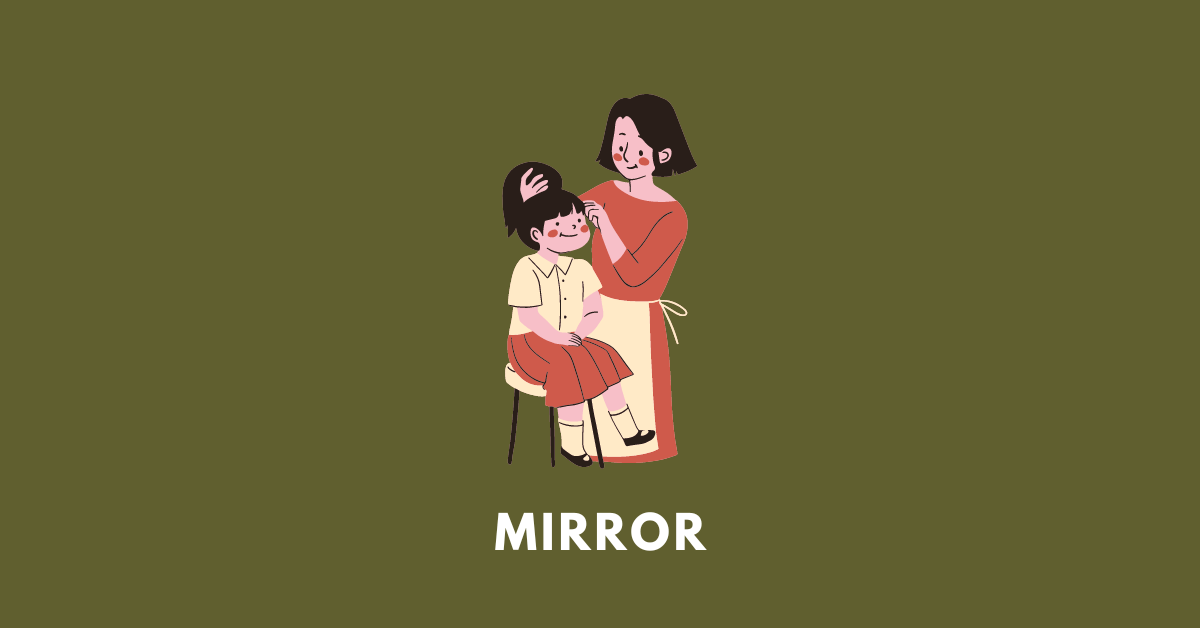
Get notes, questions, answers, solutions, Assam, pdf, and extras of NBSE class 9 English chapter Mirror. However, these notes should be used only for references and additions/modifications should be made as per the requirements.
“Mirror” by Nini Lungalang: The poet feels that although people find a lot of similarities between her mother and her, the mother is not happy about this. However, the poet does not blame her mother. She feels they have learnt to respect the space.
The poet feels this similarity is because the mother has invested a lot of emotions in her. These had begun even before her birth. After she was born, the mother felt more strongly because, before her birth, she was just a nebulous thought. After she was born, the hope became a tangible hope and a palpable joy. The mother saw her in her daydreams, imagining her to be the way she wanted her to be.
This distance between the mother’s dreams and reality evokes anger in the daughter. She wept in frustration. She felt hopeless because she could never be the child of her mother’s dreams. Yet, despite this, there is a lot of her mother in her just as she has a lot in her own daughter.
1. What is the theme of the poem?
A. Parent’s joy of having children B. Mirror reflections C. Resemblance between parents and children D. Parents’ hopes from their children
Answer: C. Resemblance between parents and children
2. What emotions does the mother display as her daughter grows up?
A. Joy, sorrow, hope B. Joy, hope, frustration C. Hope, sorrow, anger D. Love, hope, sorrow
Answer: B. Joy, hope, frustration
3. How has the mother left her stamp on her daughter?
A. Through her aspirations and lost dreams B. Through her physical attributes C. Through her upbringing D. Through all of the above
Answer: D. Through all of the above
4. How does the speaker change from nebulous to tangible thought?
A. Inception to childhood B. The unseen to the seen C. A maiden to a mother D. A daughter to a mother
Answer: A. Inception to childhood
5. Who were the poet’s enemies?
A. The person she never grew up to be B. The person she never wanted to be C. The person she could never dream of becoming D. All of the above
Answer: D. All of the above
1. What were the mother’s feelings before the birth of the poet?
Answer: The mother’s feelings before the birth of the poet were filled with anticipation and hope. She engaged in gentle interactions with the unborn poet, envisioning her in a positive and hopeful light, symbolized by terms like “nebulous wish,” “tangible hope,” and “palpable joy.”
2. How did the feelings change over the years?
Answer: The feelings evolved from hopeful anticipation to a mixture of frustration and disappointment, as evident in the mother’s expectations and comparisons of the poet to a “phantom child.” This led to the poet’s frustration and sense of inadequacy, highlighting a shift from positive anticipation to complex emotional challenges.
3. What do you think has led to this change?
Answer: The change was likely precipitated by the gap between the mother’s expectations and the reality of the poet’s identity and actions. This gap, fueled by the mother’s deep-seated desires and possibly unfulfilled dreams, led to tensions and emotional turmoil, reflecting a clash between expectations and individual identity.
4. Both the mother and daughter are unhappy. Pick words/phrases that reflect this.
Answer: The unhappiness of both mother and daughter is captured in expressions like “unreasoning hatred,” “wild frustration,” and “weep hot and helpless hopeless tears.” These phrases underscore the emotional distress caused by unmet expectations and the struggle with identity and self-acceptance.
Complete the summary of the poem by filling each blank with one word.
The poet feels that although people find a lot of resemblance between her mother and her, the mother is not happy about this. However, the poet does not blame her mother. She feels they have learnt to respect each other’s space. The poet feels this similarity is because the mother has invested a lot of emotions in her. These had begun even before her birth. After she was born, the mother felt more strongly because before her birth she was just a wish.
After she was born, the hope became a reality. The mother saw her in her dreams, imagining her to be the way she wanted to see her.
This distance between the mother’s dreams and reality evokes frustration in the daughter. She wept in despair. She felt hopeless because she could never be the child of her mother’s dreams. Yet despite this, there is a lot of her mother in her, just as her daughter has a lot of her.
1. The poem lacks a regular rhyme and rhythm. It is written in free verse. This helps the poet to express his/her feelings freely without any constraints of metre rhyme scheme etc. Make a list of other poems you have read that are written in free verse.
Answer: Since this question asks for personal experience, a generic response would mention that free verse poems often include works by poets such as Walt Whitman, T.S. Eliot, and Sylvia Plath, who are known for their free verse compositions that explore complex emotions and themes without the constraints of traditional poetic forms.
2. The poem is remarkable for its suggestiveness. Say what the following expressions suggest: nebulous wish, tangible hope, a palpable joy, my invulnerable rival, my little enemy
Answer:
3. Why does the daughter feel that she hasn’t come up to her mother’s expectations? Quote the lines from the poem to support this.
Answer: The daughter feels she hasn’t met her mother’s expectations due to the constant comparison with an idealized version of what her mother wanted her to be. This is supported by lines like “Why aren’t you? Why can’t you? Why do you always…? Why do you never…?” which highlight the mother’s dissatisfaction and the daughter’s inability to meet these expectations.
4. What is the central idea of the poem ‘Mirror’?
Answer: The central idea of the poem ‘Mirror’ revolves around self-reflection, identity, and the complex relationship between mothers and daughters. It explores how expectations, dreams, and the reality of individual identity can affect this relationship, highlighting the emotional depth and the sometimes challenging dynamics within familial bonds.
1. What do you think is the mood of the poet? Why do you think so?
Answer: The mood of the poet seems to be one of melancholy and a sense of unfulfilled expectations. The poem conveys a feeling of sadness and frustration over the gap between the mother’s idealized vision of her daughter and the reality of who the daughter turned out to be.
2. What do these lines suggest?
a) But we’ve learnt, she and I
To live in our own mirror.
Answer: These lines suggest that the mother and daughter have learned to accept their differences and live their lives separately, each in their own way, without trying to conform to the other’s expectations.
b) Because before my birth
I was just a nebulous wish in her.
Answer: These lines suggest that before the daughter’s birth, she was just an abstract desire or wish in the mother’s mind, without any concrete form or reality.
c) She’s stamped herself soul-deep in me
Answer: This line suggests that the mother has indelibly imprinted her own personality, characteristics, and essence onto her daughter, shaping her at a profound level.
3. What does the poet call ‘the phantom child’? Why?
Answer: The poet calls the idealized version of herself that her mother had imagined and hoped for as “the phantom child.” She calls it this because it was an imaginary or unreal version of herself that existed only in her mother’s dreams and expectations, not in reality.
4. Do you think the child of the mother’s dreams and the reality are different? Give reasons.
Answer: Yes, the poem clearly suggests that the child of the mother’s dreams and the reality are different. The poet refers to the “phantom child” and “my little enemy” as being the version of herself that her mother had envisioned and expected, but which she could never live up to. The frustration and sadness expressed in the poem stem from the gap between the mother’s expectations and the reality of who the daughter turned out to be.
5. Before the birth of the daughter, the mother had dreamt of an ideal daughter. How do you think her dreams were different from reality?
Answer: The poem suggests that before the daughter’s birth, the mother had dreamed of an idealized version of her daughter, imagining her to be a certain way (“She’d see me the way she wanted to see me”). However, the reality of the daughter’s personality and character turned out to be different from this idealized vision, leading to disappointment and frustration on the mother’s part.
6. Make a list of five things that your parents expect of you. How many of these do you fulfil? What are the ones that you don’t? Why don’t you?
Answer:
I fulfill the expectations of completing my homework on time and being respectful and polite. The tidiness of my room and helping with household chores are areas where I don’t fully meet expectations, mainly due to forgetfulness or being distracted. Limiting screen time is also a challenge, driven by my interest in digital activities.
7. Read the lines from the poem and answer the questions that follow.
a) I know why I look a lot like my mother
She’s put much of her into my making
After my birth, as well as before;
More after my birth
Because before my birth
I was just a nebulous wish in her.
i) What does the poet look like?
Answer: The poet looks a lot like her mother.
ii) Why does she resemble her mother?
Answer: She resembles her mother because her mother has put a lot of herself into the poet’s making, both before and after her birth.
iii) What words show that the mother was looking forward to having her baby?
Answer: The words “nebulous wish” and “tangible hope” suggest that the mother was eagerly looking forward to having her baby.
iv) What is the mood of the poet?
Answer: The mood of the poet seems to be one of acceptance and understanding of the reasons behind her resemblance to her mother.
b) Sometimes I’d see the phantom child
And it would anger me to unreasoning hatred,
I’d see in the things she’d say
Why aren’t you? Why can’t you?
Why do you always…? Why do you never…?
And I would weep in wild frustration,
Weep hot and helpless, hopeless tears;
Hopeless, because I’d recognize, even then,
My invulnerable rival, my little enemy:
i) Who is the phantom child being referred to?
Answer: The “phantom child” refers to the idealized version of the daughter that the mother had imagined and hoped for, but which the real daughter could never live up to.
ii) How does the mother react to her daughter?
Answer: The poem suggests that the mother reacts with disappointment and frustration towards her daughter, expressing dissatisfaction with the way her daughter is through questions like “Why aren’t you? Why can’t you? Why do you always…? Why do you never…?”
iii) How does the daughter feel?
Answer: The daughter feels a sense of frustration, helplessness, and hopelessness at being unable to meet her mother’s expectations. She weeps “hot and helpless, hopeless tears.”
iv) Who is ‘my little enemy’?
Answer: “My little enemy” refers to the “phantom child” or the idealized version of herself that her mother had envisioned, which the daughter sees as an “invulnerable rival” that she can never live up to.
c) So you see, I look a lot like my mother. She’s stamped herself soul-deep in me With things that are of hers And things that are of hers And did not want to be Yes, I look a lot like my mother And my daughter looks A lot like me.
i) What words show that the daughter is essentially like her mother?
Answer: The words “She’s stamped herself soul-deep in me” and “With things that are of hers” show that the daughter is essentially like her mother, carrying her mother’s imprint and characteristics deep within herself.
ii) How does the poet view these resemblances?
Answer: The poet seems to have a somewhat ambivalent view of these resemblances, suggesting that they include not only positive traits inherited from her mother (“things that are of hers”) but also aspects that she “did not want to be.”
iii) What does the poet say about her daughter?
Answer: The poet says that her daughter looks a lot like her, just as she looks a lot like her mother, suggesting that the cycle of resemblance and inherited traits is continuing into the next generation.
iv) What is the poem about?
Answer: The poem is about the complex relationship between a mother and daughter, the expectations and ideals that a mother may have for her child, and the frustrations and disappointments that can arise when reality differs from those expectations. It explores the themes of identity, inheritance, and the generational transfer of traits and characteristics.
1. What does the poet say is the mother’s initial feeling towards the daughter before her birth?
A. A palpable joy B. A nebulous wish C. A tangible hope D. None of the above
Answer: B. A nebulous wish
2. According to the poem, how did the mother’s feelings change after the daughter’s birth?
A. From joy to sorrow B. From hope to frustration C. From a nebulous wish to a tangible hope and then a palpable joy D. From love to anger
Answer: C. From a nebulous wish to a tangible hope and then a palpable joy
3. What does the phrase “she’d stroke me gently through her flesh” suggest?
A. The mother’s physical affection towards her daughter B. The mother’s emotional bond with her daughter C. The mother’s nurturing of her daughter while she was still in the womb D. All of the above
Answer: D. All of the above
4. What does the phrase “my invulnerable rival, my little enemy” refer to?
A. The daughter’s actual rival B. The daughter’s younger sibling C. The ideal child the mother had imagined and the reality of her daughter D. The mother’s unrealistic expectations from the daughter
Answer: C. The ideal child the mother had imagined and the reality of her daughter
5. What does the line “What I had never been, And could not hope to be, And did not want to be” suggest?
A. The daughter’s inability to meet her mother’s expectations B. The daughter’s acceptance of her true self C. The daughter’s disappointment with herself D. Both A and B
Answer: D. Both A and B
6. What does the phrase “She’s stamped herself soul-deep in me” suggest?
A. The daughter’s physical resemblance to her mother B. The daughter’s personality traits inherited from her mother C. The daughter’s emotional connection with her mother D. All of the above
Answer: D. All of the above
7. What does the line “And my daughter looks A lot like me” imply?
A. The cycle of resemblance and expectations continues across generations B. The daughter has inherited physical traits from the poet C. The daughter has inherited personality traits from the poet D. All of the above
Answer: D. All of the above
8. Which of the following best describes the central idea of the poem?
A. The generational gap between parents and children B. The unrealistic expectations parents have from their children C. The inherent resemblance between parents and children, both physical and emotional D. Both B and C
Answer: D. Both B and C
9. What does the phrase “she and I To live in our own mirror” suggest?
A. The mother and daughter have accepted their differences B. The mother and daughter have learned to respect each other’s individuality C. The mother and daughter have grown apart D. Both A and B
Answer: D. Both A and B
10. What does the line “I’d see in the things she’d say Why aren’t you? Why can’t you?” indicate?
A. The mother’s disappointment with her daughter B. The mother’s unrealistic expectations from her daughter C. The mother’s criticism of her daughter’s behavior D. All of the above
Answer: D. All of the above
11. What emotion does the phrase “Weep hot and helpless, hopeless tears” convey?
A. Anger B. Sadness C. Frustration D. Both B and C
Answer: D. Both B and C
12. What does the phrase “a tangible hope” refer to?
A. The mother’s hope for a child after conception B. The mother’s hope for her daughter to fulfill her dreams C. The mother’s hope for a better future for her daughter D. The mother’s hope for a healthy pregnancy
Answer: A. The mother’s hope for a child after conception
13. What does the phrase “phantom child” refer to?
A. The daughter’s imaginary friend B. The ideal child the mother had imagined C. The daughter’s younger sibling D. The mother’s unrealistic expectations
Answer: B. The ideal child the mother had imagined
14. What does the line “I was just a nebulous wish in her” suggest?
A. The daughter’s physical presence in the womb B. The mother’s vague desire for a child before conception C. The mother’s uncertainty about having a child D. The daughter’s unclear future before birth
Answer: B. The mother’s vague desire for a child before conception
15. What does the phrase “And things that are of hers And did not want to be” imply?
A. The daughter’s inability to meet her mother’s expectations B. The daughter’s rejection of her mother’s traits C. The mother’s disappointment with her daughter D. Both A and B
Answer: D. Both A and B
1. What does the mother not like?
Answer: The mother does not like when people say that her daughter looks like her.
2. What were the Mother’s feelings before the birth of the poet?
Answer: The mother felt that her daughter was just a nebulous wish, a tangible hope, and a palpable joy before the birth of her daughter.
3. How did the feelings change over the years?
Answer: The mother seemed to be disappointed. Her previous hopes and imaginations about her daughter, which did not come true, appeared to have given way to dissatisfaction over the years.
4. What do you think has led to this change?
Answer: I think the poet did not turn out to be like her mother wanted her to be. Though the mother had her own hopes and desires before the birth of the poet, after her birth, the mother must have realised that her hopes were contradictory to reality. This might have caused disappointment over the years for the mother.
5. How does the poet describe her relationship with her mother?
Answer: The poet says that she and her mother have learned to “live in our own mirror,” suggesting they have accepted their differences and found a way to coexist peacefully.
6. What does the phrase “nebulous wish” refer to?
Answer: The phrase “nebulous wish” refers to the mother’s desire for a child before the poet’s birth, when her hopes were still vague and undefined.
7. What does the phrase “palpable joy” suggest?
Answer: The phrase “palpable joy” suggests that the mother’s happiness and excitement about having a child became tangible and real after the poet’s birth.
8. Why does the poet feel frustration towards her mother?
Answer: The poet feels frustration towards her mother because she recognizes that she can never become the “phantom child” her mother had envisioned and hoped for.
9. What does the phrase “invulnerable rival” refer to?
Answer: The phrase “invulnerable rival” refers to the idealized version of the child that the mother had in her mind, which the poet could never live up to.
10. How does the poet describe the resemblance between herself and her mother?
Answer: The poet describes the resemblance between herself and her mother as the mother having “stamped herself soul-deep” in the poet, suggesting a profound and inescapable connection.
11. What does the poet say about her own daughter’s resemblance to her?
Answer: The poet suggests that her daughter looks “a lot like” her, implying that the cycle of physical and emotional resemblance continues from one generation to the next.
12. How does the poet explore the theme of expectations in the poem?
Answer: The poet explores the theme of expectations through the mother’s dreams and aspirations for her daughter. The mother envisions an idealized version of her child, referred to as the “phantom child,” which the daughter can never live up to. This creates a sense of frustration and disappointment on both sides, highlighting the gap between parental expectations and reality.
13. What role does the concept of “mirror” play in the poem?
Answer: The concept of “mirror” is central to the poem’s exploration of identity and self-perception. The poet suggests that she and her mother have learned to “live in our own mirror,” acknowledging their differences while still recognizing their profound connection. The mirror also symbolizes the way the daughter sees herself reflected in her mother’s expectations and vice versa.
14. How does the poet use vivid imagery to convey the mother’s emotions?
Answer: The poet employs vivid imagery to convey the mother’s emotions throughout the different stages of her daughter’s life. For example, phrases like “nebulous wish,” “tangible hope,” and “palpable joy” depict the mother’s evolving feelings, from initial vague desires to tangible excitement and happiness upon the daughter’s birth.
15. What does the reference to the “phantom child” symbolize?
Answer: The reference to the “phantom child” symbolizes the idealized version of the child that the mother had envisioned and hoped for. This “phantom child” represents the mother’s unrealistic expectations and dreams, which the daughter can never fully embody or become, leading to a sense of disappointment and frustration for both mother and daughter.
16. How does the poem suggest that the cycle of resemblance continues across generations?
Answer: The poem suggests that the cycle of resemblance continues across generations through the final lines: “Yes, I look a lot like my mother / And my daughter looks / A lot like me.” This implies that just as the poet resembles her mother in physical and emotional ways, her daughter will also bear similarities to her, perpetuating the intergenerational connection and the potential for unfulfilled expectations.

Only for registered users
Sir can you also grammar portion
Yes sir
Gud
It’s very helpful thankuu
Thinkful 4 ur outstanding work?
where r the miss out answers?
Can you plz give guestion 5 and 6 from appreciation..
I must say its very thoughtfully written im in my 3rd semester yet i was able to satisfy my professor by giving some of ur answers in my exams. Thank you so much for this thoughtfull web.