Synonyms
More meanings
Tip: select a single word for meaning & synonyms.
Select multiple words normally to copy text.

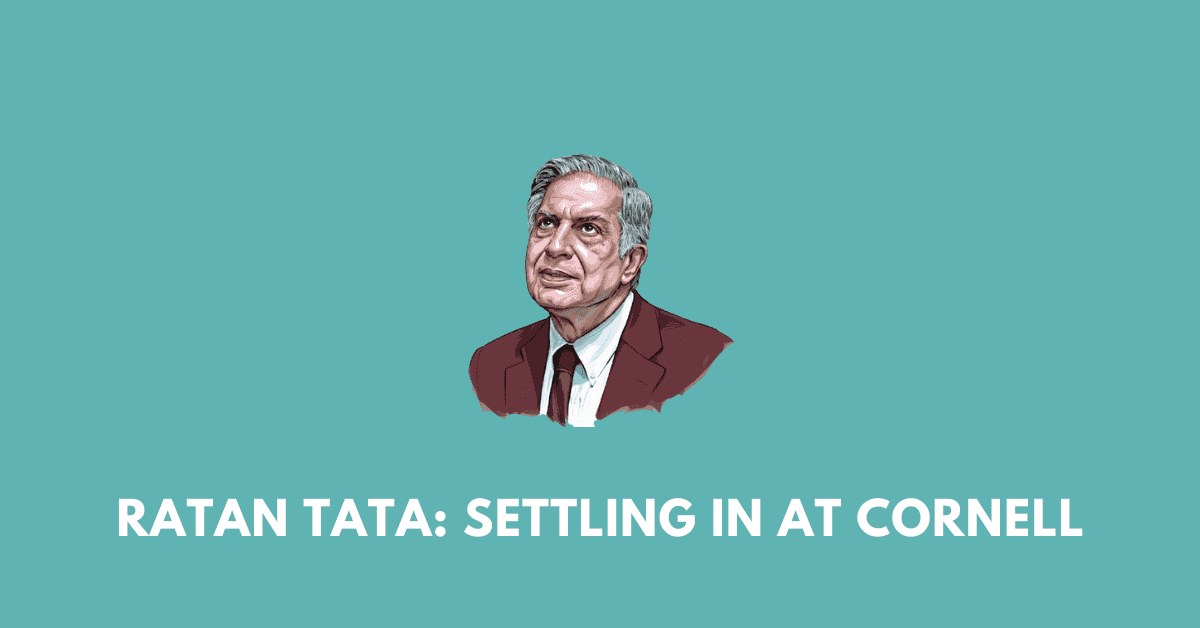
Get summay, questions, answers, solutions, MCQs, notes, extras, PDF, competency-based questions of Charles Lamb’s essay Ratan Tata (A Life-Settling in at Cornell): ISC Class 11 Modern English (Evergreen and Goyal Brothers Workbook), which is part of the present syllabus. These solutions, however, should only be treated as references and can be modified/changed.
Ratan Tata went to Cornell University in 1955 to study mechanical engineering. His first days there were very hard. He faced racial bias because he was from India and had dark skin. Society in the 1950s was not always accepting of people from other places. He also felt homesick and anxious, and the cold winter weather did not help.
Several things made Ratan feel more worried. He lived in a fraternity building, and his room was next to the dorm counsellor, Dick Barger. Ratan felt the first week was scary. Barger said he was a “policeman and helper,” which made Ratan feel like someone was always watching him. A college tradition also made him uneasy. All new students, called freshmen, had to wear red pea caps. Ratan felt this was like showing everyone how new and vulnerable they were. He wrote many letters home for comfort, but replies took weeks to arrive. It was also difficult to call his parents. The building had only one payphone, and there was usually a long line of students waiting to use it.
Ratan’s father, Naval Tata, was aware that his son was having a difficult time. After attending meetings in Geneva, he would fly to the United States to visit Ratan. These visits helped the young man feel less homesick. Naval Tata also met and became friends with Dick Barger. This friendship made the counsellor more sympathetic to Ratan’s situation. As a thank you, Naval Tata invited Barger to visit India.
His friends at Cornell saw him as a true gentleman who was thoughtful and caring. They also saw that he had many different sides. He could be quiet and shy, but he was also brave and determined. One time, some students raided his building with firecrackers and shaving cream. Ratan, who had learned judo, led the defense and helped restore order. He was also very skilled at a hand-slap game and never wanted to lose.
Slowly, Ratan adjusted to his new life. He moved into an apartment with friends and learned to do new things, like going to the grocery store. He never grew to like the cold weather and had a disastrous experience when he tried skiing. He became a full participant in university life and is now a celebrated former student. In 2008, he received the Distinguished Merit Award, becoming only the second person to receive this high honor from the university.
1. The film that Philip Handler had made on Ratan Tata was ………
(a) Alpha Sigma Phi : Tata
(b) Ratan Tata at Cornell
(c) Ratan 59 : The Cornell Story
(d) A Life Story of Ratan Tata
Answer: (c) Ratan 59 : The Cornell Story
2. Select the option that lists the correct relationship between the Assertion and the Reason.
Assertion : Ratan Tata’s anxiety about Barger increased.
Reason: Dick Barger claimed to be a ‘policeman and helper’.
(a) Both the assertion and reason are true and the reason is the correct explanation of the assertion.
(b) The assertion is true but the reason is false.
(c) Both the assertion and the reason are true but the reason is not the correct explanation of the assertion.
(d) The assertion is false but the reason is true.
Answer: (a) Both the assertion and reason are true and the reason is the correct explanation of the assertion.
3. Which of the following lists the causes of Ratan’s feeling anxious.
I. The room assigned on the sixth floor.
II. Students’ opinion that Barger was almost a tyrant.
III. The need for all freshmen to wear red pea caps.
IV. Not being able to write letters to his parents.
V. His lack of interest in studies.
(a) II, III, V
(b) I, II, IV
(c) III, IV, V
(d) II, III
Answer: (d) II, III
4. The writer says “More often than not, there was quite a queue of eager students waiting to talk to their parents or girl friends’. Why?
(a) To tell that the students always felt homesick.
(b) In order to explain why Ratan could not make call to his parents whenever he wanted.
(c) To explain how indisciplined the boys were.
(d) To show that there was only one telephone there.
Answer: (b) In order to explain why Ratan could not make call to his parents whenever he wanted.
5. Which of the following statements is NOT TRUE ?
(a) Ratan was having difficulties in adjusting to the new environment at Cornell.
(b) Ratan’s parents knew about his problems.
(c) Naval Tata regularly visited his son at Cornell.
(d) Barger later became sympathetic towards Ratan.
Answer: (c) Naval Tata regularly visited his son at Cornell.
6. Select the option that correctly lists the character traits of Ratan Tata.
I. intelligent
II. arrogant
III. submissive
IV. inquisitive
V. one dimensional
VI. thoughtful
(a) I, II, IV, V
(b) II, III, V, VI
(c) I, III, VI
(d) I, IV, VI
Answer: (d) I, IV, VI
7. Select the option that shows the correct relationship between statements 1 and 2.
Statement 1 : The society of that time in America (1950) was not very accepting of people of colour.
Statement 2 : Even though Ratan was so well off, people there were biased against him.
(a) 1 is the result of 2
(b) 2 is independent of I
(c) 2 is an example of 1
(d) 1 is in contradiction of 2
Answer: (c) 2 is an example of 1
8. Barger came to India and stayed as a guest of the Tata family in the year ….
(a) 1964
(b) 1956
(c) 1966
(d) 1950
Answer: (b) 1956
9. The attitude of Ratan’s classmate Bob Lurcott in showering high praises on him can be termed as …………
(a) appreciative
(b) full of sycophancy
(c) indifferent
(d) mocking
Answer: (a) appreciative
10. What did the incident at Rockledge, where Ratan stayed reveal about him when the boys came to attack with cherry bomb fire crackers ?
(a) Ratan was a timid boy
(b) He was quite strong and violent
(c) He had experience of martial arts
(d) Ratan was quarrelsome
Answer: (c) He had experience of martial arts
11. Select the option that uses the word ‘reach’ in the same sense as it has been used in, “But as replies took two weeks to reach, they brought him delayed relief “.
(a) My friends reach their school at 9 a.m. everyday.
(b) Raman tried to reach the cup on the shelf but could not.
(c) Our business is to reach a new record in its sales.
(d) We tried to reach Jimmi on the phone but he did not answer.
Answer: (a) My friends reach their school at 9 a.m. everyday.
12. The game that Ratan and his friends used to play in the drafting room was …………
(a) slap – slap
(b) hand – slap
(c) close the gap
(d) Alpha Sigma Phi
Answer: (b) hand – slap
13. When Ken Keoughan asked Ratan to accompany him to the grocery store, …………
(a) it made Ratan very happy
(b) Ratan felt shocked
(c) Ratan slapped him
(d) Ratan was surprised
Answer: (d) Ratan was surprised
14. Ratan had dislike for …………
(a) cold weather
(b) hot weather
(c) coffee
(d) tea
Answer: (a) cold weather
15. Which of the following statements is NOT TRUE about Ratan Tata ?
(a) He got the Distinguished Merit Award in 2008.
(b) Ratan was the only one to get this award.
(c) He was the second person to get this award.
(d) Ratan got mixed up in the fraternity culture of Cornell University.
Answer: (b) Ratan was the only one to get this award.
16. The sentence ‘The letters provided no consolation when he was gripped by bouts of anxiety’, uses the phrase ’bouts of anxiety’. What does the word ’bouts’ here refer to ?
(a) causes of anxiety
(b) consequences of anxiety
(c) spells of anxiety
(d) symptoms of anxiety
Answer: (c) spells of anxiety
17. Barger’s opinion about India was that it was a ‘country situated half the world away’. It indicates that …………
(a) Barger knew much about India
(b) Barger disliked India
(c) Barger did not know much about India
(d) Barger had a keen desire to visit this far off place
Answer: (c) Barger did not know much about India
18. The write-up on Ratan Tata reveals that his friends …………
(a) always wanted to follow his footsteps
(b) considered him very rich and haughty
(c) praised him for being the son of Naval Tata
(d) appreciated him genuinely
Answer: (d) appreciated him genuinely
19. Ratan’s anxiety and homesickness at the initial stages of his stay at a place away from his home indicate that …………
(a) he was totally different from other ordinary boys
(b) Ratan was like other boys of his age
(c) he did not realize the value of familial love
(d) he was a frightened and over-sensitive child
Answer: (b) Ratan was like other boys of his age
20. The writer says that Ratan had spent more than a year at Riverdale before coming to Cornell University. Ratan’s earlier experience was …………
(a) better than his experience at Cornell
(b) worse than his experience at Cornell
(c) better than that of his life in India
(d) the same as it was at Cornell
Answer: (a) better than his experience at Cornell
1. The film ‘Ratan 59 : The Cornell Story’ is supposed to have authentic information about Ratan’s college life because ______
Answer: its creator, Philip Handler, was Ratan’s junior who had conducted extensive research on Ratan’s life at Cornell.
2. Despite Ratan’s ‘great background’, people in America were biased against him because ______
Answer: he was an ‘Indian’ with ‘dark skin’, and the American society of the 1950s was not very accepting of people of color.
3. The location of Ratan’s room in the sixth block was also a cause for his anxiety because ______
Answer: it was next to the room of the dorm counsellor, Dick Barger, who was reputed to be a tyrant, which made Ratan feel uncomfortably and constantly watched.
4. The wearing of red pea caps with the year of enrolment written on them was a bit unnerving because ______
Answer: it felt like it was displaying the vulnerability of the freshmen on their foreheads for everyone to see.
5. All freshmen feel homesick initially, particularly when they are staying away from home for the first time. But Ratan’s feeling homesick was not the result of his staying away from home for the first time when he came to Cornell University because ______
Answer: he had already spent more than a year away from home at Riverdale; his homesickness at Cornell was due to the difficult adjustments he had to make in the large and impersonal university environment.
6. Ratan could not call home at will because ______
Answer: there was only one payphone available in the fraternity building, and there was almost always a long queue of students waiting to use it.
7. Making long conversations on the phone was not as difficult for Ratan as for most of other students because ______
Answer: he needed to call India at night due to the time difference, and at that late hour, the rush for the payphone was comparatively less.
8. The visits of Ratan’s father to Geneva also helped Ratan in fighting homesickness because ______
Answer: after attending his meetings in Geneva, his father would occasionally fly to the US to meet him.
9. Naval Tata invited Barger to visit India as a guest of the family because ______
Answer: he wanted to express his gratitude to Barger, who had become his friend and had started giving Ratan more attention and sympathy.
10. After showing reluctance to go to the grocery store, Ratan agreed to accompany Ken Keoughan to the grocery store because ______
Answer: his friend Ken startled him by stating that if he did not go, he would not have anything to eat.
1. What does the writer say about the biases against the coloured people in Cornell ?
Answer: The writer explains that Ratan Tata faced significant difficulties during his initial days at Cornell University due to racial biases prevalent in the 1950s. As Ratan was an Indian with dark skin, he encountered a lot of problems. The society at that time was not very accepting of people of colour. Even though Ratan came from a great background, was well off, and cultured, people were still biased against him. His acceptance into the Alpha Sigma Phi fraternity was secured only after a member stood up for him, assuring the others that he was a great guy, which ultimately swayed the other fraternity brothers in his favour.
2. Who has made a film on Ratan Tata ? What is the focus of the film? Describe the efforts that the film maker made for making the film.
Answer: The film about Ratan Tata was made by Philip Handler, who was Ratan’s junior from the BArch 1964 batch at Cornell.
The film is titled Ratan’ 59: The Cornell Story. Its focus is on narrating a seldom-told account of the difficulties that Ratan faced during his initial days at the university.
To make the film, Philip Handler had extensively researched Ratan’s college life. This effort allowed him to provide an authentic account of Ratan’s early experiences and challenges.
3. Describe the way Dick Barger’s presence affects Ratan Tata during the early stage of his stay in a room in the sixth block.
Answer: Dick Barger’s presence greatly increased Ratan Tata’s anxiety during the early part of his stay at Cornell. Ratan was assigned a room in the sixth block of the Rockledge fraternity building, which was right next to the room of the dorm counsellor, Dick Barger. Ratan found his first week to be scary, and his anxiety was not eased by Barger’s public stance of being both a policeman and a helper. Some students also said that Barger was a tyrant, which only worsened young Ratan’s fears. The constant and uncomfortable feeling that he was always being watched by his neighbour, who was also his counsellor, added to his distress.
4. Who was Dick Barger? What impression do you form about his role in Ratan’s life?
Answer: Dick Barger was the dorm counsellor in the Rockledge fraternity building where Ratan Tata stayed during his initial years at Cornell University.
Initially, Barger’s role in Ratan’s life was a source of anxiety. He was perceived as a tyrant and a policeman, and his proximity made Ratan feel constantly watched and uncomfortable. However, his role changed significantly after he met Ratan’s father, Naval Tata. They became good friends, which led to Barger giving Ratan more attention and becoming sympathetic to his situation of being far from home. This friendship culminated in Barger visiting India as a guest of the Tata family, showing a complete transformation from an intimidating figure to a friend.
5. What was the tradition that Ratan Tata found unnerving? Why? What added to this tradition to make the time of Ratan’s stay there ‘difficult days’?
Answer: The tradition that Ratan Tata found unnerving at Cornell was the requirement for all freshmen to wear red pea caps with their year of enrolment written on them.
He found this tradition unnerving because he felt it was like displaying the vulnerability of freshmen on their foreheads for everyone to see. It was an alien tradition that worsened his anxiety.
What added to this tradition to make his stay difficult was a sense of homesickness, which most freshmen experience when they are away from home for the first time. Although Ratan had previously spent a year at Riverdale, his days at Cornell were very difficult because he had to make many new adjustments. Furthermore, unlike Riverdale, the university was very large, which imparted a sense of impersonalism to the environment, compounding his feelings of isolation and making his adjustment period challenging.
6. What did Ratan do during the time he suffered anxiety for being homesick? Did it help? What else did he do and with what result?
Answer: During the time he suffered from anxiety and homesickness, Ratan’s insecurity compelled him to write more letters home than at any other time in his life.
This did not provide the immediate help he needed. The replies to his letters took weeks to reach him, so any relief they brought was delayed and not available when he was in the midst of his anxiety. The letters offered no real consolation during his bouts of anxiety.
As letters were not effective, Ratan turned to the telephone, which he felt was the only answer at such times. However, there was only one payphone on the ground floor of the fraternity building. More often than not, there was a long queue of students waiting to talk to their parents or girlfriends. This made it very difficult for Ratan to call home whenever he wanted or to have long conversations.
7. Who was Naval Tata ? How did his visits to Geneva help Ratan in the U.S. ?
Answer: Naval Tata was Ratan Tata’s father. He was closely associated with the International Labour Organization and regularly visited Geneva to attend its meetings.
His visits to Geneva indirectly helped Ratan in the U.S. in two significant ways. First, after his meetings in Geneva, Naval Tata would occasionally fly to the US to meet Ratan. These visits were very helpful for the barely eighteen-year-old Ratan in fighting his homesickness. Second, during one of these visits, Naval Tata met the dorm counsellor, Dick Barger, and they became good friends. This friendship led Barger to give Ratan a little more attention and to be more sympathetic towards his situation, which eased Ratan’s difficulties at Cornell.
8. What did Ratan’s friends say about him when they recollect their fiftieth anniversary reunion at Cornell ?
Answer: When Ratan’s friends shared their memories of him during their fiftieth anniversary reunion at Cornell in 2009, they revealed interesting facets of his personality. Harry Skilton, a Cornellian, summed up the views of the Alpha Sigma Phi fraternity by saying that Ratan is a gentleman and a pleasure to know. He elaborated that Ratan is not one-dimensional and that there are different Ratans: the take-no-quarters Ratan, the intrepid Ratan, the mischievous Ratan, and the mystical Ratan.
Most of his fraternity brothers also remembered how the normally taciturn and shy gentleman could be very different when confronted with a dangerous situation. They recalled an incident where pledges launched a midnight raid on Rockledge, spraying walls with shaving cream. Ratan, described as agile and determined, led the counterattack. His batchmate, Joe Santamaria, remembered that Ratan, who had learned judo, was everywhere, wrestling down pledges and helping to restore order.
9. What do you learn about Ratan as a player of the game ‘hand-slap’? Which quality of his character prominently comes out from his attitude in playing this game?
Answer: As a player of the hand-slap game, Ratan was famous amongst his classmates for his adeptness. He and his friends played this game during breaks from long hours in the drafting rooms at Sibley. He was described as having incredibly good reflexes and would beat everybody else. He was considered unbeatable and would often leave his friends with sore hands.
The quality of his character that prominently comes out from his attitude in playing this game is his strong competitive spirit and determination to win. It revealed a side of his personality where he made sure he won. As his friend Handler revealed, he never wanted to lose. This shows a deep-seated desire to succeed and a refusal to accept defeat, even in a casual game.
10. How can you say that he was not ‘single – dimensional’?
Answer: One can say Ratan Tata was not single-dimensional based on the varied descriptions provided by his friends and the different aspects of his personality revealed through various incidents. His friend Harry Skilton explicitly stated that Ratan is not one-dimensional, explaining that there are multiple versions of him: the take-no-quarters Ratan, the intrepid Ratan, the mischievous Ratan, and the mystical Ratan.
This multidimensional nature is evident in the contrast between his usual demeanor and his actions under pressure. He was known as a thorough gentleman—thoughtful, sensitive, and respectful. However, this shy gentleman transformed into an agile and determined fighter who used his judo skills to lead a counterattack during a raid on his building. Furthermore, while one classmate described him as fun-loving and challenge-seeking, another noted his controlled, gentlemanly upbringing. His ability to adapt from a privileged life, where he did not go to grocery stores, to becoming an all-American kid further illustrates his complex and multifaceted character.
1. ‘The writer has given objective views about Ratan Tata instead of being subjective while writing the excerpt’. Justify.
Answer: The writer presents an objective account of Ratan Tata’s early years at Cornell by employing several effective narrative techniques. The use of a third-person narrator is a key element that provides objectivity, allowing the story to be told from a detached perspective rather than through the author’s personal feelings or interpretations. This approach is suitable for a biography, where factual reporting is essential.
To further ensure objectivity, the writer includes the opinions and recollections of various people who knew Ratan Tata during that time. The narrative is enriched with information from Philip Handler, who made a film about Ratan’s college life; Dick Barger, the dorm counsellor; and classmates like Bob Lurcott, Harry Skilton, and Joe Santamaria. By incorporating these external voices, the author saves the narrative from being a purely subjective account and presents a more rounded view of Ratan’s personality and experiences. This inclusion of details from others is an attempt to overcome the limitations of a single narrator’s perspective.
The writer also grounds the narrative in factual details, which lends authenticity to the account. The mention of specific dates, such as Ratan joining Cornell in September 1955 or Barger’s visit to India in 1956, along with names and specific events, reinforces the biographical nature of the text. The tone is consistently matter-of-fact, avoiding emotional language, exclamations, or rhetorical questions. The descriptions and the reported opinions of Ratan’s friends are presented straightforwardly, maintaining a factual tone throughout the excerpt. These elements together create a well-structured and objective piece of writing.
2. What were the causes of Ratan’s anxiety and what efforts did he make to overcome it?
Answer: Ratan Tata’s anxiety during his initial days at Cornell University stemmed from several sources. As an Indian with dark skin in the 1950s, he faced racial biases from a society that was not very accepting of people of colour. This was compounded by the presence of his dorm counsellor, Dick Barger, whose room was next to his. Barger’s self-proclaimed role as both a ‘policeman and helper’, along with the opinion of some students that he was a tyrant, increased young Ratan’s anxiety. The constant and uncomfortable feeling of being watched by his neighbour and counsellor made his first week particularly ‘scary’.
Furthermore, Ratan found the college traditions alien and unnerving. The requirement for all freshmen to wear red pea caps with their year of enrolment written on them made him feel as though his vulnerability was on public display. Like most freshmen away from home for the first time, he also suffered from homesickness. This feeling was intensified by the large, impersonal environment of the university, which was a stark contrast to his previous school. The harsh cold weather also added to his misery.
To cope with his insecurity and anxiety, Ratan wrote more letters home than at any other time in his life. However, since replies took weeks to arrive, they provided only delayed relief and were of little help during his acute bouts of anxiety. The telephone was a more immediate option, but with only one payphone available for all the students in the fraternity building, there was often a long queue. He found it easier to call at night to account for the time difference with India when the rush was less. A significant source of comfort came from the visits of his father, Naval Tata, who would fly to the US to meet him after attending meetings in Geneva. These visits helped the eighteen-year-old fight his homesickness. Ultimately, Ratan overcame his initial struggles by fully immersing himself in the university’s activities. He melted into the fraternity culture, adapted to new customs like going to the grocery store, and built strong friendships, which led to his transformation and eventual recognition as a distinguished alumnus.
3. Describe the atmosphere at the Cornell University as presented in the excerpt. How did Ratan feel there?
Answer: The atmosphere at Cornell University in the 1950s, as depicted in the excerpt, was a mix of challenging, intimidating, and vibrant elements. For a foreign student like Ratan Tata, it was initially quite hostile. The society at the time was not very accepting of people of colour, and he faced racial biases. The university itself was large and had an impersonal feel, which could be isolating for a new student. There were also alien traditions that added to the anxiety of freshmen. For instance, the practice of wearing red pea caps was unnerving as it publicly marked the newcomers and their vulnerability.
The social life was heavily influenced by the fraternity culture. This involved a sense of brotherhood and shared activities, but it could also be boisterous and confrontational, as seen in the midnight raid on the Rockledge building. This incident, involving firecrackers and shaving cream, led to a ‘monumental scuffle’, showing a rowdier side to student life. At the same time, there was a spirit of fun and competition, exemplified by the hand-slap game that students played during breaks from their long hours of study. The physical environment was also harsh, with cold weather that made daily life, including attending classes in wet shoes, a miserable experience.
In this multifaceted atmosphere, Ratan initially felt anxious, insecure, and homesick. The first week was ‘scary’ for him, and the constant feeling of being watched by his dorm counsellor made him uncomfortable. The alien traditions worsened his anxiety, and the impersonal nature of the large university made his adjustment difficult. However, as time went on, his feelings changed. He gradually adapted and found his place within the university. He embraced the fraternity culture, participated in its activities, and formed close friendships. Despite his dislike for the cold weather, he eventually melted into the life at Cornell, transforming from an anxious newcomer into a celebrated and distinguished member of the university community.
4. What impression do you form of Ratan from reading of this excerpt? Bring out the textual evidence to support your views.
Answer: From this excerpt, I form the impression that Ratan Tata is a multidimensional individual who evolved from a shy and anxious young student into a resilient, respected, and determined man. Initially, he appears sensitive and vulnerable. He suffered from homesickness and insecurity upon arriving at Cornell, which made him write ‘more letters home’ than ever before. His anxiety was heightened by the presence of his dorm counsellor, Dick Barger, and the alienating college traditions.
However, the excerpt clearly shows his resilience and adaptability. Despite facing racial bias and personal insecurities, he did not remain withdrawn. Instead, he ‘melted into the fraternity culture’ and participated in all its activities, eventually becoming a celebrated member. His willingness to accompany his friend to the grocery store, despite his initial reluctance, marked a step in his transformation into an ‘all-American kid’, showing his ability to adjust to new circumstances.
The text portrays him as a thorough gentleman. His friends described him as a ‘thoughtful guy’ who was ‘sensitive to the feeling of others’ and an ‘intelligent, respectful, friendly, gracious and caring person’. Yet, he was not ‘one dimensional’. His friend Harry Skilton noted that there were different sides to him: the ‘take-no-quarters Ratan’, the ‘intrepid Ratan’, and the ‘mischievous Ratan’. This complexity is evident in the incident at Rockledge. When his building was raided, the normally taciturn and shy gentleman became an ‘agile and determined’ leader of the counterattack, using his judo skills to wrestle down pledges and restore order. This reveals a courageous and tough side to his personality. Furthermore, his prowess at the hand-slap game, where he was ‘unbeatable’ and ‘never wanted to lose’, highlights a strong competitive spirit and a determination to win.
5. What does the writer indicate about Ratan’s parents? What was Barger’s opinion about Ratan’s family? Does their behaviour have any direct or indirect impact on Ratan’s stay at Cornell?
Answer: The writer indicates that Ratan’s parents were aware of his difficulties in adjusting to his new life at Cornell and were very supportive. His father, Naval Tata, in particular, played an active role in helping his son. He regularly visited Geneva for meetings of the International Labour Organization and would make it a point to fly to the United States afterwards to meet Ratan. These visits were a great comfort to the young student and helped him fight his homesickness. Naval Tata also took the initiative to meet his son’s dorm counsellor, Dick Barger, and the two became good friends. The family’s hospitality is also highlighted; as a token of gratitude, Naval Tata invited Barger to visit India as a guest of the family.
Dick Barger’s opinion of the Tata family was extremely positive. During his visit to India in 1956 with two friends, he stayed at Tata House and was treated as a ‘preferred guest’. He was particularly impressed by Lady Tata, whom he described as one of the ‘most glorious, lovely women’ he had ever met. His experience clearly left him with a very high regard for the family’s graciousness and hospitality.
The behaviour of Ratan’s parents had both a direct and an indirect impact on his stay at Cornell. The direct impact came from Naval Tata’s visits, which provided emotional support and helped alleviate Ratan’s feelings of isolation and homesickness. The indirect impact was perhaps even more significant. By befriending Dick Barger, Naval Tata changed the dynamic between his son and the counsellor. This friendship led to Barger giving Ratan ‘a little more attention’ and becoming sympathetic to his situation. This change in attitude from the counsellor, who was initially a source of anxiety for Ratan, would have made his living environment much more comfortable and undoubtedly eased his process of settling in at the university.
1. What was the primary reason Ratan had difficulty settling in at Cornell?
(a) He found the coursework too difficult.
(b) He was not fluent in English.
(c) He faced racial discrimination due to his dark skin.
(d) He disliked the climate of the university.
Answer: (c) He faced racial discrimination due to his dark skin.
2. What does the constant surveillance by the dorm counsellor Dick Barger symbolise in Ratan’s experience?
(a) A protective mentor figure.
(b) A source of additional anxiety.
(c) A representation of university regulations.
(d) A cultural misunderstanding.
Answer: (b) A source of additional anxiety.
3. Why did Ratan feel even more alienated by the freshman tradition of wearing red pea caps?
(a) It made him stand out more as an outsider.
(b) The colour of the cap reminded him of home.
(c) He did not like the design of the cap.
(d) He was allergic to the material.
Answer: (a) It made him stand out more as an outsider.
4. What does Ratan’s struggle with homesickness and delayed letters suggest about the immigrant experience?
(a) Immigrants often adjust quickly to new environments.
(b) Communication barriers can intensify feelings of isolation.
(c) College life eliminates feelings of loneliness.
(d) Technology always helps in staying connected.
Answer: (b) Communication barriers can intensify feelings of isolation.
5. Which of the following best describes the impact of Ratan’s father, Naval Tata, visiting him at Cornell?
(a) It increased his longing to return to India.
(b) It provided him with moral and emotional support.
(c) It worsened his homesickness.
(d) It made him resent his family’s expectations.
Answer: (b) It provided him with moral and emotional support.
6. Why did Ratan’s classmates describe him as both a gentleman and mischievous?
(a) He was unpredictable in his behaviour.
(b) He had a balanced personality, being both refined and adventurous.
(c) He struggled with a dual identity.
(d) He only behaved mischievously when he was alone.
Answer: (b) He had a balanced personality, being both refined and adventurous.
7. Why did Ratan write more letters home even though replies took a long time to arrive?
(a) He wanted to practice his writing skills.
(b) He felt more connected to his family by writing.
(c) He had a lot of free time and needed something to do.
(d) He wanted to show his friends that he still had ties to India.
Answer: (b) He felt more connected to his family by writing.
8. Why was Ratan surprised when his friend asked him to go grocery shopping?
(a) He had never shopped for groceries before.
(b) He didn’t know where the store was.
(c) He thought Americans didn’t go shopping.
(d) He was too busy to go.
Answer: (a) He had never shopped for groceries before.
9. What does Ratan’s experience with homesickness and anxiety reveal about the experiences of immigrant students?
(a) Moving to a new country is always fun and exciting.
(b) Even successful immigrants struggle with isolation and cultural differences.
(c) Immigrants never truly adapt to a new country.
(d) Writing letters home makes all homesickness go away.
Answer: (b) Even successful immigrants struggle with isolation and cultural differences.
10. Read the two statements below from the short story “Settling in at Cornell.” Select the appropriate relation between the two.
Statement-A: Ratan initially struggled to fit in at Cornell due to racial bias and cultural differences.
Statement-B: Ratan’s fraternity brothers eventually accepted him after one member vouched for his character.
(a) Statement-B is similar to Statement-A.
(b) Statement-B is a condition for Statement-A.
(c) Statement-B is the reason for Statement-A.
(d) Statement-B is the result of Statement-A.
Answer: (d) Statement-B is the result of Statement-A.
11. Read the two statements below from the short story “Settling in at Cornell.” Select the appropriate relation between the two.
Statement-A: Ratan was hesitant to go grocery shopping with his friend.
Statement-B: He had never gone grocery shopping before and did not know what to do.
(a) Statement B is similar to Statement A.
(b) Statement B is a condition for Statement A.
(c) Statement B is the reason for Statement A.
(d) Statement B is the result of Statement A.
Answer: (c) Statement B is the reason for Statement A.
12. Which of the following best represents a central theme of the story?
(a) The impact of racial and cultural bias on personal growth.
(b) The joy of exploring new opportunities in life.
(c) The unimportance of one’s background in success.
(d) The idea that friendship can overcome all challenges.
Answer: (a) The impact of racial and cultural bias on personal growth.
13. How would you describe the overall tone of the story?
(a) Humorous and light-hearted.
(b) Nostalgic and reflective.
(c) Aggressive and confrontational.
(d) Detached and emotionless.
Answer: (b) Nostalgic and reflective.
1. Ratan felt uncomfortable at Cornell because ______
Answer: he faced racial bias, homesickness, an alienating culture, and a strict dorm counsellor.
2. Ratan was hesitant to go grocery shopping with his friend because ______
Answer: of his privileged upbringing, as he had never done it before and considered it an unfamiliar task.
3. Ratan initially disliked wearing the freshman red pea cap because ______
Answer: he felt it was like publicly displaying the vulnerability of freshmen for everyone to see.
4. Ratan’s feeling of isolation increased because ______
Answer: of the large, impersonal university environment and the communication barriers with his family, as letters took weeks to arrive and the single payphone was always busy.
5. Ratan’s father’s visit to Cornell was important because ______
Answer: it provided him with much-needed emotional support and helped him fight his homesickness.
6. Ratan’s classmates found him both reserved and mischievous because ______
Answer: he had a multi-faceted personality; he was a ‘thorough gentleman’ but also had a fun-loving, competitive, and adventurous side, as seen during the fraternity raid.
7. The dorm counsellor, Dick Barger, closely monitored Ratan because ______
Answer: it was part of his self-declared role as both a ‘policeman and helper’, and Ratan felt this constant surveillance acutely as Barger was also his next-door neighbor.
8. Ratan struggled with homesickness more than his classmates because ______
Answer: he was from India, a country half a world away, which made it impossible for him to visit home except during long holidays.
9. Ratan’s skiing experience was symbolic of his time at Cornell because ______
Answer: it represented his attempts to adapt to a new culture, facing initial failures and discomfort but ultimately embracing new experiences as part of his personal growth.
10. Ratan was anxious when he arrived at Cornell because ______
Answer: he was in a new country facing an alien culture, racial bias, unfamiliar traditions, and an intimidating dorm counsellor.
11. Ratan eventually gained acceptance at his fraternity because ______
Answer: a fellow member vouched for his good character, and over time, his own respectful personality and active participation in fraternity activities earned him the respect of his brothers.
12. Ratan’s recognition as a distinguished alumnus is significant because ______
Answer: it highlights his incredible journey from a struggling, homesick student facing cultural and racial challenges to a highly respected figure, underscoring his resilience and eventual success.
1. Why did Ratan struggle to adjust to life at Cornell? Write the answer in about 100-150 words, incorporating the following details.
(a) Cultural and racial challenges.
(b) Feeling of being constantly monitored.
Answer: Ratan struggled to adjust to life at Cornell due to significant cultural and racial challenges. In the 1950s, American society was not very accepting of people of colour, and despite his wealthy and cultured background, he faced racial bias for being an Indian with dark skin. The traditions of the college were also alien to him, such as the requirement for all freshmen to wear red pea caps, which he found unnerving as it was like displaying their vulnerability. The large and impersonal environment of the university further heightened his sense of alienation.
Adding to his difficulties was the constant feeling of being monitored. His room in the Rockledge fraternity building was next to that of the dorm counsellor, Dick Barger. Barger had a public stance of being both a policeman and a helper, and some considered him a tyrant. This proximity to his counsellor, who seemed to be always watching him, was uncomfortable and increased the young Tata’s anxiety, making his initial days at Cornell very difficult.
2. How did Ratan’s father support him during his time at Cornell? Write the answer in about 100-150 words, incorporating the following details.
(a) Emotional and moral support.
(b) His visit and reassurance to Ratan.
Answer: Ratan’s father, Naval Tata, provided essential emotional and moral support during his son’s difficult adjustment period at Cornell. Being keenly aware of Ratan’s struggles with homesickness and the new environment, Naval Tata made it a point to visit him. He would often fly to the US to meet Ratan after attending his meetings in Geneva for the International Labour Organization.
These visits were a great source of reassurance for the young Ratan, helping the barely eighteen-year-old fight his homesickness. Naval Tata also played an active role in improving his son’s situation by building relationships at the university. For instance, he met and befriended the dorm counsellor, Dick Barger, which led to Barger giving Ratan more attention and support. Through these actions, Naval Tata showed himself to be a caring and dedicated father who guided and nurtured his son’s journey.
3. What was the significance of Ratan’s red freshman cap? Write the answer in about 100-150 words, incorporating the following details.
(a) A tradition that symbolized belonging.
(b) Why it made him feel even more isolated.
Answer: The red freshman cap at Cornell was part of a college tradition that likely symbolized belonging and initiation into the university community for new students. Such traditions are often intended to foster a sense of unity among the incoming class.
However, for Ratan, this tradition had the opposite effect, making him feel even more isolated and anxious. As the traditions of the college were alien to him, he found the requirement to wear the red pea cap unnerving. He felt that it was like displaying the vulnerability of freshmen on their foreheads for everyone to see. This public display of his inexperience and nervousness made him feel exposed and uncomfortable, worsening his anxiety and heightening his sense of alienation in an already unfamiliar environment.
4. Why did Ratan hesitate to go grocery shopping with his friend? Write the answer in about 100-150 words, incorporating the following details.
(a) Lack of experience in everyday tasks.
(b) His privileged background and how it shaped his habits.
Answer: Ratan hesitated to go grocery shopping with his friend Ken Keoughan primarily due to a complete lack of experience in such everyday tasks. When his friend asked him to come along to buy provisions, Ratan was so surprised that he looked at Ken as if he had gone nuts and stated that he did not go to grocery stores.
This hesitation was a direct result of his privileged background, which had shaped his habits and shielded him from mundane chores. Coming from a family where such tasks were likely handled by staff, the concept of shopping for his own food was entirely foreign to him. His initial refusal and surprise show the significant adjustment he had to make from his past life to the self-reliant lifestyle of a student in America. The incident was a step in his transformation, as he was startled into joining his friend when faced with the reality of having nothing to eat.
5. How did Ratan’s classmates’ perception of him change over time? Write the answer in about 100-150 words, incorporating the following details. (a) Initial stereotypes and misjudgment. (b) His personal qualities that earned their respect.
Answer: Initially, Ratan’s classmates and fraternity brothers perceived him through the lens of stereotypes and misjudgment common in 1950s America. As an Indian with dark skin, he faced bias from people who were not very accepting of people of colour. It took one member of his fraternity to stand up for him and vouch for his character to sway the opinions of the other biased members.
Over time, this perception changed as his personal qualities earned their respect and admiration. He became known as a thorough gentleman who was thoughtful, intelligent, respectful, and caring. His classmates also saw his fun-loving and adventurous side, describing him as inquisitive and challenge-seeking. They discovered he was not one-dimensional; the shy gentleman could become agile and determined in a crisis, using his judo skills to defend his friends. His competitive spirit, evident in his unbeatable skill at the hand-slap game, further revealed a personality that never wanted to lose, solidifying his place as a respected member of their community.
6. What role did Dick Barger play in Ratan’s life at Cornell? Write the answer in about 100-150 words, incorporating the following details.
(a) His role as a strict yet watchful dorm counsellor.
(b) How Ratan perceived his presence.
Answer: Dick Barger, the dorm counsellor at Cornell, initially was a strict and watchful authority figure in Ratan’s life. He took pride in being both a policeman and a helper, and some students considered him a tyrant. This strict persona, combined with his constant watchfulness, was a source of great anxiety for Ratan in his early days.
Ratan perceived Barger’s presence as scary and uncomfortable. Living next door to the counsellor created a constant feeling of being watched, which only increased his anxiety. However, this perception evolved after Barger met Ratan’s father, Naval Tata. Barger became more sympathetic to Ratan’s situation and gave him more attention. He changed from a source of discomfort into a supportive mentor who helped Ratan adjust to college life, eventually becoming a good friend to the Tata family.
7. How did Ratan’s skiing experience symbolise his struggles at Cornell? Write the answer in about 100-150 words, incorporating the following details.
(a) Struggles with learning and adapting.
(b) Overcoming challenges despite failures.
Answer: Ratan’s skiing experience was symbolic of his broader struggles with learning and adapting to the new and unfamiliar environment at Cornell. Just as he found the cold weather and the alien activity of skiing difficult, he initially struggled with the cultural and social challenges of the university. His attempt at skiing ended in disaster; he got his tongue stuck to the ski and spent the afternoon falling and sliding down on his backside. This misadventure reflects the initial difficulties and setbacks he faced in his journey of adjustment.
The experience also symbolises his ability to overcome challenges despite failures. While the skiing attempt was a failure that ended his interest in snow, it was just one minor setback in his larger journey. Despite this and other initial difficulties, he did not give up on adapting to his new life. He fully embraced his overall experience at Cornell, participated in fraternity culture, and changed from an anxious student into a confident and integrated member of the community, showing that specific failures did not deter his ultimate success in adapting.
8. What does Ratan’s recognition as a distinguished alumnus signify? Write the answer in about 100-150 words, incorporating the following details.
(a) His growth from a struggling student to a respected figure.
(b) The impact of perseverance and adaptability.
Answer: Ratan’s recognition as a distinguished alumnus, receiving Cornell’s prestigious Distinguished Merit Award in 2008, signifies his great growth from a struggling student into a highly respected figure. He began his journey at Cornell feeling anxious, homesick, and alienated due to racial and cultural challenges. This award marks the culmination of his change into a confident and celebrated individual who left a lasting impact on the university.
This achievement shows the impact of his perseverance and adaptability. Despite facing initial difficulties, he persisted, embraced the fraternity culture, and learned to navigate a new way of life. His ability to adapt to challenges and remain resilient laid the foundation for his future success. The award is a recognition of his journey, showing that true success comes from overcoming early struggles through strength and determination.
1. How does Ratan’s experience at Cornell highlight the struggles of adapting to a foreign culture? Write your answer in about 250 words, referring closely to the challenges he faced and how he responded to them.
Answer: Ratan Tata’s experience at Cornell University illustrates the difficulties of adjusting to a new culture. As an Indian student in 1950s America, he encountered racial bias because he was ‘Indian’ and had ‘dark skin’. The society at that time was not very accepting of people of colour, which made his adjustment more difficult. This was a significant hurdle, even though he came from a wealthy and cultured background.
He also struggled with cultural differences and an unfamiliar environment. The university was large and had a sense of impersonalism, which made him feel alienated. College traditions, such as the requirement for all freshmen to wear red pea caps, were alien to him and worsened his anxiety. He found this tradition unnerving, as it was like displaying the vulnerability of freshmen for all to see. These feelings were compounded by homesickness, a common experience for students away from home for the first time. To cope, he wrote more letters home than at any other time, but the delayed replies offered little immediate comfort.
Despite these challenges, Ratan showed resilience. His father, Naval Tata, provided emotional support through regular visits. Over time, Ratan gradually adapted by integrating into the fraternity life and embracing aspects of American culture. He formed friendships that became his support system, helping him navigate the difficulties and eventually find his place within the Cornell community, transforming from an isolated student into a confident individual.
2. “Ratan hesitated when asked to go grocery shopping, a seemingly simple task.” Comment on how this moment reflects his privileged upbringing and the difficulties he faced in adjusting to a new way of life. Write your answer in about 250 words, focusing on the contrast between his past and present.
Answer: Ratan’s hesitation when his friend Ken Keoughan asked him to go grocery shopping reveals a great deal about his privileged background and his adjustment to a new, more independent life at Cornell. When asked, Ratan looked at his friend as if he had gone ‘nuts’ and stated that he did not go to grocery stores. This reaction suggests that in his past life, such everyday tasks were handled for him. Coming from a ‘well off’ family with a ‘great background’, he likely had little experience with such mundane chores.
This moment marks a clear contrast between his past and his present circumstances. In India, his life was one of privilege where he was not required to manage daily provisions. At Cornell, after moving out of the dormitory into an apartment with friends, he was confronted with the necessity of self-reliance. His friend’s practical warning that he would not have anything to eat if he did not shop for himself startled him into action. This was a necessary step in his transformation into what the story calls an ‘all-American kid’.
The incident was a small but meaningful part of his journey of personal growth. It pushed him out of his comfort zone and forced him to adapt to American customs and a more self-sufficient way of living. Soon after, he was at ease with simple student life, nibbling on loaves of bread and drinking coffee. This simple act of going to a grocery store for the first time symbolized his larger process of shedding his old habits and embracing the challenges of his new environment.
3. With reference to “Settling in at Cornell,” show how Ratan’s gradual acceptance into his fraternity symbolises his personal growth. Write your answer in about 250 words, explaining the shift in how he was perceived and how he adapted.
Answer: Ratan Tata’s gradual acceptance into the Alpha Sigma Phi fraternity at Cornell is a clear indicator of his personal growth and transformation. Initially, he faced significant challenges, including racial bias from his American peers. Because he was an ‘Indian’ with ‘dark skin’, he had a ‘lot of problems initially’, as the society of the 1950s was not very accepting of people of colour. People were biased against him despite his cultured and well-off background. The turning point came when one fraternity member stood up for him, stating that he was a ‘great guy’, which swayed the opinions of the other brothers.
This initial acceptance opened the door for Ratan to integrate fully into fraternity life, where he demonstrated different facets of his personality. He was not just the ‘taciturn and shy gentleman’ others first saw. During a midnight raid on his building by rival pledges, Ratan, who had learned judo, became one of the leaders of the counterattack. He was agile and determined, unleashing his martial arts skills on the surprised pledges and helping to restore order. This incident revealed a determined and intrepid side to his character.
Furthermore, he was known for being ‘unbeatable’ at the hand-slap game, showing a competitive spirit and a desire to win. His full integration is evident in how his friends remembered him at a reunion, describing multiple dimensions of his personality: the ‘gentleman’, the ‘take-no-quarters Ratan’, the ‘intrepid Ratan’, the ‘mischievous Ratan’, and the ‘mystical Ratan’. His journey from being an outsider facing prejudice to becoming a celebrated and multi-faceted member of his fraternity symbolizes his successful adaptation and his growth from an anxious student into a confident and respected individual.
4. “The presence of Dick Barger in Ratan’s life was both a source of discomfort and guidance.” Examine the impact of Barger on Ratan’s journey at Cornell, analyzing how Ratan’s perception of him evolved. Write your answer in about 250 words, focusing on their complex relationship.
Answer: The presence of Dick Barger, the dorm counsellor at Cornell, was initially a source of considerable discomfort for Ratan Tata. Ratan’s room was located next to Barger’s, and he found his first week ‘scary’. This anxiety was not eased by Barger’s public declaration that he was both a ‘policeman and helper’. To some, Barger was even seen as a ‘tyrant’, a perception that only increased young Ratan’s anxiety. The constant feeling of being watched by his neighbour, who was also an authority figure, made him uncomfortable and added to his initial struggles with adjusting to college life.
However, Ratan’s perception of Barger evolved significantly, and Barger became a source of guidance and support. This change was largely facilitated by Ratan’s father, Naval Tata. During his visits to Cornell, Naval Tata met Barger and they became good friends. This friendship led Barger to give Ratan more attention and to become sympathetic to his situation, understanding the difficulty of being a young student situated half a world away from home. Their bond was further strengthened when Naval Tata invited Barger to visit India as a guest of the family.
This transformation in their relationship shows its complexity. Barger changed from being a figure of authority who caused anxiety to a supportive mentor who helped Ratan find his place at Cornell. While he may have been perceived as strict, his eventual support for Ratan revealed a caring nature. Barger’s role was important in providing Ratan with the stability and guidance he needed during his challenging early days at the university, illustrating how an initially intimidating figure can become a key part of one’s support system.
5. Discuss the significance of Ratan’s recognition as a distinguished alumnus in light of his initial struggles at Cornell. Write your answer in about 250 words, reflecting on how his journey from isolation to success serves as an example of resilience.
Answer: Ratan Tata’s recognition as a distinguished alumnus of Cornell University is highly significant when viewed against the backdrop of his initial struggles. When he first arrived, he was an anxious and homesick student facing numerous challenges. He encountered racial bias as an Indian student in 1950s America, felt alienated by unfamiliar college traditions like wearing red pea caps, and struggled with the impersonal environment of a large university. These difficulties made him feel isolated and uncertain in his new surroundings.
His journey from this state of isolation to becoming a celebrated figure is a powerful example of resilience. Despite the initial hardships, Ratan did not give up. He persisted, gradually adapting to the new culture and earning acceptance among his peers. With the support of his father and new friends, he navigated the cultural differences and social challenges. He embraced new experiences, participated actively in fraternity life, and transformed from an anxious student into a confident and accomplished individual. His ability to overcome these obstacles demonstrates his inner strength and determination.
The Distinguished Merit Award, which he received in 2008 as one of only two alumni to be so honored, serves as the ultimate validation of his journey. It signifies not just his later achievements in the business world but also his personal victory over the difficulties he faced at Cornell. His story shows that early struggles can shape strong leaders and that success is often born from perseverance and the ability to adapt. His transformation from a struggling newcomer to a respected alumnus makes his story an inspiring account of growth and resilience.
1. What was Ratan Tata’s initial field of study when he joined Cornell University?
A. Architecture
B. Mechanical Engineering
C. Business Administration
D. Law
Answer: B. Mechanical Engineering
2. Which fraternity did Ratan Tata become a member of at Cornell?
A. Sigma Chi
B. Delta Kappa Epsilon
C. Alpha Sigma Phi
D. Phi Delta Theta
Answer: C. Alpha Sigma Phi
3. In what year did Ratan Tata join Cornell University?
A. 1955
B. 1959
C. 1964
D. 1956
Answer: A. 1955
4. Who was the first alumnus to receive Cornell’s Distinguished Merit Award, before Ratan Tata?
A. Pranab Mukherjee
B. Philip Handler
C. Samuel Bodman
D. Dick Barger
Answer: C. Samuel Bodman
5. What martial art was Ratan Tata adept at during his college years?
A. Karate
B. Taekwondo
C. Kung Fu
D. Judo
Answer: D. Judo
6. Who was the author of books such as The Winged Wonders of Rashtrapati Bhavan and Abode Under the Dome?
A. Ratan Tata
B. Pranab Mukherjee
C. Philip Handler
D. Thomas Mathew
Answer: D. Thomas Mathew
7. What was the name of Ratan Tata’s dorm counsellor at Cornell?
A. Ken Keoughan
B. Dick Barger
C. Harry Skilton
D. Bob Lurcott
Answer: B. Dick Barger
8. Which family member regularly visited Ratan Tata in the US to help with his homesickness?
A. His mother
B. His grandfather
C. His father, Naval Tata
D. His brother
Answer: C. His father, Naval Tata
9. What item were all freshmen at Cornell required to wear, which Ratan Tata found unnerving?
A. A blue blazer
B. A striped tie
C. A red pea cap
D. A university scarf
Answer: C. A red pea cap
10. At which game was Ratan Tata considered ‘unbeatable’ by his classmates due to his ‘incredibly good reflexes’?
A. Chess
B. Table tennis
C. The hand-slap game
D. Darts
Answer: C. The hand-slap game
11. Who made a film titled Ratan’ 59: The Cornell Story about Ratan Tata’s college life?
A. Joe Santamaria
B. Ken Keoughan
C. Thomas Mathew
D. Philip Handler
Answer: D. Philip Handler
12. After two years in the dormitory, Ratan Tata moved into an apartment on which street?
A. West Lincoln Street
B. Cayuga Lake Drive
C. Sibley Avenue
D. Rockledge Road
Answer: A. West Lincoln Street
13. Ratan Tata’s dorm counsellor, Dick Barger, took pride in declaring that he was both a ‘policeman and __________’.
A. friend
B. mentor
C. helper
D. guide
Answer: C. helper
14. A film made by Ratan’s junior, Philip Handler, was titled Ratan’ 59: The __________ Story.
A. Cornell
B. Fraternity
C. American
D. Tata
Answer: A. Cornell
15. Ratan’s father regularly visited Geneva for meetings of the International __________ Organization.
A. Trade
B. Labour
C. Health
D. Standards
Answer: B. Labour
16. According to his friend Harry Skilton, there are different Ratans, including the ‘take-no-quarters Ratan’ and the ‘__________ Ratan’.
A. studious
B. quiet
C. mischievous
D. serious
Answer: C. mischievous
17. During a disastrous attempt at skiing, Ratan Tata had stuck his __________ to the steel edge of the ski.
A. glove
B. tongue
C. hand
D. sleeve
Answer: B. tongue
18. Ratan Tata was described by a classmate as having a ‘very strong pleasant presence’ with an ‘attractive power of __________’.
A. persuasion
B. influence
C. personality
D. speech
Answer: C. personality
19. The author, Dr. Thomas Mathew, is a retired bureaucrat from the 1983 batch of the Indian __________ Service (IAS).
A. Foreign
B. Revenue
C. Police
D. Administrative
Answer: D. Administrative
20. When pledges raided his building with cherry bomb firecrackers, Ratan led the counterattack, resulting in a ‘__________ scuffle’.
A. brief
B. minor
C. monumental
D. friendly
Answer: C. monumental
21. (I) Ratan Tata’s first week at Cornell was ‘scary’.
(II) His dorm counsellor, who lived next door, was described by some as a ‘tyrant’.
A. I is a contradiction of II.
B. II is an example of I.
C. II was a contributing cause for I.
D. I is independent of II.
Answer: C. II was a contributing cause for I.
22. (I) Ratan Tata unleashed his martial arts skills on the pledges who raided his building.
(II) He was quite adept at judo.
A. I is the cause for II.
B. II is an explanation for I.
C. I is a contradiction of II.
D. I is independent of II.
Answer: B. II is an explanation for I.
23. (I) Ratan Tata initially felt a lot of anxiety and insecurity at Cornell.
(II) He wrote ‘more letters home’ than at ‘any other time’.
A. I is the result of II.
B. I is a contradiction of II.
C. II is the result of I.
D. I is independent of II.
Answer: C. II is the result of I.
24. (I) The dorm counsellor, Dick Barger, began giving Ratan a little more attention.
(II) Ratan’s father, Naval Tata, met and became good friends with Barger.
A. I is the cause for II.
B. I is an example of II.
C. I is a contradiction of II.
D. II is the cause for I.
Answer: D. II is the cause for I.
25. (I) Ratan Tata was described as a ‘thorough gentleman’.
(II) He was also known to be ‘fun-loving’ and ‘challenge-seeking’.
A. I is a contradiction of II.
B. The two statements describe different facets of a complex personality.
C. I is the cause for II.
D. II is an example of I.
Answer: B. The two statements describe different facets of a complex personality.
26. (I) Ratan Tata initially refused to accompany his friend to a grocery store.
(II) He soon became at ease nibbling on loaves of bread and gulping down mugs of coffee.
A. I is the cause for II.
B. II shows a transformation from the attitude displayed in I.
C. I is an example of II.
D. I and II are unrelated events.
Answer: B. II shows a transformation from the attitude displayed in I.
27. Arrange the following events from Ratan Tata’s life in the correct order.
(i) He moved into an apartment on West Lincoln Street.
(ii) He joined Cornell University to study mechanical engineering.
(iii) He was awarded the Distinguished Merit Award.
(iv) He lived in the Rockledge fraternity building.
A. (ii) → (iv) → (i) → (iii)
B. (ii) → (i) → (iv) → (iii)
C. (i) → (ii) → (iii) → (iv)
D. (iii) → (ii) → (iv) → (i)
Answer: A. (ii) → (iv) → (i) → (iii)
28. Select the option that lists the events in their correct sequence.
(i) Dick Barger visited India as a guest of the Tata family.
(ii) Naval Tata met and befriended Dick Barger.
(iii) Dick Barger became more sympathetic towards Ratan’s situation.
(iv) Naval Tata invited Dick Barger to India.
A. (i) → (ii) → (iii) → (iv)
B. (ii) → (iii) → (iv) → (i)
C. (ii) → (iv) → (i) → (iii)
D. (iv) → (ii) → (iii) → (i)
Answer: B. (ii) → (iii) → (iv) → (i)
29. Choose the option that lists the sequence of events in the correct order.
(i) A fraternity brother stood up for Ratan, saying he was a ‘great guy’.
(ii) Ratan faced problems due to his ethnicity and ‘dark skin’.
(iii) Ratan was accepted by the other fraternity brothers.
(iv) Ratan joined the Alpha Sigma Phi fraternity.
A. (ii) → (i) → (iii) → (iv)
B. (iv) → (ii) → (i) → (iii)
C. (i) → (ii) → (iv) → (iii)
D. (iv) → (i) → (ii) → (iii)
Answer: B. (iv) → (ii) → (i) → (iii)
30. Arrange the following events related to Ratan’s transformation in the correct order.
(i) Ratan was startled into joining his friend for grocery shopping.
(ii) Ratan moved into a two-storeyed apartment with friends.
(iii) Ratan replied, “I don’t go to grocery stores”.
(iv) Ratan’s friend Ken Keoughan asked him to buy provisions.
A. (ii) → (iv) → (iii) → (i)
B. (i) → (ii) → (iii) → (iv)
C. (iv) → (i) → (ii) → (iii)
D. (ii) → (iii) → (iv) → (i)
Answer: A. (ii) → (iv) → (iii) → (i)
31. The university’s environment was described as having a ‘sense of impersonalism’. This suggests the atmosphere was:
A. friendly and welcoming
B. small and intimate
C. large and lacking personal connection
D. hostile and aggressive
Answer: C. large and lacking personal connection
32. When the dorm counsellor described himself as a ‘policeman and helper’, his public stance likely made the young Ratan Tata feel:
A. secure and protected
B. amused and indifferent
C. anxious and watched
D. proud and supported
Answer: C. anxious and watched
33. The phrase ‘displaying the vulnerability of freshmen on the forehead for all to see’ refers to:
A. The grades posted on a public board
B. The requirement to wear red pea caps
C. The initiation rituals of the fraternity
D. The location of the freshmen dorms
Answer: B. The requirement to wear red pea caps
34. The description of Ratan as ‘take-no-quarters Ratan’ implies a personality that is:
A. generous and giving
B. shy and reserved
C. unyielding and ruthless in a confrontation
D. mischievous and playful
Answer: C. unyielding and ruthless in a confrontation
35. When Ken Keoughan told a reluctant Ratan, ‘you’re not gonna have any (thing) to eat’, his tone can be best described as:
A. threatening
B. sympathetic
C. jokingly practical
D. angry
Answer: C. jokingly practical
36. The various descriptions of Ratan as ‘gentleman’, ‘intrepid’, ‘mischievous’, and ‘mystical’ suggest that his personality was perceived as:
A. inconsistent
B. one-dimensional
C. simple
D. multi-faceted
Answer: D. multi-faceted
1. Who is Dr. Thomas Mathew? What is his professional background?
You are required to answer in 100-150 words by incorporating the following details:
Answer: Dr. Thomas Mathew is a retired career bureaucrat from the 1983 batch of the Indian Administrative Service (IAS). He has an enduring passion for writing and has authored several publications, including four notable books: In Search of Congruence: India-US Relations under the Obama Administration, The Winged Wonders of Rashtrapati Bhavan, and Abode Under the Dome.
He holds a Ph.D. from Jawaharlal Nehru University (JNU), New Delhi, and a Bachelor of Law from the University of Delhi. Throughout his career, Dr. Mathew held significant roles in the Ministries of Finance, Defence, and Industry. He later served as the Additional Secretary to the President of India, Pranab Mukherjee. Now retired, he serves on the boards of several companies and is a sought-after corporate consultant.
2. How did Dr. Mathew’s relationship with Ratan Tata lead to the biography?
You are required to answer in 100-150 words by incorporating the following details:
Answer: Dr. Mathew first met Ratan Tata in a professional capacity three decades ago. Over the years, their shared interests led to continued interactions, allowing them to build a connection beyond their initial professional meeting. This long-standing relationship provided Dr. Mathew with unique insights into Ratan Tata’s life and character.
In 2018, drawing upon this familiarity and his passion for writing, Dr. Mathew embarked on an ambitious project to write the biography of Ratan Tata. His goal was to capture the life and legacy of one of India’s most influential business leaders, a project made possible by the trust and access developed through their decades of interaction.
3. What initial difficulties did Ratan Tata face when he arrived at Cornell?
You are required to answer in 100-150 words by incorporating the following details:
Answer: Upon arriving at Cornell University, Ratan Tata faced several significant difficulties that made his initial days challenging. He encountered racial biases prevalent in the 1950s American society, which was not very accepting of people of color. Alongside this, he suffered from homesickness and personal insecurities, common feelings for a young student away from home for the first time.
These personal struggles were compounded by external factors. The harsh winter weather was something he was not accustomed to, adding to his discomfort. Furthermore, unlike his previous school, the university was large and had a sense of impersonalism, which made it difficult for him to find his place and feel a sense of belonging.
4. How did Ratan Tata encounter and overcome racial bias at his fraternity?
You are required to answer in 100-150 words by incorporating the following details:
Answer: Ratan Tata encountered racial bias shortly after joining the Alpha Sigma Phi fraternity. According to his junior, Phil Handler, the society of the 1950s was not very accepting of people of color. Because Ratan was an ‘Indian’ and had ‘dark skin’, he faced a ‘lot of problems initially’. Even though he was well off, cultured, and came from a great background, people were still biased against him.
He overcame this prejudice with the help of a fellow fraternity member. During a discussion among the brothers, one member stood up and spoke in Ratan’s favour, stating that he was a ‘great guy’. This simple but firm endorsement swayed the opinion of the other fraternity brothers, helping to break down the initial bias and allowing him to be accepted into the group.
5. What factors contributed to Ratan Tata’s anxiety during his first week?
You are required to answer in 100-150 words by incorporating the following details:
Answer: Ratan Tata’s first week at Cornell was ‘scary’, and his anxiety was heightened by several factors. A major source of his unease was his dorm counsellor, Dick Barger, whose room was next to his. Barger had a public stance of being both a ‘policeman and helper’, and some students considered him a tyrant. This created a constant, uncomfortable feeling for the young Tata that he was always being watched by a figure of authority.
Additionally, the college traditions were alien to him and worsened his anxiety. He found the requirement for all freshmen to wear red pea caps with their enrolment year written on them to be a little unnerving. He felt it was like displaying the vulnerability of freshmen on their foreheads for everyone to see, which added to his feelings of insecurity.
6. Describe the communication challenges Ratan Tata faced while at Cornell.
You are required to answer in 100-150 words by incorporating the following details:
Answer: Ratan Tata faced significant communication challenges while at Cornell, which made dealing with his homesickness and anxiety difficult. His insecurity prompted him to write ‘more letters home’ than at ‘any other time’, but this method provided little immediate comfort. The replies took weeks to reach him, offering only delayed relief long after he needed it the most.
The telephone was the only alternative for instant communication, but it was not easily accessible. There was just one payphone located on the ground floor of the fraternity building. More often than not, there was a long queue of students waiting to talk to their parents or girlfriends. This made it difficult for Ratan to call home whenever he wanted or to have a long conversation without feeling rushed by impatient students waiting in line.
7. How did Naval Tata’s visits impact Ratan Tata’s life at Cornell?
You are required to answer in 100-150 words by incorporating the following details:
Answer: Naval Tata’s visits had a very positive impact on his son’s life at Cornell. Ratan’s parents were aware of his difficulties adjusting, so his father, who regularly visited Geneva for meetings, would occasionally fly to the US to meet him. These visits were a great source of comfort and helped the barely eighteen-year-old Ratan fight his intense homesickness.
The visits also improved Ratan’s situation with his dorm counsellor, Dick Barger. When Naval Tata visited, he met and became good friends with Barger. This new friendship led the counsellor to give Ratan a little more attention. Barger became sympathetic to Ratan’s dilemma, understanding the difficulty of being a young student from a country half a world away who could not go home for holidays.
8. How was Ratan Tata described by his classmates at Cornell?
You are required to answer in 100-150 words by incorporating the following details:
Answer: Ratan Tata was described by his classmates in very positive terms, establishing his reputation as a thorough gentleman. He was seen as a very ‘thoughtful guy’ who was ‘sensitive to the feeling of others’ and ‘aware of the larger world’. Other descriptions included him being an ‘intelligent, respectful, friendly, gracious and caring person’.
However, his gentlemanly nature did not make him boring. His classmate Bob Lurcott noted that Ratan was also fun-seeking, like many boys his age. He described him as ‘inquisitive, fun-loving, challenge-seeking—perhaps all in slight excess’. Another classmate attributed to him a ‘very strong pleasant presence’ and an ‘attractive power of personality’, noting that his upbringing gave him a sense of ‘always being in gentlemanly control’.
9. Who was Harry Skilton? How did he describe the different facets of Ratan’s personality?
You are required to answer in 100-150 words by incorporating the following details:
Answer: Harry Skilton was a Cornellian and a member of the Alpha Sigma Phi fraternity, the same fraternity as Ratan Tata. During the fraternity’s fiftieth anniversary reunion at Cornell in 2009, he took on the role of summing up everyone’s views and memories of Ratan.
Skilton described Ratan as a multi-faceted individual, stating that he was not ‘one dimensional’. He elaborated that there were different versions of Ratan. He identified them as: the ‘take-no-quarters Ratan’, which suggests a very determined and uncompromising person; the ‘intrepid Ratan’, indicating his fearlessness; the ‘mischievous Ratan’, showing his playful side; and finally, the ‘mystical Ratan’, pointing to a more enigmatic aspect of his personality.
10. Describe the midnight raid on Rockledge. What did it reveal about Ratan Tata?
You are required to answer in 100-150 words by incorporating the following details:
Answer: The midnight raid on Rockledge was an incident involving Ratan’s friends and fraternity pledges, Bob Allen and Bruce Herbert. They decided to raid Rockledge, the building where Ratan stayed, by barging in with exploding cherry bomb firecrackers and spraying the walls with shaving cream. However, the Rockledge boys, including Ratan, came charging back and counterattacked, resulting in a ‘monumental scuffle’.
This event revealed a surprising and different side of Ratan Tata’s personality. The normally taciturn and shy gentleman transformed when confronted with a dangerous situation. He was one of the leaders of the counterattack, described as agile and determined. He had learned judo and was quite adept at it, unleashing his martial arts skills on the surprised pledges. He was seen ‘everywhere, wrestling down pledges’ and helping to restore order.
11. What did the hand-slap game reveal about Ratan Tata’s competitive nature?
You are required to answer in 100-150 words by incorporating the following details:
Answer: Ratan Tata was famous among his classmates for his skill in the hand-slap game, which they played during breaks. His classmate Joe Santamaria recalled that Ratan had ‘incredibly good reflexes’ and would ‘just beat the heck out of everybody else’, leaving his friends with ‘sore hands’.
His performance in this simple game revealed a key aspect of his personality. Phil Handler stated that Ratan was ‘unbeatable’ and that this showed his deep-seated competitive nature. Elaborating further, Handler said that Ratan ‘made sure he won’ and ‘never wanted to lose’. This demonstrated that beneath his calm exterior was a strong will to succeed and a dislike for losing, traits that would define his later career.
12. Describe the grocery store incident. Why was it a step in his transformation?
You are required to answer in 100-150 words by incorporating the following details:
Answer: The grocery store incident occurred after Ratan and his friends moved into an apartment. His friend, Ken Keoughan, asked him to come along to the grocery store to buy provisions. A surprised Ratan looked at him as if he had gone ‘nuts’ and replied, ‘I don’t go to grocery stores’. Ken then told him that if he insisted on not going, he would not have anything to eat, which startled Ratan into joining him.
This simple event was an important step in his transformation into an ‘all-American kid’. It pushed him out of his privileged background and forced him to engage in everyday, practical activities. Soon after, he became comfortable with simple American habits like nibbling on loaves of bread and gulping down mugs of coffee.
13. How did Cornell University ultimately recognise Ratan Tata’s achievements?
You are required to answer in 100-150 words by incorporating the following details:
Answer: Cornell University ultimately recognised Ratan Tata’s achievements in a very significant way. In 2008, he was awarded the Distinguished Merit Award, a prestigious honour that the university bestows upon its most accomplished alumni. This award acknowledged his contributions and celebrated his journey from a student to a global business leader.
The award was particularly noteworthy because of its exclusivity. Ratan Tata became only the second of two alumni to have ever received this honour. The first recipient was Samuel Bodman, the former US Secretary of Energy, who received the award in 2006. This placed Ratan in an elite category, highlighting the immense respect and admiration the university held for him.
14. Discuss Ratan Tata’s journey at Cornell, from his initial struggles to his eventual integration.
You are required to answer in 200-250 words by incorporating the following details:
Answer: Ratan Tata’s journey at Cornell University was a profound process of personal growth, marked by initial struggles that gave way to successful integration and eventual celebration. When he first arrived in 1955, he faced a multitude of challenges. As an Indian student with ‘dark skin’ in 1950s America, he encountered racial biases that made him feel unwelcome. This was compounded by intense homesickness and insecurity, feelings that were worsened by the harsh winter weather and the large, impersonal nature of the university. His anxiety was further heightened by an intimidating dorm counsellor, Dick Barger, and alienating college traditions like being forced to wear red pea caps. Communication with his family was also difficult, as letters were slow and the single payphone was always busy, leaving him feeling isolated.
However, Ratan gradually overcame these obstacles. His integration began within his fraternity, where a fellow member defended him against prejudice, helping him gain acceptance. The visits from his father, Naval Tata, provided crucial emotional support and also helped improve his relationship with his dorm counsellor. He started to embrace the fraternity culture, and incidents like the midnight raid on his dormitory allowed him to show his courage and strength, earning him respect. Moving into an apartment with friends furthered his independence, as he learned basic life skills like grocery shopping. By participating fully in university life, he eventually ‘melted into the fraternity culture’, transforming from an anxious newcomer into a confident student. This journey culminated in him becoming a celebrated member of the Cornell community, ultimately receiving the university’s prestigious Distinguished Merit Award.
15. Analyse the different facets of Ratan Tata’s personality revealed during his time at Cornell.
You are required to answer in 200-250 words by incorporating the following details:
Answer: Ratan Tata’s time at Cornell University revealed a complex and multi-faceted personality that went far beyond a simple, one-dimensional character. On the surface, he was known as a ‘thorough gentleman’. His classmates described him as thoughtful, sensitive, intelligent, respectful, and caring. He carried himself with a ‘strong pleasant presence’ and an ‘attractive power of personality’, always appearing to be in ‘gentlemanly control’, a reflection of his ‘British/European/Continental’ upbringing. This was the calm and composed persona that most people saw.
However, beneath this exterior were several other dynamic layers. He was not a boring person; a classmate noted that he was also ‘inquisitive, fun-loving, and challenge-seeking’, sometimes ‘in slight excess’. This playful and curious side was complemented by a fierce, competitive spirit. This was most evident in the hand-slap game, where he was known to be ‘unbeatable’ because he ‘never wanted to lose’. The most surprising facet of his personality was revealed during the midnight raid on his dormitory. The normally ‘taciturn and shy gentleman’ transformed into an ‘agile and determined’ leader, using his judo skills to fend off the intruders. As his friend Harry Skilton later summarized, there were different Ratans: the ‘take-no-quarters Ratan’, the ‘intrepid Ratan’, the ‘mischievous Ratan’, and the ‘mystical Ratan’. His Cornell years showed that he was a person of quiet depth, capable of being both gentle and formidable.
16. Examine how Ratan Tata overcame the adversities of being a foreign student in 1950s America.
You are required to answer in 200-250 words by incorporating the following details:
Answer: As a foreign student from India in 1950s America, Ratan Tata faced significant adversities, but he successfully navigated them through a combination of personal resilience and external support systems. One of the primary social obstacles was racial bias. The society at the time was not ‘very accepting of people of color’, and as an ‘Indian’ with ‘dark skin’, he initially had a ‘lot of problems’. He overcame this within his fraternity when a fellow member vouched for his character, which swayed the opinions of others and led to his acceptance.
On a personal level, he battled intense homesickness and insecurity. Being in a large, impersonal university far from home was daunting. He tried to manage this by writing frequent letters, but the slow pace of mail offered little comfort. The crucial support here came from his father, Naval Tata, whose occasional visits provided immense emotional relief. These visits also helped ease his relationship with his intimidating dorm counsellor, Dick Barger, who became more sympathetic to his situation. He also had to adapt to an alien environment with unfamiliar traditions, like wearing red pea caps, which he found unnerving. He overcame this cultural barrier by gradually immersing himself in university life, participating in fraternity activities, and building friendships. Through these experiences, he not only adapted but also thrived, transforming from an anxious newcomer into a confident and integrated member of the Cornell community.
17. Evaluate the role of key relationships in shaping Ratan Tata’s experience at Cornell.
You are required to answer in 200-250 words by incorporating the following details:
Answer: Key relationships played an instrumental role in shaping Ratan Tata’s formative experience at Cornell, helping him navigate challenges and grow into the person he became. His father, Naval Tata, was a foundational pillar of support. Aware of his son’s difficulties, Naval Tata’s occasional visits to the United States were more than just family meetings; they were a lifeline that helped the young Ratan combat severe homesickness. Furthermore, by befriending the dorm counsellor, Dick Barger, Naval Tata indirectly eased Ratan’s daily life. This friendship transformed Barger from a source of anxiety into a sympathetic figure who understood Ratan’s predicament, making his environment less intimidating.
His relationship with Dick Barger itself evolved significantly. Initially a figure who increased Ratan’s anxiety, Barger became more attentive and understanding after meeting his father. This shift in their dynamic was important for Ratan’s sense of security and belonging. Finally, his relationships with his peers and fraternity brothers were central to his social integration. It was a fraternity brother’s defense that helped him overcome initial racial bias. Friendships, such as the one with Ken Keoughan who pushed him to go grocery shopping, fostered his independence. The collective bond with his fraternity brothers allowed him to ‘melt into the fraternity culture’ and reveal hidden strengths, as seen during the midnight raid. Together, these relationships formed a vital support network that turned a difficult start into a successful and transformative university journey.
18. Trace Ratan Tata’s transformation from an anxious freshman to a celebrated alumnus.
You are required to answer in 200-250 words by incorporating the following details:
Answer: Ratan Tata’s journey at Cornell University is a clear narrative of transformation, charting his evolution from an anxious and insecure freshman into one of the institution’s most celebrated alumni. His arrival was marked by fear and discomfort. He described his first week as ‘scary’, largely due to the intimidating presence of his dorm counsellor and the alienating college traditions, such as wearing red pea caps, which he found ‘unnerving’. The vast, impersonal university environment amplified his feelings of homesickness and insecurity. These struggles were compounded by racial biases and the difficulty of communicating with his family in India, leaving him feeling isolated and vulnerable in his new surroundings.
The process of his transformation was gradual but steady. It began with small victories, such as gaining acceptance in his fraternity after a fellow member stood up for him. The emotional support from his father’s visits and the subsequent improvement in his relationship with his counsellor provided a foundation of stability. He began to actively participate in fraternity life, which allowed him to build confidence and reveal other sides of his personality, such as his courage during the midnight raid. A significant step towards independence was moving into an apartment and learning practical life skills with friends. By fully immersing himself in all activities, he successfully ‘melted into the fraternity culture’. This complete integration, coupled with his later life achievements, cemented his legacy at the university. The culmination of this remarkable journey was in 2008, when he received the prestigious Distinguished Merit Award, an honour that solidified his status as a celebrated alumnus and marked the successful completion of his transformation.

Only for registered users