Synonyms
More meanings
Tip: select a single word for meaning & synonyms.
Select multiple words normally to copy text.

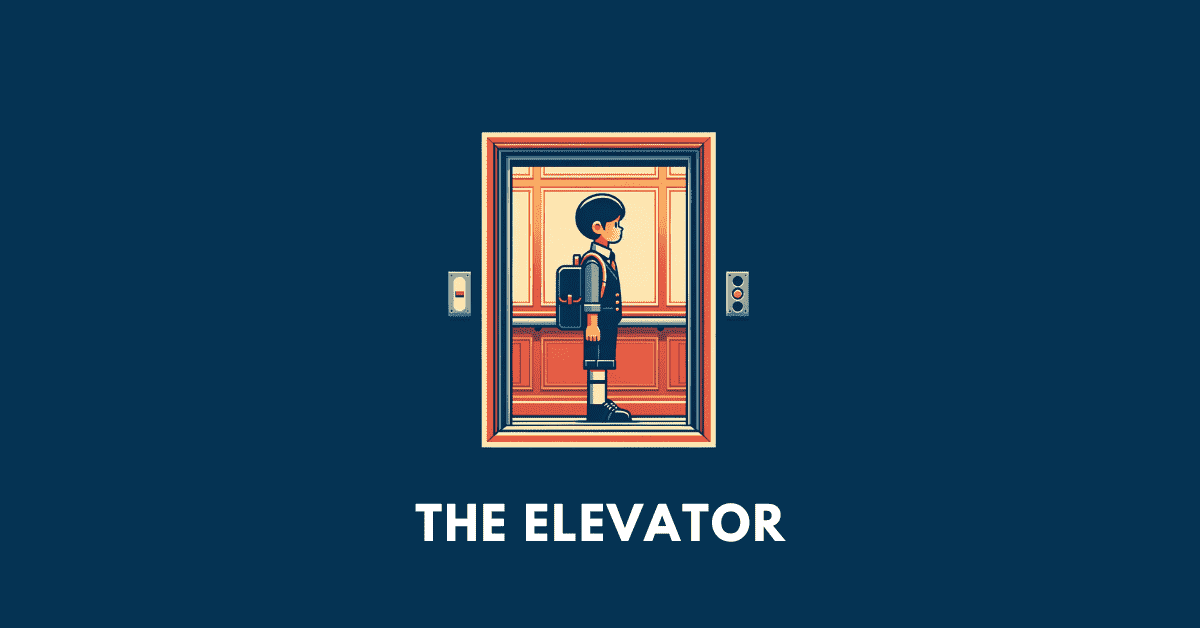
Get notes, line-by-line explanation, summary, questions and answers, critical analysis, word meanings, extras, and pdf of the story “The Elevator” by William Sleator (workbook- Evergreen and Morning Star/Beeta) , which is part of ICSE Class 10 English (Treasure Chest: A Collection of ICSE Poems and Short Stories). However, the notes should only be treated as references, and changes should be made according to the needs of the students.
Martin was a twelve-year-old boy who felt nervous about many things. He and his father moved into an old apartment building. The elevator in the building was very small and old. Martin was always scared in elevators, worried they might fall. This one was especially unpleasant with its poor lights and dirty walls. The door slammed shut too quickly with a loud noise. It even shuddered when it moved.
Martin tried using the stairs once, but they were dark and scary too. His footsteps echoed, making him feel like someone was following him. He lived on the seventeenth floor, so he was out of breath when he reached home. His father, who worked at home, was not happy. He told Martin he was a coward and should use the elevator. Martin felt he had to get used to it, just like he got used to being bullied at school.
But Martin could not get used to the elevator. One morning, a large woman got into the elevator with him. She wore an old green coat and stared at Martin with her tiny, sharp eyes. This made Martin very scared. She did not say anything, just watched him. He ran to school after she slowly left the elevator. He thought about her all day. He wondered if she lived in the building.
He saw her again in the elevator after school. This time, she seemed to know he would be there. She pressed the button for the eighteenth floor, the top floor, even though she had gotten on at the third floor. Martin was very frightened. When he got home, he told his father about the woman. His father just called him a coward again.
The next morning, the woman was waiting for him when the elevator door opened. Martin was so scared he ran down the stairs. He fell in the dark and broke his leg. Now, he had to use crutches and could not use the stairs. He thought the woman smiled because she knew this would happen. Martin felt a bit safe because his father was with him when they came back from the hospital.
His father then said he had to visit someone on the ninth floor. He got out of the elevator, leaving Martin alone despite his pleas. Martin was scared. He tried to press the button for his floor, but the elevator stopped at the tenth floor. The woman was there. She got in quickly. She looked at Martin, said, “Hello, Martin,” laughed, and pressed the Stop button. This woman was like a living form of Martin’s own fears. She might not have been a real person in the building, but she felt very real to Martin because his fear was so powerful. She appeared when his fear was at its peak, trapping him in the elevator, much like his fear trapped his mind.
(a) Analysis, Application and Evaluation :
1. Martin, in the story The Elevator, is afraid of being trapped in the elevator. What is this fear called ?
(a) Hydrophobia
(b) Arachnophobia
(c) Claustrophobia
(d) Aquaphobia
Answer: (c) Claustrophobia
2. Select the option that shows the correct relationship between statements I and II from The Elevator.
Statement I : Martin backed away from the elevator, ran down the stairs and broke his leg.
Statement II : In the morning, when the elevator door opened, the fat lady awaited him.
(a) Statement I is independent of Statement II.
(b) Statement II is the cause of Statement I.
(c) Statement I is an example of Statement II.
(d) Statement I is a contradiction of Statement II.
Answer: (b) Statement II is the cause of Statement I.
3. “You’re afraid,” said his father. “When are you going to grow up and act like a man ?” What does this sentence tell us about Martin’s father’s character? He was :
(a) cowardly
(b) greedy
(c) insensitive
(d) rude
Answer: (c) insensitive
4. How would you describe Martin’s fears ?
(a) rational
(b) irrational
(c) specific
(d) absured
Answer: (b) irrational
5. The story highlights the theme
(a) on father-son relationship
(b) of fears about the unknown
(c) of being a coward
(d) as to how you have to face and overcome your own fears
Answer: (d) as to how you have to face and overcome your own fears
6. By the time Martin reached home, he was gasping for breath. Which of the following statements shows the reason for this?
(a) Martin had seen a ghost in the elevator
(b) The elevator had broken down
(c) Martin was scolded by the fat lady
(d) He was always afraid and uncomfortable in elevators
Answer: (d) He was always afraid and uncomfortable in elevators
7. Choose the option that lists the sequence of events in the correct order.
1. The elevator stopped at the fourteenth floor, and a fat lady got on.
2. Martin’s father wanted to know why Martin was out of breath.
3. The fat lady only watched him, breathing loudly.
4. Martin did not like to be close to the other passangers in the elevator.
(a) 2, 4, 1, 3
(b) 1, 2, 4, 3
(c) 2, 1, 4, 3
(d) 1, 4, 3, 2
Answer: (a) 2, 4, 1, 3
8. “Why didn’t you take the elevator ?” he asked, frowning at Martin. Which of the following words best describes the tone of the speaker ?
(a) joyful
(b) frustrated
(c) angry
(d) satirical
Answer: (b) frustrated
9. Choose the option that shows the correct relationship between statement (1) and statement (2).
1. There were several reasons of Martin’s fears of the elevator
2. Poor lighting, the door which never stayed open.
(a) 2 is an example of 1.
(b) 1 is in contradiction of 2.
(c) 1 is independent of 2.
(d) 2 is the result of 1.
Answer: (a) 2 is an example of 1.
10. “Can’t say I have,” “he replied, not looking away from the television. Which of the following words best describes the speaker’s attitude.
(a) serious
(b) full of surprise
(c) indifferent
(d) showing concern
Answer: (c) indifferent
(b) Recalling and Understanding :
11. The elevator could carry ……………….. persons.
(a) two
(b) three
(c) four
(d) only one
Answer: (b) three
12. Martin’s father worked ……………….. .
(a) in a factory
(b) in an office
(c) at home
(d) in his fields
Answer: (c) at home
13. Martin was ……………….. boy.
(a) a brave
(b) a skinny boy
(c) a fat
(d) a fearless
Answer: (b) a skinny boy
14. Martin lived on the ……………….. floor.
(a) third
(b) fourth
(c) seventeenth
(d) eighteenth
Answer: (c) seventeenth
15. Martin first met the fat lady on the ……………….. floor.
(a) ninth
(b) thirteenth
(c) tenth
(d) fourteenth
Answer: (d) fourteenth
16. The fat lady looked at Martin ……………….. .
(a) affectionately
(b) scornfully
(c) threateningly
(d) closely
Answer: (d) closely
17. The old lady was wearing a ……………….. coat.
(a) red
(b) brown
(c) green
(d) black
Answer: (c) green
18. What was Martin’s father doing when he was told about the fat lady ?
(a) watching television
(b) speaking to someone on mobile
(c) reading a book
(d) talking to a friend
Answer: (a) watching television
19. On which floor was Martin’s father going to meet Mrs Ullman ?
(a) 4th
(b) 9th
(c) 14th
(d) 3rd
Answer: (b) 9th
20. Which of these sentences from the story The Elevator is NOT true?
(a) Martin was a thin twelve-year-old boy.
(b) The lady was wearing an old green coat.
(c) Martin was skinny, weak and bad at sports.
(d) The lady had large fleshy cheeks, no chin and brown eyes.
Answer: (d) The lady had large fleshy cheeks, no chin and brown eyes.
PASSAGE-1
Of course he was always uncomfortable in elevators, afraid that they would fall, but this one was especially unpleasant. Perhaps this was because of the poor lighting and the dirty walls.
(i) Describe the apartment to which Martin and his father had shifted recently.
Answer: Martin and his father had shifted to an apartment in an old building which had an old, very small elevator capable of carrying only three people. The elevator was characterized by poor lighting and dirty walls. Its door never stayed open long enough and would slam shut with a loud clanging noise. Furthermore, the elevator shuddered each time it left a floor, as if it was exhausted. Their apartment was on the seventeenth floor.
(ii) What made the boy uncomfortable in the elevator?
Answer: The boy, Martin, was always uncomfortable in elevators because he was afraid they would fall. This particular elevator was especially unpleasant for him, possibly due to its poor lighting and dirty walls. It could also have been because of the door, which never stayed open long enough and slammed shut with a loud clanging noise, or the way the elevator shuddered each time it left a floor, as if it was exhausted. Perhaps it was simply too small, seeming crowded even with only two people in it.
(iii) Martin was timid and cowardly. How is this true?
Answer: Martin’s timidity and cowardice are shown by several instances. He was a thin twelve-year-old who felt nervous in the elevator from the first day, always afraid it would fall. When he tried the stairs, the echo of his footsteps made him feel as if another person was climbing and getting closer. His father’s disapproving look seemed to call him not only skinny, weak, and bad at sports but also a coward. Martin was also used to being bullied at school. He was constantly afraid that the elevator would stop suddenly, trapping him inside for hours by himself, and he disliked the uncomfortable silence among passengers. His terrified reactions to the fat lady, such as running away and feeling like he was in a nightmare, further illustrate his timid nature. He is described as a cowardly fellow who feared elevators and was bullied by classmates and strangers.
(iv) What are we told about the door of the elevator ?
Answer: We are told that the door of the elevator never stayed open long enough and slammed shut with a loud clanging noise.
(v) How does the description of the elevator contribute to the suspense in the story?
Answer: The description of the elevator as old, small, poorly lit, with dirty walls, a door that slams shut with a clanging noise, and its shuddering movement creates an unsettling and spooky atmosphere. These grim details make the elevator seem unreliable and threatening, building suspense about what ominous possibilities might occur or what might happen to Martin inside it, especially given his pre-existing fear of elevators.
PASSAGE-2
‘You’re not only skinny and weak and bad at sports,’ his face seemed to say, ‘but you are also a coward’. After that, Martin always took the elevator. He would have to get used to it, he told himself, just as he got used to being bullied at school.
(i) What would you say about father’s attitude towards Martin?
Answer: I would say that the father’s attitude towards Martin is critical and unsympathetic. His face seemed to convey that Martin was not only skinny, weak, and bad at sports but also a coward. He frowned when Martin was out of breath from taking the stairs and later directly asked Martin when he was going to grow up, act like a man, and stop being timid. He chided Martin for his physical state and his fears, advising him to shed them. His relationship with Martin lacks intimacy, and he is often shown criticizing Martin’s perceived infirmities, trying to make him tougher without truly understanding or validating his son’s feelings.
(ii) What was Martin’s problem ?
Answer: Martin’s problem was his pervasive fear and discomfort, particularly his intense fear of elevators, as he was always afraid they would fall, and the one in his new building was especially unpleasant. He also had a problem with being bullied at school, indicating a broader issue with fear, a lack of confidence in confronting strange things and people, and a nervous nature.
(iii) What did Martin have to come to terms with?
Answer: Martin told himself that he would have to get used to taking the unpleasant elevator. He had to come to terms with using it, just as he had gotten used to being bullied at school, implying he had to learn to endure situations that made him fearful or uncomfortable.
(iv) Why did Martin take the elevator although he was scared of it ?
Answer: Martin took the elevator, although he was scared of it, because his father frowned at him for taking the stairs and his father’s expression seemed to call him a coward. Due to his father’s disapproval and implied accusation, Martin felt compelled to always take the elevator after that.
(v) Was Martin a coward ? Give two reasons for your answer.
Answer: Yes, the story portrays Martin as a coward.
First, he was intensely afraid of elevators, always worried they would fall, and the specific conditions of the elevator in his building magnified this fear.
Second, his reactions to the fat lady, such as feeling like he was in a nightmare, his inability to confront her, and his decision to run away, demonstrate a lack of courage in facing unsettling situations. His father also explicitly considered him a coward.
PASSAGE-3
She was wearing an old green coat that ballooned around her. As she waddled into the elevator, Martin was sure he felt it sink under her weight. She was so big that her coat brushed against him, and he had to squeeze himself into a corner.
(i) What made Martin fearful about the lady?
Answer: Martin was fearful about the lady due to her imposing physical appearance and her unsettling behavior. She was so large that her coat brushed against him, forcing him to squeeze into a corner, and he was sure the elevator sank under her weight. Instead of facing the door, she turned around and stared directly at Martin. Her face had large fleshy cheeks, no chin but a huge mass of neck, and her tiny, sharp blue eyes seemed to be boring into his face. Her persistent “piggy eyes” looking at him made him think she had to be crazy.
(ii) What is Martin’s tone while describing the lady’s stature ?
Answer: Martin’s tone while describing the lady’s stature is one of apprehension, intimidation, and negativity. He uses words like “fat” and “so big,” notes that the elevator “sank under her weight,” and describes her waddling into the elevator with her coat “ballooned around her,” all of which convey his perception of her overwhelming and somewhat grotesque size. His description of her “large fleshy cheeks and no chin” and “piggy eyes” further reflects his fearful and repulsed view.
(iii) What was Martin’s state of mind when he confronted the lady ?
Answer: When Martin confronted the lady, his state of mind was extremely fearful, anxious, and unnerved. He felt the elevator sink under her weight and had to squeeze himself into a corner. He tried to look away but felt her gaze on him. He wanted to close his eyes or turn to the corner but felt unable to. He thought she must be crazy and wondered what she was going to do next. He desperately wanted to run past her to get out but knew there was no room.
(iv) On which floor did the lady step into the elevator ? On which floor did she actually live?
Answer: The first time Martin encountered her, the lady stepped into the elevator on the fourteenth floor. The story does not explicitly state which floor she actually lived on, or if she lived in the building at all, as Martin himself wondered about this. Later, her actions of getting on at the third floor and pressing the button for the eighteenth floor add to the uncertainty about her residence, which remains a matter of speculation.
(v) How did the lady look at the boy in the elevator? What could be her intention?
Answer: The lady turned around and stared at Martin in the elevator. Her tiny, sharp blue eyes seemed to be boring into his face, and her “piggy eyes” continued to look at him. Her intention is not explicitly stated in the story and remains ambiguous, which contributes to Martin’s fear. He thought she might be crazy. Her intention could be interpreted as deliberately trying to unsettle Martin, or it could be a reflection of Martin’s own heightened fear and paranoia, making her gaze seem menacing.
PASSAGE-4
She did nothing. She only watched him breathing loudly, until the elevator reached the first floor at last. Martin wanted to run past her to get out, but there was no room. He could only wait as she turned and moved slowly into the lobby. Then he ran. He didn’t care what she thought. She ran nearly all the way to school.
(i) What was the lady’s behaviour while in the elevator with the boy ? How would you explain it ?
Answer: The lady’s behaviour in the elevator was to do nothing overt; she only watched Martin, breathing loudly, until the elevator reached the first floor. Then, she turned and moved slowly out into the lobby. This behavior can be explained as unsettling and mysterious because, by simply staring and breathing loudly without any direct action, she created an intensely uncomfortable and frightening atmosphere for Martin.
(ii) Why couldn’t Martin run past the lady ?
Answer: Martin couldn’t run past the lady because there was no room in the very small elevator, especially with the lady being described as very large and occupying most of the space.
(iii) What was the boy’s impression of the lady in the elevator ?
Answer: The boy’s impression of the lady in the elevator was that she was strange, crazy, and frightening. He was so disturbed by her staring that he thought she had to be crazy. His desperate desire to escape, running nearly all the way to school without caring what she thought, and thinking about her all day, shows the profound and disturbing impression she made on him.
(iv) Where did the lady live ? Did Martin know this?
Answer: Martin did not know where the lady lived. He wondered all day if she lived in the building, noting he had never seen her before and the building was not very big. He considered if she was visiting someone but thought 7:30 in the morning was too early for that. The story does not reveal her place of residence.
(v) What time of the day was it then? How do you know?
Answer: It was in the morning, around 7:30 a.m. Martin himself thought that 7:30 in the morning was too early for visiting. Additionally, after the encounter, he ran nearly all the way to school, which indicates it was before school hours.
PASSAGE-5
She nodded, and stepped in. The door slammed. He watched her pudgy hand move towards the buttons. She pressed not fourteen, but eighteen, the top floor.
(i) To which question of the boy did the lady nod ?
Answer: The lady nodded in response to Martin’s squeaked question, “Going up!”, which he asked when she appeared at the elevator on the third floor after school, while he was already inside.
(ii) What did the woman look like ?
Answer: The woman was described earlier as a fat lady wearing an old green coat that ballooned around her, with large fleshy cheeks, no chin but a huge mass of neck, and tiny, sharp blue eyes. In this specific passage, she is noted to have a “piggish face and blue eyes” and a “pudgy hand.”
(iii) Why is Martin surprised at the lady’s pressing the button eighteen ?
Answer: Martin was surprised at the lady’s pressing the button for eighteen, the top floor, because that morning she had gotten on at the fourteenth floor and presumably gone down. Now, she was getting on at the third floor and going up to eighteen. This inconsistency in her floor choices confounded Martin, making her actions seem unpredictable and perhaps even deliberately aimed at him.
(iv) Which floor do you think did the lady live on ?
Answer: It is not possible to determine which floor the lady lived on from the information given. Her varied actions, such as getting on at the fourteenth floor to go down, and then later getting on at the third floor to go up to the eighteenth, make her residence a mystery. The story leaves this to the reader’s speculation.
(v) What makes the boy feel nervous in the elevator ? What does it indicate about the boy ?
Answer: In this instance, the presence of the fat lady who watched him, the trembling of the elevator as it began to go up, and the fact that it seemed to be moving more slowly than usual made the boy feel nervous. He wanted to get out on the seventh floor but couldn’t reach the buttons without touching her, which he desperately wanted to avoid. This indicates that Martin is a timid and easily intimidated boy, with a heightened sense of anxiety, a strong aversion to unsettling strangers, and a profound fearfulness.
PASSAGE-6
“I’m not afraid”.
“You’re afraid”, said his father. “When are you going to grow up and act like a man? Are you going to be timid all your life?”
(i) In which situation does the boy retort “I’m not afraid”?
Answer: The boy retorts, “I’m not afraid,” after his father, turning impatiently from the television, questioned what he was worried about now and stated that Martin was afraid of “some poor old lady.” His father then directly told him, “You’re afraid,” prompting Martin’s denial.
(ii) What was the boy’s father trying to emphasise ?
Answer: The boy’s father was trying to emphasize his belief that Martin was indeed afraid and that he needed to overcome his timidity and “grow up and act like a man.” He questioned if Martin was going to be timid all his life, pushing him to be braver.
(iii) How did Martin react to his father’s rebuke ?
Answer: Martin reacted to his father’s rebuke by feeling deeply hurt and distressed. He didn’t want to cry in front of his father, so he waited until he got to his room to do so. He slept very little that night, indicating the impact of his father’s words.
(iv) What does the extract tell about the relationship between the son and the father?
Answer: The extract reveals that the relationship between Martin and his father is strained, lacking understanding, empathy, and emotional support. The father is impatient and critical, dismissing Martin’s fears, while Martin feels unable to express his true emotions to his father, leading to feelings of isolation and distress. It shows a lack of intimate or friendly relations between them.
(v) What do you think of the father’s attitude towards Martin?
Answer: I think the father’s attitude towards Martin is harsh, unsympathetic, and ultimately unhelpful for a child struggling with fear. While he might intend to make Martin stronger by telling him to “grow up,” his approach is dismissive of Martin’s genuine anxieties. Instead of offering understanding or comfort, he belittles Martin, which likely intensifies Martin’s feelings of fear and isolation and damages his self-esteem. His impatience and criticism demonstrate a significant lack of empathy for his son’s experiences.
PASSAGE-7
“Martin’s father worked at home. He wanted to know why Martin was out of breath.
“Why didn’t you take the elevator ?” he asked, frowning at Martin.
(i) How old was Martin ? On which floor did he live ? What word would you use to describe Martin?
Answer: Martin was a thin twelve-year-old. He lived with his father in an apartment on the seventeenth floor. Based on the initial descriptions of him feeling nervous in the elevator from the first day and being always uncomfortable in them, a word I would use to describe Martin is “nervous” or “anxious.” He is also described as timid.
(ii) Why was Martin scared of using the elevator ?
Answer: Martin was scared of using the elevator primarily because he was always uncomfortable in elevators and afraid that they would fall. The specific elevator in his new building was especially unpleasant for him due to several factors: its poor lighting, dirty walls, the way its door slammed shut with a loud clanging noise, how it shuddered each time it left a floor, and its very small size which made it feel crowded.
(iii) Martin disliked using the staircase. Why?
Answer: Martin disliked using the staircase because there were no windows, and the lights were not working, making it dark. Furthermore, his footsteps echoed on the cement as he climbed, creating the unsettling feeling that there was another person climbing behind him and getting closer, which frightened him.
(iv) Martin met a strange person in the elevator one day. What did she do that scared Martin ? What happened to Martin when he ran away after seeing her?
Answer: The strange person Martin met, a fat lady, scared him because instead of facing the elevator door, she turned around and stared directly at him with her tiny, sharp blue eyes that seemed to be boring into his face. Later, when he saw her waiting for him as the elevator door opened, he backed away and started running down the dark stairs. While running, he fell and, as a result, broke his leg and needed to use crutches.
(v) Comment on the ending of the story, The Elevator. Identify any two elements of horror in the story.
Answer: The ending of the story is abrupt and terrifying, leaving Martin in a state of heightened fear. He is trapped in the elevator with the fat lady, who has just said “Hello, Martin,” laughed, and pushed the Stop button. This cliffhanger ending does not resolve Martin’s predicament or his fear; instead, it culminates in his worst nightmare coming true.
Two elements of horror in the story are:
PASSAGE-8
But the door was already closing. “Afraid to be in the elevator alone?” said his father. “Grow up, Martin”. The door slammed shut.
(i) Why did the father not want Martin to visit the neighbour along with him ?
Answer: The father did not want Martin to visit the neighbour, Mrs. Ullman, along with him because he had devised a plan to make Martin overcome his fear of the elevator. By leaving Martin alone in the elevator, even after Martin pleaded to go with him, the father intended to force Martin to confront his fear of being alone in it. His words, “Afraid to be in the elevator alone? Grow up, Martin,” indicate his intention to push Martin to fight his fears independently.
(ii) Why did father seem to be quite strict and unsympathetic ?
Answer: The father seemed quite strict and unsympathetic because his main goal was to make Martin “grow up” and stop being what he perceived as timid and cowardly. He consistently dismissed Martin’s genuine fears about the elevator and the old lady, offering criticism and commands to “act like a man” instead of providing understanding, comfort, or support. His method of dealing with Martin’s fear was to force him into direct confrontation, which appeared harsh and unfeeling, reflecting a lack of intimate or friendly relations and a tendency to criticize Martin’s infirmities.
(iii) On which floor did the woman live? What was her name?
Answer: The story does not provide information about which floor the fat woman lived on. Her appearances and choice of floors were inconsistent (getting on at the fourteenth to go down, then at the third to go to the eighteenth, and waiting at the tenth). Her name is also not mentioned in the story. Mrs. Ullman, whom the father intended to visit on the ninth floor, is a different character.
(iv) Where did the elevator stop and why?
Answer: The elevator stopped at the tenth floor. It stopped there because the fat lady was waiting for Martin on that floor, even though his father had pressed the button for the ninth floor, and Martin himself had subsequently pressed nine again.
(v) What surprise awaited Martin in the elevator ? How did the lady treat him there?
Answer: The surprise that awaited Martin in the elevator was the appearance of the fat lady on the tenth floor, waiting for him. She moved in quickly before he could get out. Once the door closed and the elevator began to move, she treated him in a menacing way: she said, “Hello, Martin,” then she laughed, and finally, she pushed the Stop button, trapping him alone with her in the stopped elevator.
1. Which of the following statements about the elevator in Martin’s building is NOT correct?
A. There was poor lighting
B. Its walls were dirty
C. Its door could stay open for long
D. It could carry only three people
Answer: C. Its door could stay open for long
2. Why was the narrator gasping for breath when he reached his home?
A. He was scared that the old lady was following him
B. He used the stairs to reach his home on the seventeenth floor
C. He ran as fast as he could to escape from the fat lady
D. He was thin and weak
Answer: B. He used the stairs to reach his home on the seventeenth floor
3. What was Martin’s fear about the elevator in his building?
A. It would stop suddenly
B. He would be trapped inside it for hours
C. He would be bullied by others in the elevator
D. Both A and B
Answer: D. Both A and B
4. Which of the following is incorrect about the lady who entered the elevator?
A. She had no chin but a huge mass of neck
B. She had sharp brown eyes
C. She was wearing an old green coat
D. She had tiny but sharp eyes
Answer: B. She had sharp brown eyes
5. Why did Martin feel ashamed of himself when he returned home after school?
A. For being afraid of an old lady
B. For being scared of the staircase
C. For not using the elevator
D. None of the above
Answer: A. For being afraid of an old lady
6. Martin said, ‘It wasn’t possible.’ What was it that Martin felt like a nightmare?
A. Being trapped in the elevator
B. Using the stairs to reach the seventeenth floor
C. Seeing the lady for the second time in the elevator
D. None of the above
Answer: C. Seeing the lady for the second time in the elevator
7. What did Martin’s father say when he told him about the lady?
A. Martin would remain timid all his life
B. Martin should ignore the old lady
C. Martin should talk to her
D. None of the above
Answer: A. Martin would remain timid all his life
8. How did Martin’s father feel when he (Martin) fell down and broke his leg?
A. Sympathy for Martin
B. Angry and disappointed
C. Silent and apathetic
D. None of the above
Answer: B. Angry and disappointed
9. Why did Martin feel secure in the elevator after he returned from the hospital?
A. The old lady was not in the elevator
B. His father was with him in the elevator
C. He could hit the lady with his crutches
D. None of the above
Answer: B. His father was with him in the elevator
10. What did Martin plead with his father when he left him alone in the elevator?
A. To let Martin accompany him
B. To reach him to their house
C. To meet the fat lady
D. None of the above
Answer: A. To let Martin accompany him
11. Choose the option that lists the sequence of events in the correct order.
A. 4, 2, 3, 1
B. 3, 1, 2, 4
C. 3, 2, 1, 4
D. 4, 3, 2, 1
Answer: B. 3, 1, 2, 4
12. Select the option that shows the correct relationship between statements (1) and (2) from The Elevator.
A. 1 is the cause for 2
B. 1 is an example of 2
C. 1 is independent of 2
D. 1 is a contradiction of 2
Answer: A. 1 is the cause for 2
Extract 1
Martin, a thin twelve-year-old, felt nervous in it from the first day he and his father moved into the apartment. Of course, he was always uncomfortable in elevators, afraid that they would fall, but this one was especially unpleasant. Perhaps it was because of the poor lighting and dirty walls. Perhaps it was because of the door, which never stayed open long enough and slammed shut with a loud clanging noise.
(i) Where does Martin feel nervous? Why?
Answer: Martin feels nervous in the apartment building’s elevator. This is because he has a general fear of elevators, worrying they might fall, and this particular one had several unpleasant features like poor lighting, dirty walls, and a door that slammed shut loudly, all of which amplified his existing anxiety.
(ii) Why was the elevator in his building unpleasant to use?
Answer: The elevator in his building was unpleasant to use because of its poor lighting and dirty walls. Additionally, the door never stayed open long enough and slammed shut with a loud clanging noise, contributing to Martin’s discomfort and fear.
(iii) What was the other option besides the elevator? Was it better than the elevator? Give a reason to support your answer.
Answer: The other option besides the elevator was using the stairs. However, it was not much better because the stairs were dark, had no windows, and the lights were not working. Martin’s footsteps echoed, making him feel as though another person was climbing and getting closer, which was also frightening for him.
(iv) How did the size of the elevator affect the narrator later in the story?
Answer: The small size of the elevator significantly contributed to Martin’s heightened anxiety later in the story. It made him feel crowded and trapped, especially when he perceived the presence of the fat lady, intensifying his claustrophobia and fear.
(v) Explain how does this extract act as a ‘foreshadow’ in the story.
Answer: This extract acts as a foreshadowing element by establishing Martin’s pre-existing fear of elevators and the unsettling nature of this specific one. The detailed description of its unpleasant characteristics – poor lighting, dirty walls, the loud, quick-closing door – creates an atmosphere of unease and hints at the more intense psychological horror Martin will experience, particularly as his fears manifest in his encounters within this confined, oppressive space.
Extract 2
He wanted to know why Martin was out of breath. ‘Why didn’t you take the elevator?” he asked, frowning at Martin. You’re not only skinny and weak and bad at sports, his face seemed to say, but you are also a coward. After that, Martin always took the elevator. He would have to get used to it, he told himself, just like he got used to being bullied at school.
But he didn’t get used to it. He was always afraid that it would stop suddenly and he would be trapped inside it for hours by himself.
(i) Who is ‘He’ referred to in the extract? What did he ask Martin? Why?
Answer: ‘He’ refers to Martin’s father. He asked Martin why he didn’t take the elevator. He asked this because Martin was out of breath from taking the stairs, and his father perceived Martin’s avoidance of the elevator as a sign of cowardice.
(ii) State the three adjectives which he apparently used for Martin. Why?
Answer: The three adjectives Martin perceived from his father’s expression were “skinny,” “weak,” and “bad at sports.” His father seemed to associate these physical characteristics with Martin’s perceived lack of courage, implying that these traits made him a coward in his father’s eyes.
(iii) What does Martin promise himself? Does he succeed? Name the other thing which he got used to?
Answer: Martin promises himself that he would have to get used to the elevator. He does not succeed, as he continued to be afraid of it. The other thing he got used to was being bullied at school.
(iv) What was his fear about the elevator? Did that happen at the end of the story? Give reason for your answer.
Answer: Martin’s specific fear about the elevator was that it would stop suddenly and he would be trapped inside it for hours by himself. While the elevator did stop at the end of the story, it wasn’t that he was trapped alone for hours; rather, his fear manifested in being trapped with the fat lady, who then pressed the stop button, fulfilling his fear of being trapped in a terrifying way.
(v) Explain briefly the characteristic traits of Martin based on this extract.
Answer: Based on this extract, Martin is characterized as timid, anxious, and physically unassuming (“skinny and weak”). He is someone who internalizes negative experiences, such as bullying, and feels immense pressure from his father’s disapproval. He possesses a degree of resignation (“he would have to get used to it”) but struggles deeply with his fears, which are very real and persistent for him.
Extract 3
He thought about her all day. Did she live in the building? He had never seen her before, and the building was not very big. Maybe she was visiting somebody? But 7.30 in the morning was too early for visiting.
Martin felt nervous when he got back to the building after school. But why should he be afraid of an old lady? He felt ashamed of himself. He pressed the button and stepped into the elevator, hoping that it would not stop, but it stopped on the third floor.
(i) What did Martin think about her all day and why?
Answer: Martin thought about the fat lady all day because his encounter with her in the elevator was deeply unsettling. Her intense stare and imposing presence had frightened him, and he was trying to rationalize her appearance, wondering if she lived in the building or was just visiting, as her presence felt out of place and threatening to him.
(ii) Why was Martin nervous when he got back to his building after school?
Answer: Martin was nervous when he got back to his building after school because he feared another encounter with the fat lady in the elevator. The morning’s experience had left him shaken, and the thought of facing her again, or the embodiment of his fear she represented, filled him with anxiety.
(iii) Why did Martin feel ashamed of himself? What does it reveal about him?
Answer: Martin felt ashamed of himself for being afraid of an old lady. This reveals that Martin is self-aware and perhaps critical of his own fears. He recognizes that, on a rational level, his fear might seem disproportionate, yet he cannot control the intense anxiety her presence (or what she symbolizes) provokes in him.
(iv) Why did Martin hope that the elevator would not stop? What happened when it did stop on the third floor?
Answer: Martin hoped that the elevator would not stop because he desperately wanted to avoid another encounter with the fat lady, whose presence was a source of intense fear for him. When it did stop on the third floor, his fear was realized as the fat lady, or the manifestation of his dread, was there, and she stepped into the elevator.
(v) What according to you, Martin found scarier—the elevator or the old lady? Give reason to support your answer.
Answer: According to me, Martin found the old lady scarier. While the elevator itself was a source of general discomfort and anxiety for him, his fear escalated dramatically with the appearance of the old lady. Her persistent stare, unpredictable behavior, and the way she seemed to target him transformed his general unease into a specific, terrifying dread. She became the focal point and personification of his deepest anxieties about the elevator and perhaps his vulnerability in general.
Extract 4
Martin knew he was probably making a mistake, but he had to tell somebody about the woman. She was in the elevator with me twice today. She just kept staring at me. She never stopped looking at me for a minute.
“What are you so worried about now?” his father said, turning impatiently away from the television. “What am I going to do with you, Martin? Honestly, now you are afraid of some poor old lady.”
(i) What was the mistake Martin think he was probably making? Why did he think so?
Answer: Martin thought he was probably making a mistake by deciding to tell his father about the woman. He likely thought so because, based on past interactions, he anticipated his father would be dismissive, unsympathetic, and would probably ridicule his fears, just as he had done before regarding Martin’s anxieties.
(ii) Why did Martin feel that he had to tell somebody about the woman? Whom did he decide to tell? Why?
Answer: Martin felt he had to tell somebody about the woman because her behavior – particularly her constant, unnerving staring – was deeply disturbing him, and the fear was becoming overwhelming. He decided to tell his father, despite his reservations, because his father was the only person available to confide in at home, and he felt a desperate need to share his frightening experience.
(iii) What was the one thing that Martin found strange about the lady? Why?
Answer: The one thing Martin found particularly strange and unsettling about the lady was that she “just kept staring at me. She never stopped looking at me for a minute.” This unblinking, intense scrutiny was abnormal and made him feel targeted and deeply uncomfortable, amplifying his fear.
(iv) Martin’s father asks him what was he worried about ‘now’? What was he afraid about earlier? What did his father say about him then?
Answer: Earlier, Martin was afraid of the elevator itself, fearing it might fall or trap him. When he had shown fear of the elevator (by taking the stairs), his father had frowned and his face seemed to say Martin was a coward. His father had also told him he needed to get used to the elevator.
(v) Give a character sketch of Martin’s father based on the extract.
Answer: Based on this extract, Martin’s father is portrayed as impatient, dismissive, and lacking in empathy towards his son’s fears. He is more concerned with Martin’s perceived cowardice (“afraid of some poor old lady”) than with understanding or alleviating his son’s distress. His reaction shows a failure to connect with Martin on an emotional level, instead resorting to exasperation and criticism.
Extract 5
Martin started running down the stairs. The stairs were dark and he fell. His father was silent on the way to the hospital, disappointed and angry with him for being a coward and a fool. He could not use the stairs now. Was that why that lady had smiled? Did she know what would happen?
(i) Why did Martin start running down the stairs? How did he fall?
Answer: Martin started running down the stairs because the fat lady was waiting for him when the elevator door opened, and he was terrified of another encounter. He fell because the stairs were dark, and in his panicked haste to escape, he likely lost his footing.
(ii) What were Martin’s father’s feelings on the way to the hospital? How had he reacted earlier when Martin took the stairs to reach his house on the seventeenth floor?
Answer: On the way to the hospital, Martin’s father was silent, but Martin perceived him as being disappointed and angry with him for being a “coward and a fool.” Earlier, when Martin had taken the stairs to avoid the elevator, his father had frowned at him, clearly disapproving of Martin’s choice and his underlying fear.
(iii) Why would Martin not be able to use the stairs? How do you think Martin would have been affected by this condition?
Answer: Martin would not be able to use the stairs because he had broken his leg in the fall and now needed to use crutches. This condition would have deeply affected Martin by trapping him further; his only means of avoiding the dreaded elevator was now gone, forcing him to confront his greatest fear, which likely intensified his anxiety and sense of helplessness.
(iv) Why did Martin think that fat lady had smiled and knew what was going to happen to him?
Answer: Martin thought the fat lady had smiled and knew what was going to happen because his fear had become so intense that he started to attribute a sinister, almost supernatural prescience to her. Her smile, in his terrified mind, was not coincidental but a sign that she, as the embodiment of his fear, somehow orchestrated or foresaw his accident, which would inevitably force him back into the elevator with her.
(v) Explain briefly what could have given rise to Martin’s thoughts about the fat lady.
Answer: Martin’s thoughts about the fat lady being able to foresee events and smiling at his misfortune likely arose from his escalating psychological distress and paranoia. The repeated, unsettling encounters, her unwavering stare, and the feeling of being targeted by her (or by his own overwhelming fear that she represented) led him to perceive her as a malevolent figure with a disturbing awareness or control over his situation. His own sense of powerlessness would fuel such terrifying interpretations.
Extract 6
But the door was already closing. “Afraid to be in the elevator alone?” said his father. “Grow up, Martin.” The door slammed shut. Martin hobbled to the buttons and pressed nine, but it didn’t do any good. The elevator stopped at ten, where that fat lady was waiting for him. She moved in quickly, and he was too slow to get past her in time to get out. The door closed, and the elevator began to move.
“Hello, Martin,” she said, and laughed, and pushed the Stop button.
(i) How did Martin remain alone in the elevator? What did his father tell him?
Answer: Martin remained alone in the elevator after his father stepped out on the ninth floor to visit Mrs. Ullman. As the door was closing, his father taunted him by saying, “Afraid to be in the elevator alone?” and then told him, “Grow up, Martin.”
(ii) Why did Martin want to press button nine on the elevator? What had happened instead?
Answer: Martin wanted to press button nine on the elevator because his father had gotten out on that floor, and Martin, desperate not to be alone and likely wanting to join his father, tried to select the same floor. Instead, despite his effort, the elevator stopped at the tenth floor.
(iii) Why could Martin not move out of the elevator? What happened thereafter?
Answer: Martin could not move out of the elevator when it stopped at the tenth floor because the fat lady was waiting there and moved in quickly. Martin, on his crutches, was too slow to get past her and escape before the door closed. Thereafter, the fat lady said, “Hello, Martin,” laughed, and then pushed the Stop button, trapping him with her.
(iv) Why do you think that the lady laughed and then pushed the ‘Stop button? Give a reason to support your answer.
Answer: The lady, as a manifestation of Martin’s deepest fears, likely laughed and pushed the ‘Stop’ button to represent the ultimate culmination of his terror – being completely trapped and at the mercy of his overwhelming anxiety. Her actions symbolize his fear taking complete control, paralyzing him in the very situation he dreaded most. The laugh signifies the cruel, mocking nature of his fear, and pressing the stop button signifies his inability to escape it.
(v) The story ends in a cliffhanger. What is a cliffhanger? Explain what according to you would have happened at the end. Give reasons to justify your views.
Answer: A cliffhanger is a literary device where the story ends at a moment of high suspense, leaving the outcome unresolved and the reader in anticipation. According to me, what would have happened at the end is a complete psychological breakdown for Martin, or a terrifying confrontation with what the lady represents. Given that she is likely a personification of his fear, her trapping him and stopping the elevator signifies his fear completely overwhelming him. The story’s progression suggests that this final encounter is the climax of his internal struggle, and the outcome would likely be a terrifying immersion in his deepest anxieties, rather than a physical attack from a literal person. His fear has cornered him, and the “end” is him being consumed by it.
Extract 1
It was an old building with an old elevator, a very small elevator which could carry only three people. Martin, a thin twelve-year-old, felt nervous in it from the first day he and his father moved into the apartment. Of course, he was always uncomfortable in elevators, afraid that they would fall, but this one was especially unpleasant. Perhaps this was because of the poor lighting and the dirty walls. Perhaps it was because of the door which never stayed open long enough and slammed shut with a loud clanging noise. Perhaps it was the way the elevator shuddered each time it left a floor as if it was exhausted. Maybe it was simply too small. It seemed crowded even with only two people in it.
(i) Why did Martin feel particularly nervous about the elevator in his new apartment building?
Answer: Martin felt particularly nervous about the elevator in his new apartment building because, in addition to his general discomfort with elevators, this specific one was especially unpleasant due to its poor lighting, dirty walls, a door that never stayed open long enough and slammed shut with a loud clanging noise, and the way it shuddered as if exhausted.
(ii) How did Martin perceive the size of the elevator?
Answer: Martin perceived the elevator as being very small, to the point where it seemed crowded even with only two people in it.
(iii) What elements contributed to Martin’s discomfort with the elevator?
Answer: Several elements contributed to Martin’s discomfort: the poor lighting, the dirty walls, the door which never stayed open long enough and slammed shut with a loud clanging noise, the way the elevator shuddered each time it left a floor, and its small size.
(iv) How did Martin react when the elevator shuddered each time it left a floor?
Answer: The way the elevator shuddered each time it left a floor, as if it was exhausted, added to Martin’s nervousness and made his experience in it more unpleasant.
(v) Did Martin’s discomfort with elevators stem from this specific one or was it a general fear?
Answer: Martin’s discomfort stemmed from a general fear of elevators, as he was “always uncomfortable in elevators, afraid that they would fall,” but this specific one was “especially unpleasant,” exacerbating his existing fear.
Extract 2
The stairs were no better. Martin tried them one day after school. There were no windows, and the lights were not working. Martin’s footsteps echoed behind him on the cement as though there was another person climbing, getting closer. By the time he reached his home on the seventeenth floor, he was gasping for breath.
(i) Why did Martin choose to take the stairs instead of the elevator?
Answer: Martin chose to take the stairs one day after school because the elevator in his building was especially unpleasant for him, and he was generally uncomfortable and afraid in elevators.
(ii) How did Martin feel while climbing the stairs?
Answer: While climbing the stairs, Martin felt uneasy and frightened because there were no windows, the lights were not working, and his footsteps echoed on the cement, making him feel as though another person was climbing and getting closer.
(iii) What physical state was Martin in by the time he reached his home?
Answer: By the time he reached his home on the seventeenth floor after climbing the stairs, Martin was gasping for breath.
(iv) What caused Martin’s discomfort while using the stairs?
Answer: Martin’s discomfort while using the stairs was caused by the lack of windows, the non-working lights which made it dark, and the echo of his footsteps which created the illusion of someone following him.
(v) Did the stairs provide a better alternative to the elevator for Martin?
Answer: No, the stairs did not provide a better alternative to the elevator for Martin, as they were also a source of fear and discomfort due to the darkness, lack of lights, and the unsettling echoes.
Extract 3
One morning, the elevator stopped at the fourteenth floor, and a fat lady got on. She was wearing an old green coat that ballooned around her. As she waddled into the elevator, Martin was sure he felt it sink under her weight. She was so big that her coat brushed against him, and he had to squeeze himself into a corner. There was no room for anybody else. The door closed quickly behind her, and instead of facing it, she turned around and stared at Martin.
(i) What was Martin’s initial reaction to the fat lady getting on the elevator?
Answer: Martin’s initial reaction was one of fear and physical discomfort. He was sure he felt the elevator sink under her weight, and because she was so big, her coat brushed against him, forcing him to squeeze himself into a corner.
(ii) What was unusual about the fat lady’s behavior after entering the elevator?
Answer: What was unusual about the fat lady’s behavior was that instead of facing the elevator door, she turned around and stared directly at Martin.
(iii) How did Martin physically react to the fat lady’s presence in the elevator?
Answer: Martin physically reacted by having to squeeze himself into a corner because the lady was so big that her coat brushed against him, and there was no room for anybody else.
(iv) How did the woman’s gaze affect Martin’s emotions?
Answer: The woman’s direct and persistent stare made Martin extremely nervous and fearful. Her tiny but sharp blue eyes seemed to be boring into his face, intensifying his anxiety.
(v) Why did Martin feel as though the elevator sank when the fat lady entered?
Answer: Martin was sure he felt the elevator sink under her weight when the fat lady waddled into it, which likely heightened his existing fear of the elevator falling and his discomfort in the small, crowded space.
Extract 4
Martin watched the door slide open, revealing a green coat, a piggish face, and blue eyes which were already staring at him as if she knew he would be there. It wasn’t possible. It was like a nightmare. But there she was. “Going up!” said Martin, his voice little more than a squeak. She nodded and stepped on. The door slammed. He watched her pudgy hand move towards the buttons. She pressed not fourteen but eighteen, the top floor.
(i) How did Martin feel when he saw the fat lady again?
Answer: When Martin saw the fat lady again, he felt it was like a nightmare. Her eyes were already staring at him as if she knew he would be there, which made him feel it wasn’t possible, yet there she was.
(ii) How did the woman behave when she entered the elevator the second time?
Answer: The second time, the woman, whose eyes were already staring at Martin, nodded when he spoke, stepped on, and then pressed the button for eighteen, the top floor, instead of fourteen.
(iii) Why was Martin shocked by the fat lady’s appearance on the third floor?
Answer: Martin was shocked by the fat lady’s appearance on the third floor because it seemed impossible and like a nightmare, especially since her eyes were already staring at him as if she knew he would be there. This encounter was after he had seen her get on at the fourteenth floor earlier that day.
(iv) What did Martin observe about the woman’s choice of floor this time?
Answer: Martin observed that this time the woman pressed the button for eighteen, the top floor, instead of fourteen, which was the floor she had been associated with in his previous encounter. This change confounded him.
(v) How did Martin react physically to the woman’s reappearance?
Answer: Martin’s physical reaction to the woman’s reappearance was one of extreme nervousness; his voice was “little more than a squeak” when he said, “Going up!”
Extract 5
At least his father was with him in the elevator on the way back from the hospital. There was no room for the fat lady to get in, and if she did, his father would see her and maybe he would understand. When he got home, he could stay in the apartment for a few days. The doctor said that he had to rest as much as possible. Martin felt quite safe from the fat lady now.
(i) Why did Martin feel safer with his father in the elevator?
Answer: Martin felt safer with his father in the elevator because he believed there would be no room for the fat lady to get in. More importantly, he hoped that if she did appear, his father would see her and perhaps finally understand the fear Martin had been experiencing.
(ii) What temporary relief did Martin expect upon returning home?
Answer: Upon returning home, Martin expected temporary relief because the doctor had said he had to rest as much as possible for a few days. This meant he could stay in the apartment and avoid using the elevator, thus feeling safe from the fat lady.
(iii) Why did Martin think his father might understand his fear if he saw the fat lady?
Answer: Martin thought his father might understand his fear if he saw the fat lady because her unsettling appearance and behavior, which Martin found so terrifying, might become apparent to his father, leading to empathy or validation of Martin’s feelings.
(iv) How did the doctor’s advice give Martin a sense of security?
Answer: The doctor’s advice that he had to rest as much as possible gave Martin a sense of security because it meant he could stay in the apartment for a few days, thereby avoiding the elevator and his encounters with the fat lady.
(v) What was Martin’s emotional state after returning from the hospital?
Answer: After returning from the hospital, Martin felt “quite safe from the fat lady now,” indicating a sense of temporary relief and security due to his father’s presence and the prospect of not having to use the elevator for a few days.
Extract 6
Martin felt nervous when he got back to the building after school. But why should he be afraid of an old lady? He felt ashamed of himself. He pressed the button and stepped into the elevator, hoping that it would not stop, but it stopped on the third floor. Martin watched the door slide open, revealing a green coat, a piggish face, and blue eyes which were already staring at him as if she knew he would be there. It wasn’t possible. It was like a nightmare.
(i) How did Martin feel when he returned home after school?
Answer: When Martin returned home after school, he felt nervous. However, he also questioned his fear, feeling ashamed of himself for being afraid of an old lady.
(ii) Why did Martin feel ashamed of his fear of the fat lady?
Answer: Martin felt ashamed of his fear of the fat lady because he questioned why he should be afraid of an old lady, suggesting he felt his fear was irrational or a sign of weakness.
(iii) What was Martin hoping for when he got into the elevator after school?
Answer: When Martin got into the elevator after school, he was hoping that it would not stop, presumably so he could avoid any potential encounter with the fat lady.
(iv) How did Martin react when the elevator stopped at the third floor?
Answer: When the elevator stopped at the third floor and the door slid open to reveal the fat lady already staring at him, Martin felt it wasn’t possible and that it was like a nightmare.
(v) What was significant about the fat lady’s appearance at the third floor?
Answer: The significance of the fat lady’s appearance at the third floor was that her eyes were “already staring at him as if she knew he would be there.” This suggested a preternatural awareness of his presence, intensifying Martin’s feeling that this was a nightmare and not a normal occurrence.
Extract 7
Martin knew he was probably making a mistake, but he had to tell somebody about the woman. “She was in the elevator with me twice today. She just kept staring at me. She never stopped looking at me for a minute.” “What are you so worried about now?” his father said, turning impatiently away from the television. “What am I going to do with you, Martin? Honestly, now you’re afraid of some poor old lady.”
(i) Why did Martin feel the need to talk to someone about the fat lady?
Answer: Martin felt he had to tell somebody about the woman because her persistent staring was deeply unsettling him, and he had encountered her twice that day under these disturbing circumstances.
(ii) How did Martin describe the fat lady’s behaviour in the elevator?
Answer: Martin described the fat lady’s behaviour by stating, “She just kept staring at me. She never stopped looking at me for a minute.”
(iii) How did Martin’s father react to his concern about the fat lady?
Answer: Martin’s father reacted with impatience, turning away from the television and dismissively asking what Martin was worried about now, implying his fear was unfounded and trivializing it as being afraid of “some poor old lady.”
(iv) What does Martin’s father’s reaction reveal about their relationship?
Answer: Martin’s father’s reaction reveals a lack of understanding and empathy in their relationship. He seems to view Martin’s fears as a sign of weakness or immaturity rather than offering support or trying to understand his son’s distress.
(v) How did Martin’s father interpret his son’s fear?
Answer: Martin’s father interpreted his son’s fear as an overreaction and a sign of cowardice, dismissing the fat lady as just “some poor old lady” and expressing exasperation with Martin’s anxieties.
Extract 8
In the morning when the elevator door opened, the fat lady was waiting for him. Martin stood there, unable to move, then backed away. As she saw him, her expression changed. She smiled as the door slammed. Martin started running down the stairs. The stairs were dark, and he fell. His father was silent on the way to the hospital, disappointed and angry with him for being a coward and a fool. Martin had broken his leg and needed to walk on crutches.
(i) What happened when Martin saw the fat lady waiting for him in the morning?
Answer: When Martin saw the fat lady waiting for him as the elevator door opened, he stood there, unable to move, then backed away. As she saw him, her expression changed, and she smiled as the door slammed.
(ii) How did Martin react after seeing the fat lady?
Answer: After seeing the fat lady and her smile, Martin started running down the stairs in fear.
(iii) How did Martin’s father react to his accident?
Answer: Martin’s father was silent on the way to the hospital, but Martin perceived him as being disappointed and angry with him for being a coward and a fool.
(iv) What physical injury did Martin sustain after his fall?
Answer: After his fall on the dark stairs, Martin had broken his leg and needed to walk on crutches.
(v) What was the significance of the fat lady’s smile as the door closed?
Answer: The significance of the fat lady’s smile, from Martin’s perspective, was deeply unsettling. It made him wonder if she knew what would happen, implying a malevolent awareness or even a causal link to his subsequent accident, further cementing her as a terrifying figure in his mind.
Extract 9
Martin’s father reached out and pressed number nine. “What are you doing?” asked Martin, trying not to sound afraid. “I promised to visit Mrs. Ullman,” said his father, looking at his watch as he stepped out of the elevator. “Let me go with you. I want to visit her too!” Martin pleaded, struggling to move on his crutches. But the door was already closing. “Afraid to be in the elevator alone?” said his father. “Grow up, Martin.” The door slammed shut.
(i) Why did Martin’s father press number nine?
Answer: Martin’s father pressed number nine because he said he had promised to visit Mrs. Ullman, who presumably lived or was on that floor.
(ii) Why did Martin plead to go with his father to visit Mrs. Ullman?
Answer: Martin pleaded to go with his father because he was terrified of being left alone in the elevator, especially given his previous traumatic experiences and his current vulnerable state on crutches.
(iii) How did Martin’s father react to his son’s request to accompany him?
Answer: Martin’s father dismissed his son’s plea, taunting him by asking if he was “Afraid to be in the elevator alone?” and then telling him to “Grow up, Martin,” before the door slammed shut.
(iv) What was Martin struggling with physically during this moment?
Answer: During this moment, Martin was struggling to move on his crutches due to his broken leg.
(v) How did Martin feel as the elevator door slammed shut?
Answer: As the elevator door slammed shut, Martin likely felt a surge of fear, abandonment, and helplessness, knowing he was trapped alone in the place he dreaded most, despite his pleas.
Extract 10
Martin hobbled to the buttons and pressed nine, but it didn’t do any good. The elevator stopped at ten, where the fat lady was waiting for him. She moved in quickly, and he was too slow to get past her in time to get out. The door closed, and the elevator began to move. “Hello, Martin,” she said and laughed and pushed the Stop button.
(i) What did Martin try to do after the elevator door closed?
Answer: After the elevator door closed, Martin, hobbling on his crutches, tried to press the button for the ninth floor, likely to follow his father or escape his current situation.
(ii) Where did the elevator stop after Martin pressed the button?
Answer: Despite Martin pressing nine, the elevator stopped at the tenth floor.
(iii) Why was Martin unable to escape the fat lady this time?
Answer: Martin was unable to escape the fat lady this time because she moved in quickly when the elevator stopped at the tenth floor, and he, being on crutches and too slow, could not get past her in time to get out before the door closed.
(iv) What did the fat lady do after entering the elevator?
Answer: After entering the elevator, the fat lady said, “Hello, Martin,” then she laughed, and then she pushed the Stop button.
(v) What does the fat lady’s behavior in this final encounter suggest about her intentions?
Answer: The fat lady’s behavior in this final encounter – her greeting, her laugh, and decisively pushing the Stop button – strongly suggests a malevolent and deliberate intention to trap and terrify Martin. It represents the culmination of his fears, where the source of his dread takes active control, leaving him in a state of ultimate vulnerability and horror.
1. What floor does Martin live on?
A. 14th floor B. 17th floor C. 18th floor D. 9th floor
Answer: B. 17th floor
2. Why does Martin dislike riding the elevator?
A. It moves too fast B. It is too brightly lit C. It feels rickety and confined D. It is not cleaned regularly
Answer: C. It feels rickety and confined
3. What happens when Martin tries using the stairs instead of the elevator?
A. He has to stop to catch his breath B. He gets lost C. He slips and falls D. The lights go out
Answer: A. He has to stop to catch his breath
4. How does Martin’s father react when he suggests a strange woman is stalking him in the elevator?
A. He comforts Martin B. He warns the building security C. He inspects the elevator himself D. He dismisses Martin’s concerns
Answer: D. He dismisses Martin’s concerns
5. What does the fat lady do when she rides the elevator with Martin?
A. She hums loudly B. She applies makeup C. She reads a book D. She stares at Martin
Answer: D. She stares at Martin
6. Why does Martin feel relieved about staying home with a broken leg?
A. He gets to miss school B. He can avoid the elevator C. His father is nicer to him D. He doesn’t have to walk stairs
Answer: B. He can avoid the elevator
7. Where is the woman waiting for Martin the second time he sees her?
A. 14th floor B. 3rd floor C. 10th floor D. Basement
Answer: B. 3rd floor
8. How does Martin end up breaking his leg?
A. The woman pushes him B. He trips carrying his schoolbooks C. He falls down the stairwell D. The elevator malfunctions
Answer: C. He falls down the stairwell
9. What is the relationship like between Martin and his father?
A. Close and affectionate B. Distanced and unaffectionate C. Friendly with mutual understanding D. Martin is afraid of his father
Answer: B. Distanced and unaffectionate
10. How might the strange woman be interpreted symbolically?
A. As Martin’s inner courage B. As the danger of elevators C. As a motherly guide D. As the embodiment of Martin’s fears
Answer: D. As the embodiment of Martin’s fears
11. Why does Martin’s father get angry at him for taking the stairs?
A. He worries it is unsafe B. He thinks Martin is acting cowardly C. It takes Martin too long D. It is against building rules
Answer: B. He thinks Martin is acting cowardly
12. What is suggested about Martin’s personality?
A. He is brave and adventurous B. He is anxious and timid C. He is reckless and selfish D. He is angry and violent
Answer: B. He is anxious and timid
13. What floor does the fat lady get off the elevator on the second time?
A. 3rd floor B. 14th floor C. 17th floor D. 18th floor
Answer: D. 18th floor
14. Why does Martin avoid looking the fat lady in the eyes when they ride the elevator?
A. He is playing a game B. He knows she is crazy C. He is being polite D. He feels too scared
Answer: D. He feels too scared
15. Why does Martin’s father stop on the 9th floor before Martin gets off on their way back?
A. To help a neighbor B. To confront the woman C. To call the repairman D. To visit Mrs. Ullman
Answer: D. To visit Mrs. Ullman
16. What does the fat lady say to Martin at the end when she traps him in the elevator?
A. “Going down?” B. “Are you okay?” C. “Hello, Martin.” D. “Be brave.”
Answer: C. “Hello, Martin.”
17. Why does Martin’s father call him weak and timid?
A. Because Martin cries a lot B. Because Martin performs poorly in sports C. Because Martin is afraid of the elevator D. Because Martin often gets injured
Answer: C. Because Martin is afraid of the elevator
18. What time of day does the woman first appear in the elevator?
A. Late at night B. Early morning C. After school D. Mid-afternoon
Answer: B. Early morning

Only for registered users
I want answers and solutions of the chapter the elevator
How did the lady go to know martin’s name??
Because she was not real ,she was just an imagination of martin, probably because he was anxious all the time and nobody understands him so he started to imagine things that are not real that could be the reason she knows his name
OR
Maybe she was a ghost that was haunting Martin and thats why she knows his name
who was the lady
The lady was just an imagination of martin. His fear of elevator made him imagine that fat old lady
Because she was not real ,she was just an imagination of martin, probably because he was anxious all the time and nobody understands him so he started to imagine things that are not real that could be the reason she knows his name
OR
Maybe she was a ghost that was haunting Martin and thats why she knows his name
The lady was not real . She was a manifestation of Martin’s fear and insecurities.
As Martin was scared of the elevators was the lady real or was it just a hallucination of Martin??
The lady was an hallucination as martin’father never saw the lady and martin was qlso cllaustrophobic
The lady was not there,it was just a fear of martin
Yo!
Am incredibly happy with the question answeress