Synonyms
More meanings
Tip: select a single word for meaning & synonyms.
Select multiple words normally to copy text.

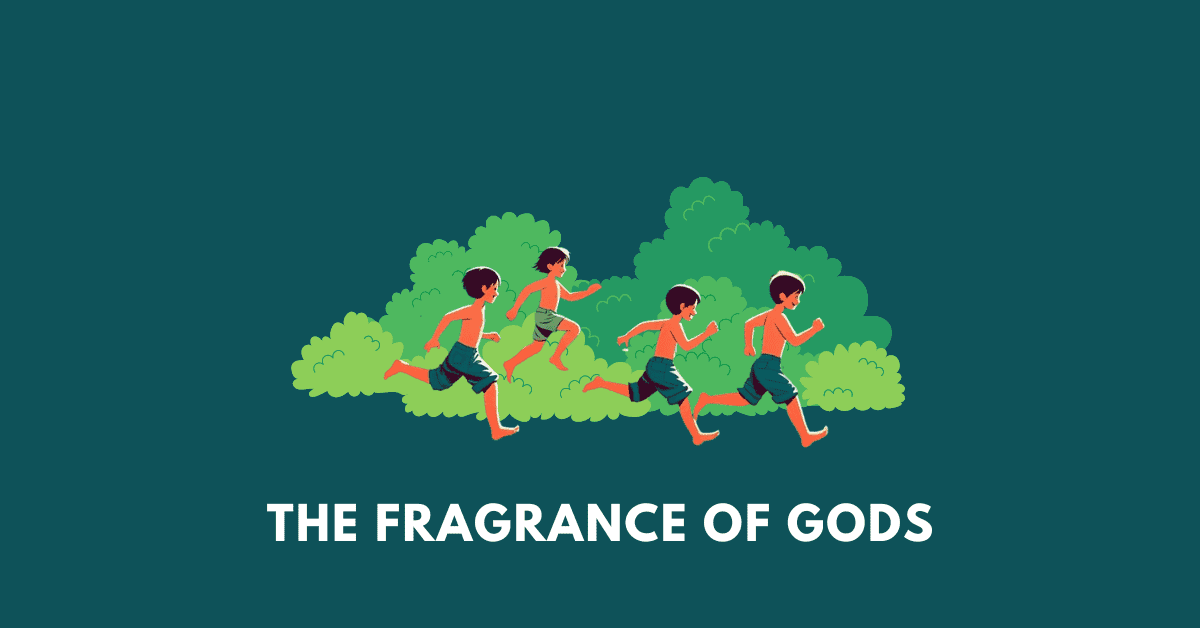
Here you’ll find a short summary of NBSE Class 10 alternative English chapter ‘The Fragrance of Gods’ by Toshi Langu and questions and answers. However, these notes should be used only for references. These materials should be modified/changed as per the needs.
Toshi Langu recounts his carefree childhood days growing up in a remote Naga village called Lakhuni in the 1950s. The village was located deep in the Japukong mountain range, enveloped by thick jungles and far removed from any semblance of modern civilization.
As children, Toshi and his friends lived more like “civilised apes” than human beings. Their days were spent outdoors, exploring the forests, climbing trees, eating wild fruits and nuts, and engaging in all sorts of mischievous monkey-like antics. While the world outside was making major technological advancements like launching rockets into space, the children of Lakhuni remained blissfully unaware, occupied with swinging from branches high up in the trees.
Toshi vividly paints a picture of his village life – perched atop a mountain, surrounded by dense jungles on all sides. The only road connection was an old pony trail used by American missionaries travelling to and from Assam. During World War II, this trail was broadened to allow vehicles, though motor vehicles remained an extreme rarity in those days. In fact, Toshi recalls seeing aeroplanes flying overhead before ever witnessing a motor vehicle on the road.
Any sighting of a vehicle, whether a jeep, truck or motorcycle, was a major event that sent the children into a feverish excitement. They called these vehicles ‘karis’ and the two-wheelers ‘thup thup karis.’ The arrival of a vehicle could be heard from miles away as it laboured up the winding dirt road leading to the village. Upon hearing the telltale engine sounds, children would raise an animated alert of “Kari, kari!” and the news would spread like wildfire.
Scores of children, including Toshi and his gang, would then frantically race downhill towards the main road, slipping and scrambling along the overgrown footpath, holding up their tattered half-pants. Their goal – to chase after the vehicle, running at full tilt while gulping down the exhaust fumes which they dubbed the “fragrance of the gods.” To them, raised without any machinery, the smell of engine exhaust was an exotic delight to be savoured.
After an exhilarating chase alongside the lumbering vehicle, the exhausted children would collapse by the roadside, panting heavily. Later, they would recount their grand exploit, comparing who ran fastest, whose pants fell off and any lucky finds like a fuel patch on the ground – a real “jackpot” to be carefully hidden away for sniffing at leisure.
Looking back, Toshi marvels at the paradoxical beauty of those seemingly uncivilised days. His village cohorts lived almost like theinka’tangle tribesmen from the movie The Gods Must Be Crazy – half-naked, filthy, malnourished and unkempt, yet ever joyful in their innocent ways. By modern standards, the risks they faced from disease, injury and harsh living conditions should have ensured they didn’t survive childhood. Yet against all odds, most of those carefree “vehicle chasers” lived to tell their tale.
Toshi can only deduce that an angel must have been watching over them through those wild and wonderful years of climbing trees, scarfing down fruits, playing rough, and mindlessly pursuing the “fragrance of the gods.” As he reminisces about the breathtaking natural beauty and unbridled freedom of those bygone childhood days, Toshi rrecognisesthat his remote Naga village may have been materially “backward,” but it bestowed upon him and his friends an unmatchable gift – the gift of living life naturally, at one with their lush surroundings, unfettered by societal norms and rejoicing in life’s simple pleasures.
1. What is ‘monkey mail’?
Answer: c. Village children passing messages to each other.
2. Why was having a short cut to the main road from the village advantageous?
Answer: d. The children could get from the village to the passing vehicle faster.
3. Why had Toshi never heard of Kohima?
Answer: d. It was rare that anyone went to Kohima or came from there to the village.
4. There we grew up more like civilized apes… What is the literary device used here?
Answer: b. Simile
5. I can only say that there was an Angel’ taking care of us. What does this sentence tell us about Toshi?
Answer: c. He believes in God.
1. They were driven by giant ape-like men with red faces.
a. Who are the men Toshi is talking about?
b. Why were they driving through Toshi’s village?
c. Why were their faces red?
Answer: a. The men Toshi is talking about were American soldiers who passed by his village during the war.
b. They were driving through Toshi’s village because they were soldiers and fighting in a war.
c. According to the author, their faces were red either because people at that time roamed around half-naked and thus the soldiers were blushing or perhaps they got sunburns.
2. During such exploits, finding a patch of oil or fuel which had fallen through a leak in the vehicle was like hitting the jackpot!
a. Why was finding a patch of oil on the ground like winning the jackpot?
b. Why did the finder try to hide the oil?
c. What do you think of Toshi and his friends’ practice of sniffing fuel?
Answer: a. Finding a patch of oil on the ground was like winning a jackpot because it was seen as a source of ‘fragrance of the gods’ for the weeks to come which they loved to sniff.
b. The finder tried to hide the oil as it was revered as a prized possession and must be protected.
c. I think Toshi and his friends’ practice of sniffing fuel started as a form of curiosity because of the rarity of fuel and grew to become a form of addiction that they had no clue about.
1. Why does Toshi call his village ‘remote’ and ‘backward’?
Answer: Toshi called his village ‘remote’ and ‘backward’ as according to him his village was far away from any civilization and jungles blanketed the entire region. They grew up more like civilized apes than human children spending more time in the wild outdoors than at homes. Further, when the Americans were trying to build a rocket and go to the moon, they were busy swinging from branch to branch, up in the trees, that too without any safety equipment.
2. What is the ‘fragrance of the gods’? Why were children in the village so eager to catch a whiff of it?
Answer: To the children, the exhaust of the vehicles that would pass their villages was known as ‘fragrance of the gods’.
The children were eager to catch a whiff of it because their village was so remote that a vehicle passing by the village was a rare occasion, and that naturally created curiosity among the children. So they would chase the vehicles and try to absorb themselves in the remnants of the vehicles, which were the exhaust. For them, the exhaust was something new, precious, and rare. The children had also perhaps gotten addicted to the exhaust, and thus they were so eager to get a whiff of it.
3. I can only say that there was an ‘Angel’ taking care of us. Why are Toshi and his friends lucky to be alive?
Answer: Toshi and his friends are lucky to be alive considering the food they ate, the malnourished bodies they possessed, the dirt they lived in, the animal-like habits and lifestyle they had, the games they played, and the risks they took were simply overwhelming! Influenza, tetanus, dysentery, hepatitis, or accidents could have wiped them out, but they didn’t. That’s why Toshi remarked that an ‘Angel’ was taking care of them as they were still alive despite all the odds.
1. Toshi compares his childhood to the happenings at an ape enclosure in a zoo. What does he mean by this? What literary device is he using here?
Answer: Toshi compares his childhood to the happenings at an ape enclosure in a zoo to draw a picture of the surroundings he grew up in. Though the comparison may appear a bit exaggerated, he is still able to paint a vivid picture with this. By comparing his childhood to the happenings at an ape enclosure in a zoo, he means that they spent their childhood in the wilderness, taking risks, exploring the forest, climbing trees, swinging from branches, eating wild fruits and nuts, and monkeying around unlike other children of their age.
The literary device that he is using here is a simile.
2. I am a child of the fifties. What decade were you born in? What are some of the major events that took place then that have shaped your life?
Answer: I was born in 2000s. Some major events that took place during that time period and shaped my life include:
1. Toshi loved the beauty of his village and the freedom that the village life gave him. But at the same time he was also aware of its drawbacks. Do you think he presents his views in a fair and balanced way in the memoir? Explain how.
Answer: Yes, Toshi presents his views in a fair and balanced manner. He vividly describes the beauty and freedom of village life, highlighting the joy and adventure he and his friends experienced in their natural surroundings. At the same time, he does not shy away from discussing the drawbacks, such as the village’s remoteness, lack of modern conveniences, and the challenges posed by living in a less developed area. This balanced view allows readers to appreciate the beauty and challenges of his childhood environment.
2. Girls simply had no place in such adventures though.
a. What does Toshi mean by ‘adventures’ here?
Answer: Toshi refers to the adventurous activities he and his friends engaged in, such as chasing vehicles, inhaling the exhaust fumes they considered the ‘fragrance of the gods,’ and navigating the natural landscape of their village. These activities were thrilling and risky, embodying a sense of adventure for them.
b. Why do you think girls had nothing to do with these adventures?
Answer: The absence of girls in these adventures could be attributed to societal norms and expectations of the time, which likely discouraged girls from participating in activities considered dangerous or unsuitable for them. Additionally, the narrative suggests that these adventures were perceived as masculine pursuits, which further explains why girls were not involved.
3. ‘Be natural live natural’ was our slogan. Do you think Toshi has a sense of humour? How does the line given above reflect his sense of humour?
Answer: Yes, Toshi demonstrates a sense of humour through his writing. The line ‘Be natural live natural’ serves as a tongue-in-cheek reference to the simplicity and unrefined aspects of their childhood. It humorously encapsulates their embrace of a wild and untamed lifestyle, marked by adventures in nature and a disregard for the trappings of modern civilization. This slogan, along with the candid recounting of their childhood exploits, showcases Toshi’s ability to reflect on his past from a light-hearted and humorous perspective.
1. Toshi talks about having had a very ‘natural’ childhood. How has the increased use of technology changed children’s lives today?
Answer: The increased use of technology has significantly transformed children’s lives today, making them more inclined towards indoor activities such as video games, social media, and online learning, thus reducing their time spent outdoors and in natural play. It has also influenced their social interactions, learning habits, and overall development, introducing them to a world of information and global connectivity from a young age but potentially affecting their physical activity levels and direct human interactions.
2. A memoir is an account of one’s personal life and experiences. Toshi Langu has written a mini memoir about his childhood. Write your own mini memoir about your childhood focusing on some of your most cherished or painful memories.
Answer: I am Anami, a young girl from a village in the hills of Nagaland. My most cherished memories are of the times I spent in the forests and fields surrounding our village with my brother Imti and our dog Moko. We would run and play for hours, climbing trees, splashing in streams, and following animal tracks with curiosity.
The forests felt like a magical world full of mysteries to explore. Imti taught me which plants had edible berries, how to set simple traps for small creatures, and the ancient stories and legends of our Naga people. Being out in nature with him was pure freedom and joy.
One painful memory was when Moko didn’t return home from the forest one evening. We searched for days but eventually had to accept that he was gone, likely taken by a larger animal. I was heartbroken. Moko had been my loyal friend and companion since I was a baby. Imti tried to comfort me, but I felt such profound sadness at losing her.
Another difficult memory was the year the rains didn’t come as expected, and our crops withered in the fields. We went hungry for many weeks until the monsoon finally arrived. I remember my mother’s stoic face as she boiled the same watery vegetable broth day after day, trying to make it last as long as possible. I was always hungry and weak during that time.
Yet through all the struggles of village life, we had our close-knit community. I have fond memories of festive dances and storytelling around the fires, the whole village coming together in colour and ceremony. Those vibrant traditions, passed down through generations, made me feel rooted and part of something greater than myself. I cherish the ways of my Naga ancestors and will pass them on to my own children one day.
1. What did the children name the smell of the vehicle’s exhaust?
A. Elixir of life B. Breath of fresh air C. Fragrance of the gods D. Scent of freedom
Answer: C. Fragrance of the gods
2. How did the children in Toshi’s village react to the passing of a vehicle?
A. They ignored it B. They chased after it C. They hid from it D. They reported it to the elders
Answer: B. They chased after it
3. Why were vehicles a rare sight in Toshi’s village?
A. The village was well-connected by public transport B. The village had a strict no-vehicle policy C. Vehicles seldom passed through the village D. The village was located in an urban area
Answer: C. Vehicles seldom passed through the village
4. What did Toshi and his friends do when they found a patch of oil or fuel from a vehicle?
A. Cleaned it up immediately B. Reported it to the village council C. Scooped it up to sniff at leisure D. Used it to light fires
Answer: C. Scooped it up to sniff at leisure
5. How does Toshi describe his childhood surroundings?
A. Urban and noisy B. Quiet and industrial C. Remote and covered in jungles D. Coastal and breezy
Answer: C. Remote and covered in jungles
6. What was the ‘kari adventure’?
A. A local festival B. Chasing after passing vehicles C. A traditional dance D. A village game
Answer: B. Chasing after passing vehicles
7. How did Toshi and his friends perceive their childhood lifestyle?
A. Unfortunate and constrained B. Normal and unremarkable C. Adventurous and free D. Restricted and boring
Answer: C. Adventurous and free
8. What was the significance of the ‘angel’ in Toshi’s story?
A. A real guardian who looked after the children B. A mythical creature feared by the villagers C. A metaphor for luck or divine protection D. The name of a local deity
Answer: C. A metaphor for luck or divine protection
9. How did the children know a vehicle was approaching the village?
A. They could see it from a distance B. They were informed by the village elders C. They heard it from miles away D. They received a notification
Answer: C. They heard it from miles away
10. Why did Toshi and his friends run behind vehicles?
A. To get a ride B. To see it up close C. To inhale the ‘fragrance of the gods’ D. To warn the village
Answer: C. To inhale the ‘fragrance of the gods’
11. What was considered a ‘jackpot’ for Toshi and his friends during their adventures?
A. Finding a lost vehicle B. Discovering a new play area C. Finding a patch of oil or fuel on the ground D. Catching a glimpse of an airplane
Answer: C. Finding a patch of oil or fuel on the ground
12. How did Toshi and his friends view the vehicles and their exhaust?
A. As a nuisance B. As a danger C. As a source of fascination D. As an everyday occurrence
Answer: C. As a source of fascination
13. What does Toshi attribute to their survival despite the risks they took in their childhood?
A. Their physical strength B. The care of an ‘Angel’ C. The safety of their village D. Their cleverness
Answer: B. The care of an ‘Angel’
14. How did the children communicate the approach of a vehicle to others in the village?
A. By using a loudspeaker B. By sending a person to inform each house C. Through ‘monkey mail’ D. By lighting a signal fire
Answer: C. Through ‘monkey mail’
1. Where was the village where the narrator grew up located?
Answer: The village where the narrator grew up was located in the lower regions of the Ao land called the Japukong Range.
2. What are the great ‘kari adventures’? Why do you think the girls never took part in them?
Answer: The great ‘kari adventure’ for the children wear to chase the passing by motor vehicles, which were rare occasions, and get a whiff of their exhaust. Whenever the children would hear the sound of an approaching motor vehicle, they would take a shortcut and reach the spot where they could catch the vehicle. The older boys frequently caught up with the vehicle but the smaller ones were still running down the short cut long after the vehicle had gone past. Those who reach the spot early, they would be jostling with each other for a vantage point and the moment the vehicle passed them, they would be running behind the vehicle while inhaling smoke emitted by the vehicle. For them, it was the ‘fragrance of the gods’. Having raced till the village or beyond with the vehicle, they would just drop flat on the ground with exhaustion and deoxygenation.
The girls had no place in such adventures because like any other patriarchal society girls were confined within the household chores most of the time.
3. What happened to the pony trail through the village during World War II?
Answer: During World War II, the pony trail through the village was broadened into a motorable road.
4. What were the stories about the vehicles that came through the village during the war?
Answer: There were stories in the village that countless vehicles-big and small ones-came and went on the road through the village during the war. These vehicles were driven by giant ape-like men with red faces. Most probably they had red faces because our grandparents roamed around half-naked at that time. The Americans might have been blushing or perhaps they got sun burns.
5. How did the narrator miss an exciting time in history?
Answer: The narrator missed an exciting time in history by about five years, as they were not yet born when the Americans frequented the village during World War II.
6. How was the village connected to other places?
Answer: The village was connected to other places through the first and only pony trail into Nagaland, which was used by American missionaries.
7. What did the speaker and their friends do when a vehicle passed by?
Answer: The speaker and their friends ran excitedly towards the road below the village to get a whiff of the vehicle’s exhaust, which they called the “fragrance of the gods.”
8. How did the boys run with their half pants on?
Answer: The boys had to run with one hand holding up their half pants as they kept falling down their ankles. Most of them had buttons torn off their half pants which they never bothered to sew on again.
9. What did the boys do with the patch of oil or fuel that they found on the road?
Answer: The boys who found a patch of oil or fuel on the road scooped it up, put it on a leaf and carried it home. They would hide it carefully in a place known only to them and sniff away the “fragrance of the gods” at leisure for weeks.
10. What did the boys do after they chased after a vehicle and reached the village?
Answer: After the boys chased after a vehicle and reached the village, they would drop flat on the ground with exhaustion and deoxygenation. Then, long after the vehicle had gone, they would stagger into the village, sit around some place and recount the whole incident. They would narrate who did what and how and evaluate the great “kari adventure.” After this, they would scatter and go back home, as all that running had made them extremely hungry.
11. What was the rare and precious exhaust that the children in the village named “fragrance of the gods”?
Answer: The rare and precious exhaust that the children in the village named “fragrance of the gods” was the smoke emitted by vehicles.
12. What did the children in the village do after running with a vehicle till the village or beyond?
Answer: After running with a vehicle till the village or beyond, the children in the village would drop flat on the ground with exhaustion and deoxygenation. Then, long after the vehicle had gone, they would one by one stagger into the village, sit around some place and recount the whole incident.
13. How did the children in the village spend their childhood days?
Answer: The children in the village spent their childhood days exploring the forest, climbing trees, swinging from branches, eating wild fruits and nuts, and playing in the outdoors. They lived a natural and primitive lifestyle, swimming and playing in the water like sea otters, climbing and swinging on trees like monkeys, and eating like pigs whenever the opportunity came their way.
14. What did the speaker and their friends look like during their childhood?
Answer: The speaker and their friends were almost naked and caked in dirt, had bloated tummies from malnutrition and worms, overgrown, matted and uncut hair infested with lice, and phlegm hanging from their noses like yellowish-green worms.
15. How did the speaker and their friends spend their free time in childhood?
Answer: The speaker and their friends liked to swim and play in the water like sea otters, climb and swing on trees like monkeys, roll down hillsides like tumbleweed, skip and jump like lemurs, go hungry like wolves, and eat like pigs whenever the opportunity came their way.
16. How did the speaker’s perception of distance change over time?
Answer: The speaker used to think that Mokokchung was very far away, but now it is only 40 kilometres or so away from their village. They had never heard of Kohima, so they thought it didn’t exist.
17. How did the speaker and their friends’ habits and lifestyle in childhood compare to those of animals
Answer: The speaker and their friends’ way of life in childhood was similar to that depicted in the movie “The Gods Must Be Crazy”.
18. How did the narrator and their friends spend their childhood?
Answer: The narrator and their friends spent their childhood exploring the forest, climbing trees, swinging from branches, eating wild fruits and nuts, and monkeying around.

Only for registered users
Thank you sir for the information.
actually..what is their slogan?
Natural,be natural,live natural
Very nice app
It’s a website not an app. Amateurs
Lol it seems you are the amateurs .. It’s just a link to the app ….Check last portion of the website Mr.expert 🙂
Toshi and his friends are lucky to be alive considering the food they ate and the malnourished bodies they possessed, the dirt they lived in, the animal-like habits and lifestyle they had, the games they played and the risks they took were simply overwhelming! Influenza, tetanus, dysentery, hepatitis or accidents could have wiped them out but they didn’t. That’s why Toshi remarked that an ‘Angel’ was taking care of them as they were still alive despite all the odds.
This app is amazing I am using this app from last two year now I am in class 10 I am getting great healp from this apppppppppppp❤️?
What was their slogan?
Benaturallivenatural
‘ Be natural, live natural ‘ was their slogan
Need answer to the newly added questions
Need answer for the newly added question
Why did toshi wrote about his childhood adventures