Synonyms
More meanings
Tip: select a single word for meaning & synonyms.
Select multiple words normally to copy text.

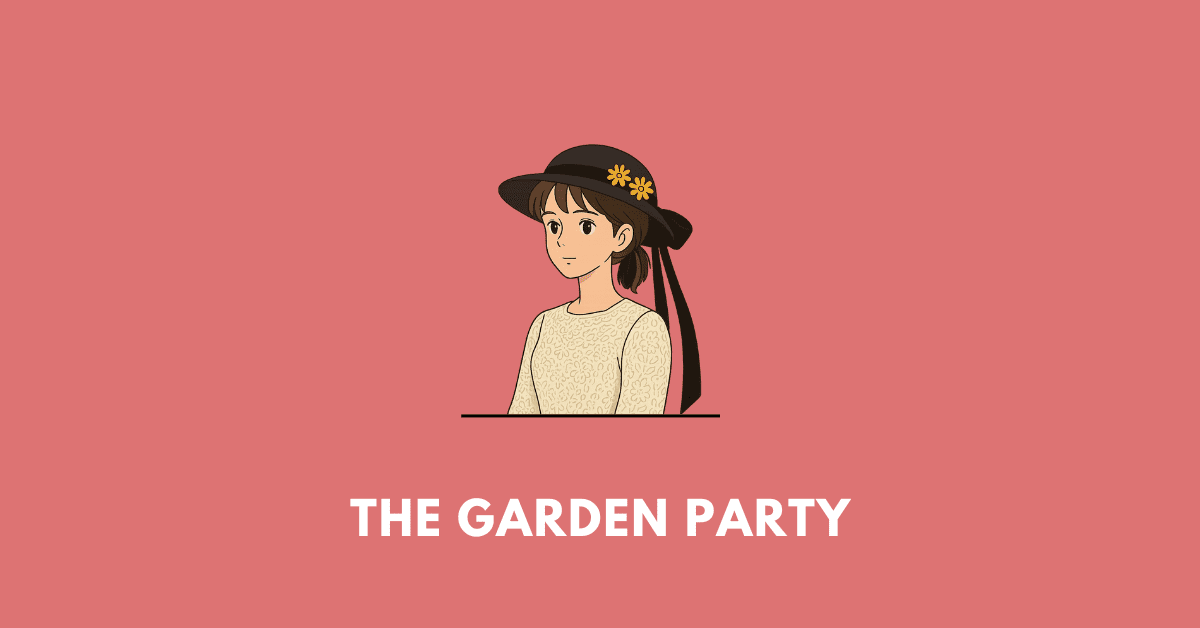
Get summaries, questions, answers, solutions, notes, extras, PDF and guides for Katherine Mansfield’s The Garden Party: WBCHSE Class 11 English Literature textbook A Realm of English (B) Selection, which is part of the Semester III syllabus for students studying under WBBSE (West Bengal Board-Uccha Madhyamik). These solutions, however, should only be treated as references and can be modified/changed.
The Sheridan family prepared for a garden party on a perfect summer day. The garden was beautiful, with hundreds of roses in bloom. Laura, one of the daughters, was asked to supervise the arrangements.
Four workmen arrived to put up a large tent, called a marquee. At first, Laura felt shy speaking to them while holding a piece of bread-and-butter. A friendly workman made her feel comfortable. She began to admire the men and wondered about the social differences that kept them apart. She saw one of them stop to smell a sprig of lavender. This small act made her feel a connection to him and his simple appreciation of life.
Later, a delivery man brought terrible news. A man named Scott, who lived in the poor cottages down the hill, had been killed in an accident. He left behind a wife and five small children. Laura was horrified and insisted they must cancel the party. She felt it was wrong to celebrate while a family nearby was in mourning.
Her sister, Jose, and her mother, Mrs. Sheridan, thought her idea was absurd. They told her the accident had nothing to do with them. To change the subject, Mrs. Sheridan gave Laura a new hat with a long velvet ribbon. The hat represented the family’s wealthy lifestyle and their way of ignoring unpleasant realities. When Laura saw how lovely she looked in the mirror, she was distracted from her worries and agreed the party should go on.
The garden party was a success. Laura played the part of a good hostess, and the accident was temporarily forgotten. After the guests left, the family sat in the empty marquee. Laura’s father mentioned the man’s death. Mrs. Sheridan then had an idea to send a basket of leftover food to the grieving family. She asked Laura to take it to them.
Laura walked down the hill toward the cottages. She felt uncomfortable and out of place in her fancy party dress and hat. Her family’s garden was a symbol of a beautiful, sheltered world. The dark lane where the cottages stood represented the harshness of life and death that her family tried to avoid.
Inside the Scott house, Laura met the grieving widow. She was then led into a bedroom to see the dead man. He lay peacefully, as if in a deep sleep. Looking at his calm face, Laura had a sudden realization. She understood that in death, social classes, parties, and fancy clothes did not matter. He seemed content and far away from all worldly troubles. Feeling ashamed of her own appearance, she whispered, “Forgive my hat.”
Laura left the house crying and met her brother, Laurie. He asked if her visit was awful. She sobbed that it was “marvellous.” She could not fully explain her new understanding of life, but Laurie seemed to understand her feelings.
1. Describe the role of Laura’s mother in shaping Laura’s perception in The Garden Party?
Answer: Laura’s mother, Mrs. Sheridan, shapes Laura’s perception by consistently imposing her upper-class values and dismissing Laura’s genuine concerns. When Laura wants to cancel the party after a man’s death, her mother calls her absurd and distracts her with a new hat. This manipulation causes Laura to doubt her own feelings and conform to her mother’s view that the party must go on, as people of a lower class do not expect sacrifices.
2. How does the garden reflect the contemporary society?
Answer: The garden reflects the stark class divisions of the society. The Sheridan’s garden is an idyllic, perfect space with immaculate lawns and beautiful flowers, representing the sheltered, privileged world of the wealthy. This is set in sharp contrast to the “disgusting and sordid” lane of the workers, whose garden patches contain only cabbage stalks and tomato cans, illustrating the vast social and economic gap between the classes.
3. Explore the symbolism of the Sheridan family’s Garden in the story.
Answer: The Sheridan family’s garden symbolises the idyllic and isolated world of the upper class, a carefully curated paradise shielded from harsh realities. Its description as a place with a perfect day, windless and warm, with hundreds of beautiful roses, represents a life of privilege, beauty, and leisure. The garden functions as a world unto itself, where concerns are limited to party arrangements, separating its inhabitants from the outside world.
This symbolism is sharpened by the contrast with the poor cottages below. The garden’s physical elevation above the lane mirrors the social hierarchy, with its lushness highlighting the poverty and squalor of the working class. Laura’s journey out of the garden at the end of the story is therefore a symbolic crossing of class boundaries, moving from a state of sheltered innocence to a direct confrontation with the realities of life and death from which the garden had protected her.
4. Discuss the various themes as exhibited in The Garden Party.
Answer: A primary theme is class consciousness and the deep divisions in society. The narrative consistently contrasts the opulent lifestyle of the Sheridans and their garden party with the stark poverty of their neighbours. This is shown through the family’s dismissive attitudes and Laura’s own internal conflict as she becomes more aware of these “absurd class distinctions” after interacting with the workmen.
The story also charts a journey from innocence to experience. Laura begins as a naive young woman, but the news of the fatal accident forces her to confront a reality that clashes with the party’s frivolity. Her visit to the grieving family is a transformative moment, moving her from a sheltered existence toward a more complex understanding of life.
Finally, the story juxtaposes life and death. The vibrant, joyful party preparations occur alongside a tragic death nearby. Laura grapples with how these two opposing realities can coexist. Her eventual encounter with the dead man, whom she finds peaceful and beautiful, leads to a new, almost incommunicable insight into life, which she tries to express to her brother at the end.
1. How was the weather on the day of the garden party?
Answer: The weather on the day of the garden party was ideal and perfect, as if they had ordered it. The day was windless and warm, with a sky that had no clouds. The blue of the sky was gently covered with a haze of light gold, a feature sometimes seen in early summer.
2. What did the gardener do to prepare the lawns?
Answer: The gardener had been working since dawn to prepare the lawns for the party. He spent the morning mowing the lawns and then sweeping them. He worked until the grass and the dark, flat rosettes of the daisy plants seemed to shine, making the garden look neat and beautiful.
3. Why did the roses seem to understand their importance?
Answer: The roses seemed to understand their importance because they are the only flowers that truly impress people at garden parties and are flowers that everyone is certain to know. Hundreds of roses had bloomed in a single night, and the green bushes bowed down under their weight, as if they had been visited by archangels, acknowledging their special role.
4. How did Mrs. Sheridan respond when asked about the marquee?
Answer: When asked where the marquee should be put, Mrs. Sheridan told her child that it was no use asking her. She explained that she was determined to leave all the arrangements to the children that year. She playfully instructed them to forget she was their mother and to treat her as an honoured guest for the day.
5. Why couldn’t Meg supervise the men putting up the marquee?
Answer: Meg could not go and supervise the men because she had just washed her hair before breakfast. She was sitting and drinking her coffee while wearing a green turban to dry her hair. A dark, wet curl was stamped on each of her cheeks, making it impossible for her to go out.
6. Who was Jose? How is she described in the story?
Answer: Jose was one of the Sheridan sisters. She is described as a butterfly, who always came down from her room dressed in a silk petticoat and a kimono jacket. She was also very practical and enjoyed giving orders to the servants, as it made her feel like she was part of a drama.
7. Why was Laura chosen to supervise the workmen?
Answer: Laura was chosen to supervise the workmen because her sister, Jose, declared that Laura was the artistic one in the family. Since the placement of the marquee was seen as an artistic decision, the family felt that Laura was the most suitable person for the task.
8. How did Laura feel about being given the task to arrange things?
Answer: Laura was delighted to be given the task of arranging the marquee. She loved having an excuse to eat her bread-and-butter outdoors. More importantly, she loved arranging things because she always felt that she could do it so much better than anybody else in her family.
9. Describe the appearance of the four workmen.
Answer: The four workmen were dressed in their shirt-sleeves and stood together on the garden path. They carried staves which were covered with rolls of canvas, and they each had a big tool-bag slung on their back, making them look impressive. The tallest of them was a lanky, freckled man, another was a little fat man, and a third was pale with a haggard look.
10. Why did Laura feel embarrassed when she first approached the workmen?
Answer: Laura felt embarrassed because she was holding a piece of bread-and-butter in her hand as she went to speak to the workmen. She wished she was not holding it but could find nowhere to put it down and felt she could not possibly throw it away. This made her blush and try to look severe.
11. How did the tallest workman put Laura at ease?
Answer: The tallest workman put Laura at ease with his friendly behaviour. When he spoke to her, he knocked back his straw hat and gave her an easy, friendly smile. Laura noticed that the other workmen were smiling too, and their smiles seemed to tell her to cheer up and that they would not bite, which helped her recover from her shyness.
12. What was Laura’s first suggestion for the marquee’s location? Why was it rejected?
Answer: Laura’s first suggestion was to place the marquee on the lily-lawn. She pointed to the spot with the hand that was not holding her bread-and-butter. However, the tall workman rejected this idea. He said that he did not fancy it because the location was not conspicuous enough for a marquee.
13. What did the tall workman mean by “a bang slap in the eye”?
Answer: When the tall workman said the marquee should give you a “bang slap in the eye,” he was using a figure of speech. He meant that the marquee needed to be placed in a very obvious and prominent location. It should be the first thing people notice, somewhere it would immediately and powerfully catch their attention.
14. Where did the workmen finally decide to put the marquee? Why?
Answer: The workmen, led by the tall fellow, finally decided to put the marquee against the karaka-trees. The workman pointed to the spot and declared that it would do fine. This location was chosen because it was prominent and would be immediately visible to the guests, fulfilling the requirement of being conspicuous.
15. Why was Laura initially unhappy with the chosen location for the marquee?
Answer: Laura was initially unhappy with the chosen location because placing the marquee there would hide the beautiful karaka-trees. She thought the trees were lovely, with their broad, gleaming leaves and clusters of yellow fruit. She felt they were like trees from a desert island, and she questioned if they must be hidden.
16. What gesture by the tall workman made Laura forget about the karakas?
Answer: Laura forgot about her concern for the karaka-trees when she saw the tall workman perform a simple, sensitive gesture. He bent down, pinched a sprig of lavender, and sniffed its smell. Laura was filled with wonder that he would care for something like the smell of lavender, and this made her forget her earlier unhappiness.
17. How did Laura feel about the workmen compared to the boys she knew?
Answer: Laura felt that the workmen were extraordinarily nice people. She thought about how few of the men she knew would have appreciated the smell of lavender as the workman did. She wished she could have workmen for her friends instead of the silly boys she danced with, feeling she would get on much better with men like them.
18. What did Laura do to show she despised stupid conventions?
Answer: To prove that she was happy, felt at home with the workmen, and despised what she considered stupid social conventions, Laura took a big bite of her bread-and-butter. She did this while staring at the little drawing the workman had made, wanting to show that she was not bound by upper-class manners and felt like a work-girl herself.
19. What did Laurie ask Laura to do before the afternoon?
Answer: As Laurie was getting ready to go to the office, he quickly asked Laura for a favour. He asked her if she would give his coat a “squiz,” which means a quick look, before the afternoon party. He wanted her to see if the coat needed to be pressed before he wore it later.
20. What did Laura discuss with Kitty on the telephone?
Answer: On the telephone, Laura invited her friend Kitty to come for lunch, explaining that it would only be a “scratch meal” of leftovers. They also talked about the perfect weather for the party. Laura then advised Kitty on what to wear, agreeing that Kitty’s white outfit would be a good choice.
21. What was Mrs. Sheridan’s instruction to Laura regarding Kitty’s attire?
Answer: While Laura was on the phone with Kitty, Mrs. Sheridan’s voice floated down the stairs with an instruction. Mrs. Sheridan told Laura to tell Kitty that she should wear the sweet hat that she had on the previous Sunday. Laura then passed this message on to Kitty before ending the call.
22. Describe the atmosphere in the house after Laura’s phone call.
Answer: After the phone call, the house was alive with activity and preparation for the party. All the doors seemed to be open, and the air was filled with the sounds of soft, quick steps and running voices. The green baize door to the kitchen swung open and shut, and the heavy piano was being moved, making a long, chuckling sound.
23. What did the florist deliver to the Sheridan house?
Answer: The florist delivered a wide, shallow tray filled with pots of pink canna lilies. There was no other kind of flower, only lilies. They were described as big pink flowers that were wide open, radiant, and looked almost frighteningly alive on their bright crimson stems.
24. How did Laura react to the arrival of the canna lilies?
Answer: Laura reacted to the lilies with a sound like a little moan of awe. She crouched down as if to warm herself at their brilliant colour, feeling their presence in her fingers and on her lips. Overwhelmed by the sheer number of them, she faintly said that their delivery must be a mistake.
25. How did Mrs. Sheridan justify ordering so many lilies?
Answer: Mrs. Sheridan calmly explained that she had ordered the lilies herself. She said she had been passing the florist’s shop the day before and saw them in the window. She suddenly thought that for once in her life she wanted to have enough canna lilies, and the garden party was a good excuse to buy them.
26. How did Jose test the piano in the drawing-room?
Answer: To test how the piano sounded, Jose decided to practice a song she might be asked to sing in the afternoon. She chose to play and sing “This life is Weary.” As she started, the piano burst out so passionately that her expression immediately changed, showing she was pleased with its sound.
27. What song did Jose sing? How did her expression change while singing?
Answer: Jose sang a sad song titled “This Life is Wee-ary.” While singing the mournful lyrics, she looked mournfully and enigmatically at her mother and Laura. However, as she sang the final word, “Good-bye,” her face broke into a brilliant and dreadfully unsympathetic smile, and she beamed, asking if she was in good voice.
28. What did the cook ask for? Why was Mrs. Sheridan’s response typical?
Answer: The cook sent a message through the maid, Sadie, asking if Mrs. Sheridan had the little flags for the sandwiches. Mrs. Sheridan’s response was typical of her character because she echoed the question dreamily, and her children knew from her expression that she had forgotten to get them, showing her forgetful nature regarding practical details.
29. What task did Mrs. Sheridan give Laura in the smoking-room?
Answer: Mrs. Sheridan quickly took Laura into the smoking-room for an important task. She had found an envelope with the names of the sandwich fillings written on the back. She told Laura that she would have to write the names out for her, as they were needed for the kitchen.
30. What were the fillings for the sandwiches?
Answer: The fillings for the sandwiches were cream cheese and lemon-curd, as well as egg and olive. Mrs. Sheridan had trouble reading the writing on the envelope and at first thought the word “olive” was “mice,” which Laura had to correct for her. Mrs. Sheridan thought egg and olive was a horrible combination.
31. How did Godber’s cream puffs arrive? Why were they famous?
Answer: The cream puffs were delivered by a man from Godber’s, a well-known bakery. Godber’s was famous for its cream puffs, and they were so special that nobody ever considered making them at home. Their arrival was announced by the maid, Sadie, who saw the delivery man pass the window.
32. What news did Godber’s man bring to the house?
Answer: Godber’s man, while delivering the cream puffs, brought the shocking news of a fatal accident. He told the kitchen staff that a man had been killed that morning in the neighbourhood just below their house. He seemed to enjoy being the one to tell the dramatic story.
33. Who was Mr. Scott? What happened to him?
Answer: Mr. Scott was a young man who worked as a carter and lived in one of the small cottages below the Sheridan’s home. He was killed in an accident that morning. His horse was frightened by a traction-engine on Hawke Street, and he was thrown from his cart, landing on the back of his head.
34. How did Laura react to the news of the man’s death?
Answer: Laura was horrified when she heard the news of the man’s death. She stared at Godber’s man in disbelief and immediately grabbed her sister Jose’s sleeve. She dragged Jose away from the kitchen staff and, in a horrified voice, insisted that they had to stop everything because of the tragedy.
35. What did Laura want to do immediately after hearing about the accident?
Answer: Immediately after hearing about the man’s death, Laura’s first and only thought was to cancel the garden party. She felt it was completely inappropriate to have a celebration with music and guests when a man had just died so close to their home. She told Jose they must stop the party, of course.
36. How did Jose react to Laura’s suggestion to stop the party?
Answer: Jose was amazed by Laura’s suggestion and thought it was absurd. She told Laura not to be so extravagant, insisting that they could not possibly cancel the party. Jose argued that nobody would expect them to do such a thing and that it was not their responsibility.
37. Describe the cottages where the poor people lived.
Answer: The cottages were described as little, mean dwellings painted a chocolate brown. They were an eyesore to the Sheridans. The garden patches had only cabbage stalks and tomato cans, and even the smoke from the chimneys looked “poverty-stricken.” The whole area, filled with swarming children and workers, was considered disgusting and sordid.
38. Why were the Sheridan children forbidden from visiting the lane?
Answer: When the Sheridan children were little, they were forbidden to go into the lane where the cottages were. This was because their parents were concerned about the “revolting language” used by the people who lived there. They were also worried that the children might catch some kind of illness or disease.
39. What was Jose’s argument against stopping the band?
Answer: Jose became seriously annoyed with Laura and argued that life would be very strenuous if one stopped a band from playing every time an accident happened. She hardened her expression and told Laura that being sentimental would not bring a “drunken workman” back to life, callously dismissing the man’s death.
40. How did Mrs. Sheridan first react when Laura told her the news?
Answer: When Laura told her mother that a man had been killed, Mrs. Sheridan’s first reaction was one of selfish alarm. She immediately interrupted to ask if the man had been killed in their garden. Upon hearing he had not, she expressed relief, saying Laura had given her a fright, showing no initial sympathy for the victim.
41. How did Mrs. Sheridan try to dismiss Laura’s concerns about the party?
Answer: Mrs. Sheridan told Laura to use her common sense and dismissed her concerns by saying they only heard about the death by accident. She argued that if someone had died “normally” in those “poky little holes,” they would have continued with the party anyway, so this situation was no different.
42. What did Mrs. Sheridan do to distract Laura from her worries?
Answer: To distract Laura from her grief and worries about the party, Mrs. Sheridan used a new hat. She took a beautiful black hat, told Laura it was made for her, and popped it on her head. She then praised Laura, telling her she looked like a picture, and held up a hand-mirror so Laura could see her reflection.
43. How did Laura feel when she saw herself in the mirror with the new hat?
Answer: When Laura saw her reflection, she was captivated by the charming girl in the mirror wearing the beautiful hat with gold daisies and a velvet ribbon. She had never imagined she could look so lovely. This sight made her start to question her own convictions and hope that her mother was right about the party.
44. What did Laura decide to do about the memory of the accident?
Answer: After seeing herself in the new hat, the memory of the accident began to seem blurred and unreal to Laura, like a picture in a newspaper. She decided to put the thought of the poor woman and her children aside for now and to remember it again after the party was over, which seemed like the best plan.
45. How did Laurie react when he saw Laura in her new hat?
Answer: When Laurie saw Laura in her new hat, he was visibly impressed and surprised. He was halfway up the stairs when he turned, puffed out his cheeks, and goggled his eyes at her. He exclaimed that she looked stunning and that her hat was “absolutely topping,” which means excellent.
46. What did Laura do during the party?
Answer: During the party, Laura became the perfect hostess, glowing with happiness. She moved among the guests, softly asking them if they had had tea or would like an ice. She even ran to her father and begged him to arrange for the band to have something to drink, fully immersing herself in the celebration.
47. What did Mr. Sheridan say about the accident after the party?
Answer: After the party, Mr. Sheridan brought up the accident, calling it a “beastly” and “horrible affair.” He confirmed that the man who died was married and lived just below them in the lane. He added the detail that the man had left behind a wife and half a dozen, or six, children.
48. What was Mrs. Sheridan’s “brilliant idea” for the leftovers?
Answer: Mrs. Sheridan’s brilliant idea was to use the party leftovers for a charitable gesture. She suggested they make up a basket of the uneaten sandwiches, cakes, and puffs and send it to the grieving widow. She felt it would be a great treat for the children and helpful to have food ready for neighbours.
49. Why was Laura hesitant about taking the basket of food?
Answer: Laura was hesitant about her mother’s idea because she felt a new sense of unease. She questioned if it was truly a good idea to take “scraps” from their party to a grieving family. She wondered if the poor woman would really appreciate such a gesture, showing a deeper sensitivity than her mother.
50. Why did Jose object to Laura taking the arum lilies?
Answer: When Mrs. Sheridan suggested Laura also take some arum lilies, Jose objected for a very practical reason. She pointed out that the wet stems of the lilies would ruin Laura’s delicate lace frock. Her concern was for Laura’s expensive dress, not for the appropriateness of the gift.
51. What did Laura feel as she walked down the hill to the cottages?
Answer: As Laura walked down the hill, she felt a strange sense of detachment. She could not fully realize that she was going to a house where a man lay dead. Instead, she felt that the happy memories of the party—the kisses, voices, and laughter—were still inside her, leaving no room for anything else.
52. How did Laura feel about her party dress and hat in the poor lane?
Answer: In the smoky, dark lane, Laura felt deeply uncomfortable and out of place in her fine party clothes. She wished she had worn a coat, as her frock seemed to shine too brightly. She was especially self-conscious about her big hat, feeling it was a mistake to have come dressed so elaborately and that everyone must be staring at her.
53. Describe the scene outside the Scott’s house.
Answer: Outside the Scott’s house, there was a dark knot of people standing quietly. An old woman with a crutch was sitting in a chair by the gate, watching. As Laura drew near, the people stopped talking and parted for her, as if they had been expecting her to arrive.
54. How did Laura enter the Scott’s house?
Answer: Laura intended to just leave the basket at the door, but she was ushered inside against her will. A little woman in black opened the door, and before Laura could explain, the woman said, “Walk in, please, miss.” To Laura’s horror, she was then shut inside the gloomy passage.
55. Who did Laura meet inside the kitchen? What was the woman’s appearance?
Answer: Inside the wretched little kitchen, Laura met the dead man’s widow, Em, who was sitting by the fire. When the woman turned around, her face looked terrible. It was red and puffed up, and her eyes and lips were swollen from crying, showing her immense grief.
56. Describe the dead man’s appearance as Laura saw him.
Answer: When Laura saw the dead man, he did not look frightening. He lay as if fast asleep, looking sound, deep, and peaceful. He seemed remote and far away, as if he were dreaming. His head was sunk in the pillow with his eyes closed. To Laura, he looked wonderful and beautiful.
57. What was Laura’s realization upon seeing the dead man?
Answer: Seeing the peaceful face of the dead man, Laura had a sudden realization. She understood how unimportant things like garden parties, baskets of food, and lace frocks were to him now. She saw that while her family was laughing and celebrating, this peaceful marvel had come to the lane, and that his face looked happy and content.
58. What did Laura say to the dead man?
Answer: Overcome with emotion and feeling the need to say something, Laura gave a loud, childish sob. Looking at the peaceful man, she apologized for her own vanity and the social class she represented by saying, “Forgive my hat.” It was an apology for her world’s intrusion into his.
59. How did Laurie find Laura? What was his reaction?
Answer: Laurie met Laura at the corner of the lane as she was leaving. He had stepped out of the shadows, looking for her because their mother had become anxious. He was very gentle and concerned, asking if she was all right and, seeing her tears, putting his arm around her shoulder and telling her not to cry in a warm, loving voice.
60. What did Laura try to say to Laurie at the end? How did he respond?
Answer: At the end, Laura tried to express her new, overwhelming understanding of life and death. She sobbed that her experience was “simply marvellous” and then stammered, “Isn’t life—” but could not find the words to explain her complex feelings. Laurie, however, seemed to understand her perfectly and finished her thought by saying, “Isn’t it, darling?”
61. Describe the preparations for the garden party in the opening paragraphs.
Answer: The preparations for the garden party began on what was an ideal day, with windless, warm weather and a sky veiled in a haze of light gold. The gardener had been working since dawn, mowing and sweeping the lawns, making the grass and daisy rosettes shine. Hundreds of roses had bloomed overnight, bowing down as if visited by archangels.
Before breakfast was even over, men arrived to put up the marquee. Mrs. Sheridan declared her intention to leave everything to the children and act as an honoured guest. Since Meg had just washed her hair and Jose was not suitably occupied, Laura, considered the artistic one, was sent to supervise the workmen.
62. How does Laura’s interaction with the workmen challenge her views on class?
Answer: Laura’s interaction with the workmen significantly challenges her views on class. Initially, she feels embarrassed holding her bread-and-butter and tries to look severe, reflecting her class conditioning. However, she is disarmed by a workman’s easy and friendly smile. Her perspective shifts completely when she sees one of the men stop to smell a sprig of lavender.
She is filled with wonder that he would care for such a thing, a sensitivity she had not seen in the boys of her own class. This leads her to think how extraordinarily nice workmen were and to wish they were her friends. She concludes that class distinctions are absurd and, to prove she despises such conventions, she takes a large bite of her bread-and-butter, feeling just like a work-girl.
63. What is the contrast between Laura’s sisters, Meg and Jose, and Laura herself?
Answer: A clear contrast exists between Laura and her sisters, Meg and Jose. Meg is preoccupied with her appearance, unable to help with the marquee because she has just washed her hair. Jose, called “the butterfly,” is dramatic and enjoys giving orders, but she lacks genuine feeling. This is shown when she sings a sad song with a “dreadfully unsympathetic smile.”
In contrast, Laura is sensitive and engaged, deemed “the artistic one.” The difference is most apparent in their reaction to the news of the local man’s death. While Laura is deeply moved and feels the party must be cancelled, Jose is practical and dismissive, calling Laura’s compassion absurd and sentimental. Jose is concerned with appearances and propriety, while Laura is guided by her conscience and empathy.
64. Explain the conflict between Laura and her family over cancelling the party.
Answer: The conflict arises when Laura learns of the carter’s death and insists that they must cancel the garden party out of respect for the grieving family. Her family, however, does not share her feelings. Her sister, Jose, is the first to object, calling Laura’s idea “absurd” and “extravagant.” Jose dismisses the neighbors as an “eyesore” and suggests the dead man was probably drunk, showing a complete lack of sympathy.
Laura then appeals to her mother, but Mrs. Sheridan is equally dismissive and seems amused by Laura’s distress. She tells Laura to use her “common sense,” arguing that it was only an accident and that “people like that” do not expect sacrifices from them. Laura finds herself completely alone in her moral conviction, facing the united and unfeeling opposition of her family.
65. How does Mrs. Sheridan manipulate Laura into forgetting the tragedy? What does this reveal?
Answer: Mrs. Sheridan manipulates Laura by cleverly distracting her with vanity. When Laura is deeply upset about the death and insists on cancelling the party, Mrs. Sheridan ignores her moral arguments. Instead, she takes a new hat and places it on Laura’s head, telling her it is “made for you” and that she has “never seen you look such a picture.” She then holds up a mirror, forcing Laura to admire her own reflection.
This act of flattery successfully shifts Laura’s focus from the tragedy to her own appearance. This reveals that Mrs. Sheridan prioritizes social appearances, pleasure, and maintaining the status quo over genuine empathy. She uses material objects and vanity as tools to suppress uncomfortable realities and to control her daughter’s inconvenient compassionate impulses.
66. Describe the Sheridan’s perception of the people living in the cottages.
Answer: The Sheridans perceive the people in the nearby cottages with contempt and disgust. They consider the cottages, which are small, mean dwellings, to be the “greatest possible eyesore” that have no right to be in their neighborhood. The area is described as “disgusting and sordid,” with shabby gardens, sick hens, and “poverty-stricken” smoke.
As children, the Sheridans were forbidden to go there for fear of “revolting language” and disease. This attitude persists into their adulthood. Mrs. Sheridan refers to the homes as “poky little holes” and coldly states that “people like that” do not expect sacrifices from her class. Their perception is one of strict social hierarchy, viewing the poor as an unpleasant and inferior group to be avoided.
67. Trace Laura’s emotional journey from hearing the news to the end of the party.
Answer: Upon hearing of the man’s death, Laura is filled with horror and a strong moral conviction that the party must be stopped. She then feels isolated and confused when her family dismisses her feelings as absurd. Her resolve is weakened by her mother’s manipulation with the new hat; seeing her own charming reflection makes her hope that her mother is right and that she is just being extravagant.
She decides to put the matter aside until after the party. During the festivities, she is swept up in the happy atmosphere, the music, and the compliments from guests. When she sees her brother Laurie, she remembers the accident but is stopped from speaking by his praise for her hat. By the end of the party, her initial compassion has been temporarily buried under a layer of social pleasure and vanity.
68. Why does Mrs. Sheridan decide to send leftovers to the Scott family? What does this show?
Answer: Mrs. Sheridan decides to send leftovers to the Scott family after the party is over. The idea occurs to her suddenly when she sees all the uneaten food on the table that would otherwise be wasted. She frames it as a “brilliant idea,” suggesting the food will be a “greatest treat for the children” and a help to the widow.
This act shows her superficial and detached approach to charity. Her primary motivation seems to be a practical one—not wasting food—combined with a desire to make a charitable gesture that costs her nothing and soothes any lingering guilt. It demonstrates her inability to understand true grief, as she believes a basket of party scraps is an appropriate offering. It highlights a class-based attitude where charity is a performance rather than a genuine act of empathy.
69. Describe Laura’s journey to the Scott’s cottage. What are her feelings and observations?
Answer: Laura’s journey to the Scott’s cottage is a descent into a different world. As she leaves her bright garden, she enters a lane that is “smoky and dark,” where the cottages are in “deep shade.” The atmosphere is quiet and somber, a stark contrast to the party. Initially, she is still filled with the sensations of the party and feels she has “no room for anything else.”
As she proceeds, she becomes intensely self-conscious of her fine party frock and big hat, feeling they are inappropriate and that it was a “mistake to have come.” She sees the local people and feels their eyes on her, which makes her “terribly nervous.” She feels like an intruder and wishes she could just leave the basket and run away without having to interact with anyone.
70. What is the impact of seeing the dead man on Laura? Explain her epiphany.
Answer: Seeing the dead man has a profound and unexpected impact on Laura. Instead of a horrifying sight, she finds a scene of incredible peace. The man looks as if he is “fast asleep,” looking “remote, so peaceful.” In that moment, she has an epiphany about the triviality of her own world. She thinks, “What did garden-parties and baskets and lace frocks matter to him?”
She realizes that he is “far from all those things” and sees him as “wonderful, beautiful.” Death is not ugly, but a “marvel” that makes the concerns of her life seem meaningless. This experience gives her a new, deep, and confusing understanding of life and death, which she struggles to express later. The man’s peaceful face seems to tell her that all is well and as it should be.
71. Explain the final conversation between Laura and Laurie. Why is it important?
Answer: The final conversation between Laura and Laurie is very important because it provides Laura with understanding and comfort. When Laurie finds her crying, he asks if her visit to the cottage was awful. She replies that it was “simply marvellous.” She then tries to explain her profound realization about life, stammering, “Isn’t life—” but is unable to finish her thought.
The key moment is that Laurie “quite understood” without her needing to explain further. His gentle response, “Isn’t it, darling?” confirms their shared sensitivity and deep connection. This is important because it shows Laura is not alone in her newfound awareness. Laurie’s empathy validates her experience and sets them both apart from the rest of their family, ending the story on a note of shared, unspoken insight.
72. How does the story contrast the world of the rich with the world of the poor?
Answer: The story draws a sharp contrast between the worlds of the rich Sheridans and the poor workers in the cottages. The Sheridan’s world is one of light, beauty, and excess. It is characterized by a perfect garden, hundreds of flowers, a lavish party, and an abundance of food. Their life is filled with pleasure and trivial social concerns.
In contrast, the world of the poor is depicted as dark, smoky, and grim. The cottages are “mean dwellings” in a “disgusting and sordid” lane, marked by signs of poverty like “cabbage stalks” and “sick hens.” While the Sheridans enjoy a party, their neighbors face the harsh realities of death and grief. The physical and social distance between the two worlds is immense, symbolizing the deep class divide and the lack of understanding between them.
73. What is the role of the hat in the story? How does it affect Laura’s actions?
Answer: The hat is a central symbol representing vanity, social class, and Laura’s internal conflict. Mrs. Sheridan uses the beautiful new hat to manipulate Laura, distracting her from her moral distress about the dead man. Admiring herself in the hat causes Laura to question her own convictions and ultimately give in to her mother’s wishes to continue with the party.
The hat also prevents her from confiding in her brother, Laurie, as his compliment about it stops her from speaking. Later, the hat becomes a symbol of her shame and inappropriateness when she wears it into the grieving neighborhood. Her final apology, “Forgive my hat,” is an apology for her own vanity and for the superficial values of her social class, which the hat represents.
74. How do Jose and Mrs. Sheridan represent the attitudes of their social class?
Answer: Jose and Mrs. Sheridan clearly represent the attitudes of their privileged social class. They are both primarily concerned with their own comfort, pleasure, and maintaining social appearances. When faced with the news of a neighbor’s death, their reactions are not of empathy but of annoyance and dismissal.
Jose is coldly practical, calling Laura “sentimental” and immediately dismissing the victim as a “drunken workman.” Mrs. Sheridan is more subtly condescending, treating Laura’s moral concerns as childish. Her statement that “People like that don’t expect sacrifices from us” perfectly captures her ingrained sense of class superiority. Their solution of sending leftovers is a shallow gesture of charity that reinforces their detachment from the real suffering of others.
75. Discuss Laura’s initial embarrassment and later admiration for the workmen.
Answer: Laura’s feelings toward the workmen evolve from class-conscious embarrassment to genuine admiration. When she first approaches them, she is holding a piece of bread-and-butter and feels awkward, wishing she could hide it. She tries to act superior and “severe” to maintain a social distance.
This feeling vanishes when the men prove to be friendly and natural. Her admiration is sealed when she sees one of the workmen pause to smell a sprig of lavender. She is struck by this simple, sensitive act, realizing that the men of her own class would likely not do such a thing. She begins to see the workmen as “extraordinarily nice” and more genuine than the “silly boys” she knows, which leads her to question the entire basis of class distinctions.
76. Why was Laura so impressed by the workman smelling the lavender? What did it signify to her?
Answer: Laura was so impressed by the workman smelling the lavender because it was a simple, spontaneous act of appreciating beauty. It went against all her preconceived notions of what a working-class man would be like. In her sheltered world, she associated such sensitivity with art and her own “artistic” nature, not with laborers.
The gesture signified to her a shared humanity that transcended class. It showed her that this man, despite his social standing, had a capacity for gentleness and a connection to the natural world that she found deeply admirable. It made her realize that the “silly boys” of her own circle lacked this genuine quality. For Laura, it was proof that the class distinctions she had been taught were artificial and meaningless.
77. Analyze the character of Jose. What does her behavior reveal about her personality?
Answer: Jose’s character is shown to be superficial, dramatic, and fundamentally unsympathetic. She is called “the butterfly,” which suggests a flighty nature focused on appearances. Her love of “giving orders to the servants” reveals a desire for control and a flair for the dramatic.
Her core personality is revealed when she sings a very sad song, “This Life is Wee-ary,” but ends with a “brilliant, dreadfully unsympathetic smile.” This shows a complete disconnect between the emotion she performs and what she actually feels. She is practical to the point of being callous, as seen in her dismissal of the dead man and her concern for Laura’s frock over a human tragedy. Jose embodies the cold, conventional, and self-absorbed attitudes of her social class.
78. What is the importance of the canna lilies in the story?
Answer: The canna lilies are an important symbol of the vibrant, excessive, and almost overwhelming life of the Sheridan’s world. Described as “radiant, almost frighteningly alive,” they represent the peak of natural beauty and luxury that fills the garden for the party. Laura’s intense, physical reaction to them shows how powerful this life force is.
Mrs. Sheridan’s impulsive decision to buy so many, simply because she wants “enough” for once, highlights the family’s casual extravagance. The lilies stand in stark contrast to the reality of death that occurs just outside their gates. Later, when Mrs. Sheridan suggests sending lilies to the grieving family, it shows how a symbol of life can be used as a condescending gesture of charity, based on the classist assumption that poor people are “impressed” by such things.
79. How does the party itself serve as a backdrop for Laura’s internal conflict?
Answer: The garden party serves as the perfect backdrop for Laura’s internal conflict between her awakening conscience and the pressures of her social class. The party represents a world of beauty, pleasure, and innocence. Its perfect weather, beautiful flowers, and happy guests create an idyllic setting that is completely at odds with the grim reality of the man’s death.
This contrast forces Laura into a difficult position. On one hand, she feels a moral obligation to acknowledge the tragedy and show respect. On the other hand, the party, with its music, food, and social demands, constantly pulls her back into its carefree world. The party is the physical manifestation of the sheltered life she is being asked to choose over a more difficult and compassionate awareness of the world.
80. Explain Laura’s final words, “Forgive my hat.” What does she mean by this?
Answer: Laura’s final words, “Forgive my hat,” spoken to the dead man, are a deeply symbolic apology. The hat is not just an item of clothing; it represents the vanity, triviality, and social superiority of her world. It was the tool her mother used to distract her from her grief, and it became a source of shame for her as she walked through the poor neighborhood.
In that moment, standing before the peaceful reality of death, Laura understands how meaningless things like fancy hats and garden parties are. By asking for forgiveness for the hat, she is apologizing for her own weakness in being swayed by vanity. More broadly, she is apologizing for her entire class and its focus on superficial concerns in the face of life’s most profound experiences. It is an admission of shame and a recognition of a deeper truth.
81. Discuss how Katherine Mansfield uses symbolism to explore the theme of class distinction.
Answer: Katherine Mansfield uses several powerful symbols to explore the theme of class distinction. The Sheridan’s garden itself is a primary symbol, representing the beautiful, orderly, and sheltered world of the upper class. It is a place where nature is controlled, with perfect lawns and roses that seem to understand their social role, creating a stark contrast to the world outside its gates.
The new hat that Mrs. Sheridan gives to Laura symbolizes the superficial values and materialism of her class. When Laura is troubled by the news of the death, the hat serves as a distraction. Seeing her charming reflection makes her forget her moral conflict, showing how surface appearances can overshadow genuine human feeling. Her final apology to the dead man, where she says to forgive her hat, shows her realization of its triviality.
Finally, the basket of leftover party food symbolizes the inadequate and condescending nature of upper-class charity. Mrs. Sheridan’s idea to send scraps from their feast is not an act of true empathy but a gesture to make themselves feel better. It highlights the vast emotional and social gap between the two classes, showing how the wealthy offer superficial solutions to profound suffering.
82. Analyze the character development of Laura throughout the story. How does she change?
Answer: Laura’s character develops from a state of youthful idealism to a more complex and mature understanding of life. At the beginning of the story, she is presented as the “artistic one,” sensitive to beauty and seemingly opposed to the “absurd class distinctions” of her family. She feels a genuine connection with the workmen and believes she despises the shallow conventions of her social circle.
The news of Mr. Scott’s death creates a significant internal conflict. Her immediate, compassionate response is that the garden party must be cancelled. However, her family, particularly her mother and sister Jose, pressure her to be sensible. The gift of a new hat distracts her, and she agrees to suppress her conscience for the sake of the party, revealing her vulnerability to the values of her class.
Her journey to the poor cottage marks the final stage of her development. Confronted with the reality of death, she sees not something horrible, but a peaceful and beautiful man, far removed from the trivialities of her world. This experience shatters her innocence. She returns unable to fully explain her feelings but has clearly moved beyond the simple, protected worldview she held at the start, having been introduced to the profound realities of life and death.
83. “The Garden Party” is a story about a loss of innocence. Discuss this statement.
Answer: The statement that “The Garden Party” is a story about a loss of innocence is accurate, as it traces Laura Sheridan’s journey from a sheltered, naive girl to a young woman confronted with the complexities of the world. Laura’s innocence is established early on; she lives within the perfect, protected bubble of her family’s garden and believes in simple kindness, thinking that class barriers are foolish and can be easily ignored. Her initial belief that the party can and should be stopped out of respect for a stranger’s death is a product of this innocent worldview.
This innocence is challenged by her family’s pragmatic and dismissive attitude. They see her compassion as “absurd” and “extravagant.” Her mother’s manipulation with the beautiful hat successfully appeals to Laura’s vanity, causing her to push aside her moral concerns and participate in the party. This is the first crack in her innocent idealism, as she learns to compartmentalize and ignore unpleasant realities.
The true loss of innocence occurs when she leaves her garden and enters the world of the grieving family. In the presence of the dead man, she realizes the complete insignificance of her world of parties, hats, and social niceties. She sees that death is a profound reality that makes her former concerns seem trivial. Her final, tearful encounter with her brother shows that she can no longer return to her previous state of innocence; she has been initiated into a more difficult but more complete understanding of life.
84. Explore the theme of life and death as presented in the story.
Answer: The theme of life and death is explored through a sharp contrast between two different worlds. Life is represented by the Sheridan’s garden party. It is filled with vibrant, sensory details: the perfect weather, hundreds of blooming roses, bright canna lilies, lively music, and the general excitement of the guests. This version of life is beautiful, joyful, and meticulously planned, but it is also shown to be superficial and insulated from harsh realities.
Death enters this perfect day as a “horrible accident” that has occurred in the poor cottages at the bottom of the hill. For most of the Sheridan family, death is an inconvenience, something to be ignored so that the party, or life’s pleasures, can continue. They attempt to keep the two worlds entirely separate, with Mrs. Sheridan being relieved that the man was not killed in their garden.
Laura’s journey brings these two opposing forces together. When she finally sees the dead man, Mr. Scott, she does not find the horror she expected. Instead, she sees a man who is “remote, so peaceful,” and even “wonderful, beautiful.” Death is presented not as a frightening end, but as a state of profound peace that makes the lively party seem insignificant. Laura’s final, stammered words to her brother suggest a new understanding that life and death are not separate, but are deeply connected parts of a larger, mysterious existence.
85. How does the story critique the superficiality and insensitivity of the upper class?
Answer: The story critiques the superficiality and insensitivity of the upper class primarily through the actions and attitudes of the Sheridan family. Their lives revolve around trivial concerns. They are preoccupied with the arrangements for the garden party: ordering a marquee, arranging flowers, planning the food, and choosing what to wear. Jose’s emotional performance of a sad song, followed immediately by a “dreadfully unsympathetic smile,” shows that her feelings are shallow and for show.
The family’s insensitivity is most clearly revealed in their reaction to Mr. Scott’s death. Jose dismisses Laura’s wish to cancel the party as “absurd” and cruelly suggests the man was drunk. Mrs. Sheridan’s main concern is that the accident did not happen on her property. She tells Laura to use “common sense” and states that “people like that don’t expect sacrifices from us,” revealing a cold, class-based detachment from the suffering of others.
This critique is further sharpened by Mrs. Sheridan’s idea to send the party leftovers to the grieving family. This act is not one of genuine compassion but a condescending gesture that highlights their inability to offer real comfort. They offer scraps from their celebration as a solution to a family’s tragedy, demonstrating their profound emotional distance and the superficial nature of their social conscience.
86. Compare and contrast the two settings: the Sheridan’s garden and the poor cottages.
Answer: The two settings of the Sheridan’s garden and the poor cottages are presented as complete opposites, highlighting the social and economic divide between their inhabitants. The Sheridan’s garden is a place of beauty, order, and abundance. The day is “ideal,” the lawns are perfectly mown, and hundreds of roses have bloomed as if for the occasion. It is a large, enclosed space, protected from the outside world, representing a life of privilege, leisure, and cultivated beauty.
In stark contrast, the lane with the poor cottages is described as “disgusting and sordid.” These are “little mean dwellings” with grim garden patches containing only “cabbage stalks, sick hens and tomato cans.” The smoke from their chimneys is “poverty-stricken,” unlike the “great silvery plumes” from the Sheridan’s house. The lane is smoky, dark, and crowded with children and neighbors, suggesting a life of hardship, poverty, and lack of privacy.
While the garden is a place of light, color, and controlled nature, the lane is a place of shadow, gloom, and grim reality. The garden is for a temporary, joyful party, while the cottages are the setting for the permanent, harsh realities of life and death. The physical road that separates them symbolizes the immense social chasm between the two classes.
87. Analyze the role of Mrs. Sheridan in the story. Is she a villain or a product of her society?
Answer: Mrs. Sheridan is best understood as a product of her society rather than a straightforward villain. Her actions and attitudes are a perfect representation of the upper-class Edwardian mindset. She is not intentionally cruel; rather, she is insulated by her wealth and social position to the point of being completely insensitive to the realities of life for the lower classes. Her primary concerns are superficial: the success of her party, the beauty of her flowers, and the appearance of her family.
Her response to the news of the man’s death shows her limitations. Her first thought is for her own property, asking if the man was killed “in the garden.” She treats Laura’s genuine distress as childish and “absurd,” unable to comprehend why a death outside her immediate circle should affect their plans. Her method of dealing with Laura’s conflict is to distract her with a pretty hat, a tool of the superficial world she commands.
Her idea to send leftovers to the grieving family, while seeming kind on the surface, is deeply condescending. She believes “people of that class are so impressed by arum lilies,” showing she sees the poor as a different species of human. While her actions are harmful to Laura’s moral development and insensitive to the grieving family, they stem from a worldview shaped entirely by her privileged, isolated environment. She is a symbol of her class, not an evil individual.
88. Discuss the importance of the story’s ending. What has Laura learned about life?
Answer: The ending of the story is extremely important because it shows Laura’s transformation and her arrival at a new, more complex understanding of existence. After seeing the peaceful face of the dead Mr. Scott, Laura leaves the cottage in a state of emotional turmoil. She is crying, but when her brother Laurie asks if the experience was “awful,” she sobs that it was “simply marvellous.”
This apparent contradiction reveals what she has learned. She has learned that life is not just about garden parties, pretty dresses, and superficial happiness. She has been confronted with the profound and peaceful reality of death, which makes her former world seem trivial. The experience was “marvellous” because it was a genuine, deeply moving human moment, unlike the artificial joy of the party.
When she tries to articulate her discovery to Laurie, stammering, “Isn’t life-,” she cannot find the words. Her inability to explain shows that her new knowledge is not intellectual but emotional and intuitive. Laurie’s simple, understanding response, “Isn’t it, darling?” confirms that she has been initiated into a shared, adult understanding of the world. Laura has learned that life is a mysterious mixture of joy and sorrow, beauty and death, and that these opposites are inextricably linked.
89. Examine the different attitudes towards the death of Mr. Scott. What do they reveal?
Answer: The different attitudes towards the death of Mr. Scott clearly reveal the characters’ social positions and their capacity for empathy. These reactions highlight the story’s central theme of class distinction.
Jose represents a practical and callous upper-class view. She is astonished at the idea of cancelling the party, calling it “absurd” and “extravagant.” She immediately resorts to class prejudice, dismissing the victim as a “drunken workman” to justify her lack of feeling. Her attitude reveals a belief that the lives and deaths of the poor are insignificant and should not interfere with the pleasures of the wealthy.
Mrs. Sheridan shares this insensitivity, though it is masked by a motherly, patronizing manner. Her main concern is that the death did not occur on her property. She treats Laura’s feelings as a silly phase and uses a new hat to distract her. Her belief that “people like that don’t expect sacrifices from us” shows her deep-seated conviction in the social hierarchy and the separation between classes.
Laura’s attitude stands in stark contrast. Her initial reaction is one of pure, unthinking empathy. She feels it is impossible to celebrate while a family is grieving so nearby. Although she is temporarily swayed by her family and the party’s allure, her conscience eventually leads her to the cottage. Her journey and final reaction show a capacity to bridge the class divide through shared humanity, something her mother and sister are incapable of.
90. How does Mansfield use sensory details to create the atmosphere of the two different worlds?
Answer: Katherine Mansfield masterfully uses sensory details to create the distinct atmospheres of the Sheridan’s garden and the poor cottages, thereby highlighting the contrast between the two worlds.
The world of the garden party is brought to life with an abundance of pleasant sensory details. Visually, there is the “blue” sky with a “haze of light gold,” the shining green grass, and “hundreds” of roses. The canna lilies are a “blaze” of “big pink flowers” on “bright crimson stems.” Auditory details include the “chock-chock of wooden hammers,” the sound of the band, and the “soft, quick steps and running voices” inside the house. The sense of taste is invoked with descriptions of cream puffs and passion-fruit ices. These details combine to create an atmosphere of vibrant, joyful, and luxurious life.
In contrast, the atmosphere of the cottages is created with bleak and grim sensory details. The lane is “smoky and dark.” The smoke is “poverty-stricken,” and the cottages are “mean little dwellings.” The visual landscape is one of “cabbage stalks” and “tomato cans.” As Laura walks down the hill, the world becomes quiet after the noise of the party, and the cottages are in “deep shade.” Inside the Scott’s house, the kitchen is “wretched” and “low,” lit only by a “smoky lamp.” These details create an atmosphere of poverty, gloom, and hardship, which serves as a powerful counterpoint to the brightness and abundance of the Sheridan’s world.
91. Discuss the conflict between social convention and individual conscience in the story.
Answer: The conflict between social convention and individual conscience is at the very center of the story, embodied in the character of Laura. Her journey is a struggle between what her heart tells her is right and what her family and society expect of her.
Laura’s individual conscience is awakened when she hears of Mr. Scott’s death. Her immediate, humane impulse is that the garden party must be stopped. This reaction is personal and moral; she feels it is simply wrong to be festive so close to a tragedy. This represents her inner voice, her sense of shared humanity that transcends class boundaries.
This conscience is immediately challenged by the forces of social convention, represented by her family. Her sister Jose and her mother dismiss her feelings as “absurd” and “extravagant.” They argue from a position of social expectation and class privilege, stating that “people like that don’t expect sacrifices” and that life must go on. The new hat is a powerful tool of social convention, appealing to Laura’s vanity and her desire to fit in, temporarily silencing her conscience.
The story’s climax sees Laura’s conscience reasserting itself as she carries the basket to the cottage. By physically leaving her protected world and confronting the reality of death, she follows her individual conscience over the social conventions she was raised with. Her final realization is a victory for her conscience, as she learns a truth about life that social conventions had tried to hide from her.
92. Analyze the relationship between Laura and her brother, Laurie. Why is he the one who understands?
Answer: The relationship between Laura and her brother, Laurie, is portrayed as one of deep, almost unspoken connection and understanding, which contrasts with Laura’s relationships with the other members of her family. While her mother and sister represent the rigid social conventions of their class, Laurie appears to share some of Laura’s sensitivity. They are presented as allies in a world of superficiality.
Throughout the story, Laura seeks Laurie’s approval and understanding. Early on, she feels that if Laurie agreed with the others about the party, “then it was bound to be all right.” This shows that she values his judgment above others. He is the only one she wants to tell about the accident, suggesting she instinctively feels he will be more sympathetic than her mother or Jose. His warm, boyish nature provides a comforting presence for her.
The reason Laurie is the one who understands at the end is that he seems to exist on a similar emotional wavelength as Laura. When she returns from the cottage, overwhelmed and unable to articulate her profound experience, she stammers, “Isn’t life-“. Laurie does not ask for a logical explanation. He simply replies, “Isn’t it, darling?”. His response is not a question but an affirmation. It shows that he grasps the emotional and philosophical weight of her discovery without needing it spelled out. He understands her transition from innocence to experience because he shares a fundamental sympathy with her that transcends the shallow logic of their social class.

Only for registered users