Synonyms
More meanings
Tip: select a single word for meaning & synonyms.
Select multiple words normally to copy text.

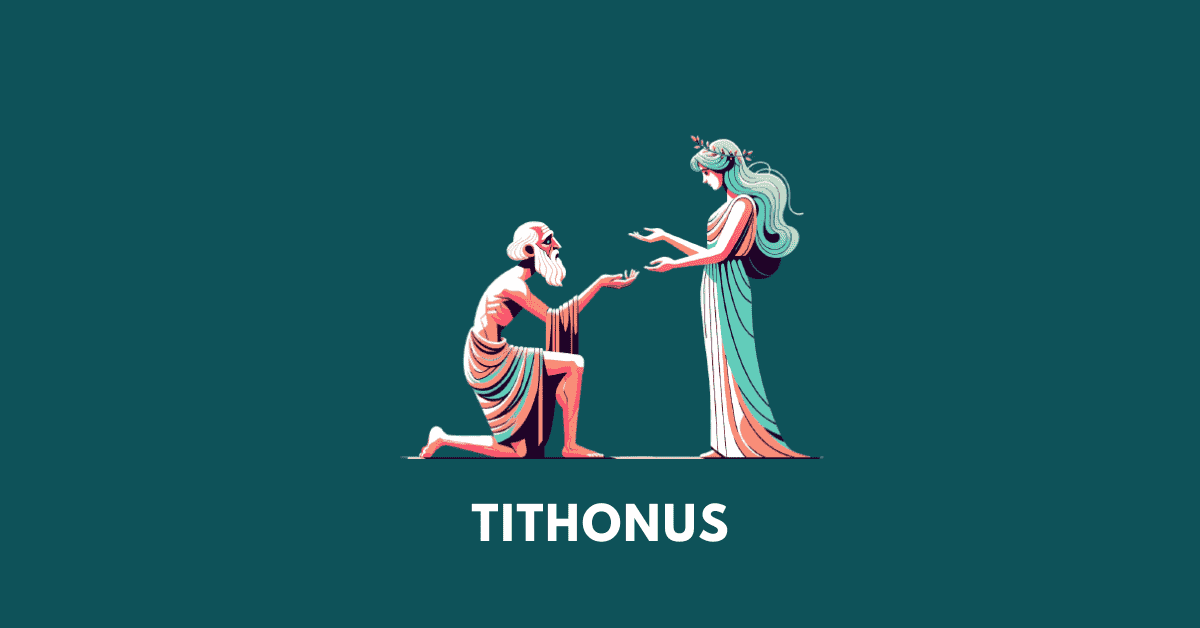
Get notes, summary, questions and answers, workbook solutions (Beeta Publication/Morning Star), critical analysis, word meanings, extras, and pdf of Lord Alfred Tennyson’s poemTithonus: ISC Class 12 English (Rhapsody: A Collection of ISC Poems). However, the notes should only be treated for references and changes should be made according to the needs of the students.
The speaker in this poem is Tithonus, son of the Trojan king Laomedon. He reminisces about the unfortunate predicament he finds himself in as a result of being granted immortality by his divine wife, the goddess Eos. Tithonus reflects that it is the natural law and destiny of all creatures, including humans, to age and meet their end. However, the eternal life given to him by Eos has left him a feeble, decrepit old man unable to die. Rather than blame Eos (Aurora) for his miserable state, Tithonus takes responsibility, admitting it was his own pride and ambition in demanding immortality while young that has led to this. He deeply regrets having lost his vigour and youth, while Eos (Aurora) remains eternally beautiful and alluring as the goddess of the dawn.
Tithonus now desperately wishes Eos (Aurora) would take back her gift of immortality, agreeing that he has no reason to go on living when all mortals must die. He contrasts Eos’ enduring youthful splendour with his own withered and hopeless old age. Tithonus expresses anguish over no longer being able to match the passionate youth of his beloved wife. When Eos (Aurora) does not respond to his pleas, Tithonus realises she too is in pain, though as a goddess she does not shed tears as he does. Her tearful eyes remind him of an old saying he learned in his youth – that the gods cannot revoke gifts once bestowed.
Tithonus mourns the loss of his own passionate enjoyment of dawn’s beauty and Eos’ youthful ardour, as he has grown old and lost the energy and zeal for life he once had. He wonders if he is even the same man anymore. His words suggest it was perhaps his fate to wed the radiant goddess and suffer this torment. Therefore neither Eos (Aurora) nor Tithonus himself are to blame for his current misery. In the end, he implores Eos (Aurora) not to force him to remain immortal as he has become withered and aged, feeling no passion for her anymore. The sight of the vapours from the fields of still-mortal men reveals their happiness in not having to grow old without death. Even those in their graves under the grass seem fortunate to Tithonus for having avoided the sorrow of immortality devoid of youth. He expresses his wish to die and be released from this woeful existence, while acknowledging Eos (Aurora) will go on delighting in her immortality. The poem’s implication is that humans are meant to perish and depart the earth, while the gods remain eternal.
Though based on the Greek myth of Tithonus and Eos, the poem does not recount the literal myth, omitting for instance Tithonus being turned into a grasshopper. Rather it focuses on the human condition and the problems that arise when the natural cycle of life is interfered with, whether by mortal ambition or divine power.
The woods decay, the woods decay and fall,
The vapours weep their burthen to the ground,
Man comes and tills the field and lies beneath,
And after many a summer dies the swan.
Tennyson paints a scene of natural entropy and the inexorable passage of time. The repeated phrase “the woods decay and fall” serves as a melancholic refrain that nature, in its endless cycle, is subject to decline and death. The imagery of the weeping vapours adds a layer of sorrow, as if the skies themselves mourn the fate of all things that must eventually succumb to the gravity of time—represented both literally as rain falling to the ground and symbolically as the sorrows of life. Man’s brief tenure on earth is likened to a farmer’s labour, which is temporary and inevitably ends with him becoming part of the land he once cultivated. The swan’s death is particularly evocative; though it lives through many summers—a symbol of beauty and grace—even it is not immune to death. This stanza establishes the theme of mortality that contrasts sharply with the immortal existence Tithonus laments.
Me only cruel immortality
Consumes: I wither slowly in thine arms,
Here at the quiet limit of the world,
A white-hair’d shadow roaming like a dream
The ever-silent spaces of the East,
Far-folded mists, and gleaming halls of morn.
Here, the speaker, Tithonus, describes himself as an anomaly within the natural order. Unlike the woods, the vapour, man, and the swan, he cannot decay and fall; he is trapped by the “cruel immortality” granted to him. The word “consumes” is paradoxical—normally one would be consumed by death, not immortality. But for Tithonus, immortality is a slow consumption, a perpetual withering rather than a quick release. The image of a “white-haired shadow” emphasises his ghostly, insubstantial existence. His comparison to a “dream” floating through “ever-silent spaces of the East” is replete with the notion of liminality; he is caught between the tangible world and some other ethereal realm, a place marked by the “gleaming halls of morn,” suggestive of the unattainable beauty and renewal that dawn represents, forever out of his grasp.
Alas! for this gray shadow, once a man—
So glorious in his beauty and thy choice,
Who madest him thy chosen, that he seem’d
To his great heart none other than a God!
These lines express a profound sense of loss. Tithonus mourns for himself, recalling his past vitality and glory. He was once a “grey shadow,” full of life and chosen by a goddess. His selection by a divine being made him feel akin to a god, inflating his sense of self to divine proportions. It’s a wistful reflection on past grandeur, now lost.
I ask’d thee, ‘Give me immortality.’
Then didst thou grant mine asking with a smile,
Like wealthy men, who care not how they give.
Tithonus recalls the fateful request he made to the goddess Eos—to be made immortal. The granting of this wish is recounted with a sense of naivety on both their parts. Eos’s smile is likened to that of the careless generosity of the rich, who give without considering the consequences or the nature of the gift. This introduces the theme of unintended consequences and the folly of wishing for more than what is naturally allotted.
But thy strong Hours indignant work’d their wills,
And beat me down and marr’d and wasted me,
And tho’ they could not end me, left me maim’d
To dwell in presence of immortal youth,
Immortal age beside immortal youth,
And all I was, in ashes.
Time, personified as “strong Hours,” seems to rebel against the perversion of its natural law. Tithonus is not simply living; he is being actively destroyed by time, yet not allowed to die. There’s a sense of indignity in the way time treats him, leaving him “maim’d” and less than he once was. The juxtaposition of “immortal age beside immortal youth” is tragic—Tithonus ages but does not die, whereas Eos (Aurora) remains eternally young. His former self is reduced to “ashes,” a powerful image of complete degradation and the finality that he can never achieve.
Can thy love,
Thy beauty, make amends, tho’ even now,
Close over us, the silver star, thy guide,
Shines in those tremulous eyes that fill with tears
To hear me? Let me go: take back thy gift:
Why should a man desire in any way
To vary from the kindly race of men
Or pass beyond the goal of ordinance
Where all should pause, as is most meet for all?
Tithonus questions whether the love and beauty of the goddess can compensate for the torment he endures. The “silver star,” possibly the planet Venus, often associated with love, guides Eos (Aurora) and is reflected in her tearful eyes, signifying her regret and sadness over Tithonus’s fate. His plea to be released from immortality is laden with the wisdom of hindsight; he now sees the value in the natural order of life and death from which he has been excluded. He ponders why anyone would want to deviate from the human experience, to go beyond the natural boundaries set for life—reflecting the Victorian era’s anxieties about the consequences of hubris and the overreaching of humanity.
A soft air fans the cloud apart; there comes
A glimpse of that dark world where I was born.
A change in the atmosphere occurs as a gentle breeze provides a momentary glimpse into Tithonus’s past. The “dark world” refers to the mortal world he was born into—a stark contrast to the perpetual dawn he now inhabits. This glimpse serves as a poignant reminder of what he has lost: his mortality and the natural world he was a part of.
Once more the old mysterious glimmer steals
From thy pure brows, and from thy shoulders pure,
And bosom beating with a heart renew’d.
Thy cheek begins to redden thro’ the gloom,
Thy sweet eyes brighten slowly close to mine,
Ere yet they blind the stars, and the wild team
Which love thee, yearning for thy yoke, arise,
And shake the darkness from their loosen’d manes,
And beat the twilight into flakes of fire.
Eos’s transformation at dawn is described with an ethereal beauty. The “old mysterious glimmer” alludes to the recurring beauty of Eos (Aurora) that Tithonus has witnessed countless times, yet now it only serves to emphasise his eternal alienation from the cycle of life and death. The “wild team” refers to the horses of Eos’s chariot, full of vitality and vigour, embodying the power and majesty of the natural world that Tithonus can observe but no longer partake in. The poetic image of the twilight being beaten “into flakes of fire” captures the violence and beauty of the dawn, as well as the pain it brings to Tithonus, as it signifies another day of his endless life.
Lo! ever thus thou growest beautiful
In silence, then before thine answer given
Departest, and thy tears are on my cheek.
Tithonus acknowledges the silent beauty of Eos (Aurora) that grows with each passing moment. Her departure without answering his pleas indicates a sense of inevitability and helplessness in the face of his fate. The tears on his cheek are a testament to their shared sorrow—a sorrow that is profound and personal, marking the gulf between their experiences.
Why wilt thou ever scare me with thy tears,
And make me tremble lest a saying learnt,
In days far-off, on that dark earth, be true?
‘The Gods themselves cannot recall their gifts.’
The tears of Eos (Aurora) alarm Tithonus; they seem to confirm a terrible ancient saying that even the gods cannot undo what they have given. This realisation terrifies him, suggesting his immortality, and thus his suffering, is irrevocable. This echoes a common theme in myths where divine actions are irreversible and often carry a heavy price.
Ay me! ay me! with what another heart
In days far-off, and with what other eyes
I used to watch—if I be he that watch’d—
The lucid outline forming round thee; saw
The dim curls kindle into sunny rings;
Tithonus expresses a poignant longing for the past, contrasting his former vitality with his current despair. The repeated exclamations “Ay me! ay me!” signal deep lamentation. He nostalgically remembers watching Eos (Aurora) with a heart full of life and eyes that could truly see and appreciate the beauty of her divine transformation. There’s a sense of disbelief as he questions whether he is the same person who once observed Eos’s hair transform from dim curls into rings illuminated by the sun.
Changed with thy mystic change, and felt my blood
Glow with the glow that slowly crimson’d all
Thy presence and thy portals, while I lay,
Mouth, forehead, eyelids, growing dewy-warm
With kisses balmier than half-opening buds
Of April, and could hear the lips that kiss’d
Whispering I knew not what of wild and sweet,
He recalls being in sync with Eos’s transformation at dawn, his body reacting to the increasing light that made her divine presence radiate. As he lay there, every kiss from Eos (Aurora) was rejuvenating and warm, compared to the gentle emergence of spring represented by “half-opening buds of April.” There’s a sense of mystery and sweetness in the whispers he couldn’t quite understand, reminiscent of the enchanting and incomprehensible nature of divine communication.
Like that strange song I heard Apollo sing,
While Ilion like a mist rose into towers.
The memory of Eos’s whispers takes him back further in time to the divine songs of Apollo, the god of music. He evokes an image of Troy (Ilion), his homeland, appearing majestic and dream-like, rising from the mist, possibly alluding to the legendary past and the glory of life before his transformation into an immortal being.
Yet hold me not for ever in thine East:
How can my nature longer mix with thine?
Coldly thy rosy shadows bathe me, cold
Are all thy lights, and cold my wrinkled feet
Upon thy glimmering thresholds, when the steam
Floats up from those dim fields about the homes
Of happy men that have the power to die,
Tithonus pleads with Eos (Aurora) not to keep him bound to the realm of the eternal dawn, which she governs. There is a profound disconnect between his now-cold, mortal nature and her warm, immortal one. The ‘rosy shadows’ and lights of dawn, once sources of warmth and joy, now feel cold to him, a reminder of his unnatural state. He envisions the earthly fields and homes of mortals, who, in their ability to die, possess a happiness he can no longer attain.
And grassy barrows of the happier dead.
Release me, and restore me to the ground;
Thou seëst all things, thou wilt see my grave:
Thou wilt renew thy beauty morn by morn;
I earth in earth forget these empty courts,
And thee returning on thy silver wheels.
Tithonus deems even the dead, lying in their grass-covered graves, to be happier than he is. He implores Eos (Aurora) to let him join them in the earth, to end his eternal suffering. He acknowledges her omnipotent vision, assuming she will witness his return to the earth upon his death. He imagines a world where she continues her daily renewal, her beauty unfading with each dawn, while he, once returned to dust, will no longer remember the empty existence he endured. The ‘silver wheels’ refer to her chariot, which brings the dawn each day—yet for him, it’s a cycle from which he desperately seeks release.
decay: The process of rotting or deteriorating.
vapours: Moisture in the air; mist or steam.
burthen: An archaic form of “burden,” meaning a heavy load or weight.
tills: Prepares and cultivates land for farming.
consumes: Eats away at; destroys or uses up.
wither: To dry up or shrivel due to loss of moisture or sustenance.
arms: Here, it implies the embrace or protective support, possibly referring to the embrace of Eos, the goddess of dawn.
shadow: A dark shape produced by a body coming between rays of light and a surface; used metaphorically to represent a faint or diminished presence.
roaming: Wandering or travelling aimlessly.
Alas: An expression of grief, pity, or concern.
marr’d: Damaged or spoiled.
wasted: Weakened; diminished in health or vitality.
maim’d: Injured, typically in a way that results in a permanent disability.
amends: Compensation for a wrong or injury.
silver star: Often a symbol for the planet Venus, which is associated with the goddess of love and is visible at dawn or dusk.
tremulous: Shaking or quivering slightly, usually from nervousness or emotion.
ordinance: A decree or command.
soft air: A gentle breeze.
glimmer: A faint or wavering light; a soft glow.
redden: To become red or flushed.
thresholds: The bottoms of doorways; the place or point of entering or beginning.
yoke: A wooden beam used to couple two animals together for pulling heavy loads; symbolically, it can represent slavery or servitude.
manes: The long hair growing from the neck of a horse or similar animal.
twilight: The soft glowing light from the sky when the sun is below the horizon, caused by the reflection of the sun’s rays from the atmosphere.
flakes of fire: Likely a poetic description of the shimmering or flickering effect of light at twilight or dawn.
barrows: Burial mounds or large heaps of earth or stones placed over a grave.
restore: To bring back to a former condition or position.
grave: A place of burial for a dead body, typically a hole dug in the ground.
Alfred Lord Tennyson’s monologue “Tithonus” utilises the mythological character Tithonus to meditate on existential questions of life, death, and immortality. Tithonus was granted eternal life by Eos, goddess of the dawn, but not everlasting youth. Through Tithonus’s lamentation, the poem explores the agony of an immortal being trapped in a decaying body, suggesting immortality alone is a curse without the permanence of youth.
A prevalent theme is the contrast between the mortal condition of constant change and renewal versus Tithonus’s unchanging, interminable decline. While the natural world cycles through life, death, and rebirth with each dawn, Tithonus remains suspended in perpetual decrepitude. The vivid imagery of the rejuvenating dawn underscores Tithonus’s stasis and isolation in the “ever-silent spaces.”
Tennyson employs mournful rhythm and enjambment to evoke Tithonus’s ceaseless, unpausing torment. The irregular metre reinforces the anguished disjunction between Tithonus’s state and the natural order. Requests for death’s release convey the desire to escape suffering, highlighting the poem’s solemn existential undertones.
The recurring dawn imagery exemplifies how love, even divine love, cannot conquer the ruthless passage of time or mortality’s shadow. Tithonus’s yearning for his youthful passion suggests life’s poignancy is in its ephemeral nature. Tennyson implies immortality alone is meaningless without change, implying the necessity of death in providing life meaning.
By poetically rendering Tithonus’s mythic agony, Tennyson stimulates contemplation on mortality, desire, and the human quest for immortality. The poem warns against tampering with natural laws and hubristically seeking eternal life devoid of growth or purpose. Ultimately, “Tithonus” provides a mythological lens to examine timeless philosophical questions about the essence and cyclical beauty of mortal existence.
1. How do the vapours weep their burthen?
(a) The clouds burst on the hills
(b) The vapours dissolve in the sea
(c) The clouds dissolve into rain
(d) None of the above
Answer: (c) The clouds dissolve into rain
2. Who is consuming ‘Me’ in the first stanza of the poem?
(a) Pride
(b) Immortality
(c) Mortality
(d) Beauty
Answer: (b) Immortality
3. In whose arms in the speaker withering?
(a) His beloved’s
(b) His own
(c) Death
(d) None of the above
Answer: (a) His beloved’s
4. What is referred to by the ‘quiet limit of the world?
(a) The eastern horizon
(b) The home of Goddess, Eos
(c) The end of human life
(d) Both (a) and (b)
Answer: (d) Both (a) and (b)
5. What is the tone of the poem, Tithonus?
(a) Epigrammatic
(b) Elegiac
(c) Epistolary
(d) None of the above
Answer: (b) Elegiac
6. Which type of poetry is used in the poem, Tithonus’?
(a) Sonnet
(b) Ode
(c) Ballad
(d) Dramatic Monologue
Answer: (d) Dramatic Monologue
7. Who is the one in the poem, who ‘lies beneath’?
(a) Cockroach
(b) Dead man
(c) Grasshopper
(d) All of the above
Answer: (b) Dead man
8. What is suggested by ‘A white-hair’d shadow roaming like a dream?
(a) An insignificant dream
(b) Moon light
(c) Man’s shadow
(d) None of the above
Answer: (a) An insignificant dream
9. What does the poet bemoan as he looks at earth?
(a) The suffering of man
(b) The death of all things
(c) His immortality
(d) None of the above
Answer: (c) His immortality
10. Where is he now, who is described as ‘once a man’?
(a) In the forest
(b) In the sky
(c) In the vapours
(d) In the sea
Answer: (b) In the sky
11. Who is described in line — ‘So glorious in his beauty’?
(a) God of Sky
(b) God of Dawn
(c) The Prince of Trojan
(d) The Prince of Rome
Answer: (c) The Prince of Trojan
12. Who among the following has been compared with ‘wealthy men’ in the poem?
(a) Tithonus
(b) Eos
(c) Zeus
(d) None of the above
Answer: (b) Eos
13. Who are referred to as ‘they’ in the line given below?
And tho’ they could not end me, left me maim’d
(a) The Gods
(b) Time
(c) Nature
(d) None of the above
Answer: (b) Time
14. What ‘amends’ does the speaker ask Eos to make?
(a) To answer her questions
(b) Not to weep at his condition
(c) To take back her gift of immortality
(d) To gift her immortal youth
Answer: (c) To take back her gift of immortality
15. Where does the speaker want to go?
(a) To his home
(b) To a place where all are immortal
(c) To Earth
(d) To heaven
Answer: (c) To Earth
16. Which figure of speech is used in the line given below?
‘Whispering I knew not what of wild and sweet’
(a) Allusion
(b) Alliteration
(c) Metaphor
(d) Simile
Answer: (b) Alliteration
17. In the line—’Thy presence and thy portals’, who is referred by Thy?
(a) The goddess of dawn
(b) Tithonus
(c) God Apollo
(d) None of the above
Answer: (a) The goddess of dawn
18. What is referred to by the speaker as the ‘dark world?
(a) Heaven
(b) Underground
(c) The earth
(d) None of the above
Answer: (c) The earth
1. In the poem, Tithonus, the speaker says that ‘Me only cruel immortality/ consumes’ because ______
Answer: while everything else in the natural world, such as the woods, clouds, and even the swan, follows the cycle of decay and death, he alone is cursed to live forever. This immortality is cruel because it sets him apart from the natural order, trapping him in a state of endless withering without the release of death that all other beings experience.
2. In the poem, Tithonus, the speaker has defined his immortality as cruel because ______
Answer: it was not granted along with eternal youth. As a result, relentless Time has ravaged him, depriving him of his strength, beauty, and vitality. He is forced to exist as a “white-hair’d shadow,” eternally old and frail, in the presence of the eternally youthful Eos, which makes his condition a constant and painful torment.
3. In the poem, Tithonus, the speaker says that he was ‘once a man’ because ______
Answer: he is contrasting his glorious past with his current wretched state. In his youth, he was a beautiful and strong Trojan Prince, but now, ravaged by unending old age, he is merely a “gray shadow.” He no longer possesses the human vitality and form that he once had, and thus no longer considers himself a man.
4. In the poem, Tithonus, the speaker says that Eos chose him as her beloved because ______
Answer: of his magnificent youth and how “glorious” he was in his beauty. He was so exceptionally handsome as a young man that the Goddess of Dawn herself chose him from among all mortals to be her lover.
5. In the poem, Tithonus, the speaker asks Eos to take back her gift of immortality because ______
Answer: the gift has become a terrible curse. Without eternal youth, he is trapped in a state of endless aging and decay, having lost all his former glory and strength. He desperately wants to be released from this suffering and be allowed to die like other mortal men.
6. In the poem, Tithonus, the speaker wants to go back to Earth because ______
Answer: it is the place where he can finally die and be buried. He envies the “happy men that have the power to die” and wishes to rejoin the natural human cycle. By returning to the earth, he can find peace in the grave and escape the “empty domes” of the dawn where he is eternally trapped.
7. In the poem, Tithonus, the speaker says that men should not pass beyond the ‘goal of ordinance’ because ______
Answer: it is wrong and unnatural to desire a life different from the one prescribed for the human race. The ‘goal of ordinance’ refers to the laws of nature, which dictate that all men must die. Tithonus’s own tragic fate serves as proof that trying to defy this natural end only leads to misery.
8. Tithonus implores Eos to let him go because ______
Answer: his nature, which is one of eternal old age and decay, can no longer harmonize with her nature of eternal youth and renewal. The passion he once felt is gone, and her warmth and light now feel cold to him. Their existences have become completely incompatible, and he longs for release.
9. Tithonus says, ‘And all I was in, ashes’ because ______
Answer: everything that he once was—his former beauty, glory, and strength—has been completely destroyed by time. His youthful self is gone, reduced to nothing, as if it had been burned to ashes, leaving only a frail, withered old man.
10. Tithonus says that it is not proper for a human being to go against the laws of nature because ______
Answer: the natural order, which includes death, is the most fitting and proper course for humanity. His own suffering is the direct result of his foolish desire to be different from the “kindly race of men.” He has learned through his torment that defying nature leads not to a better existence, but to profound isolation and misery.
11. Eos has tears in her eyes when she sees the miserable condition of Tithonus because ______
Answer: she is filled with pity and grief for his suffering. She weeps for her beloved, who is trapped in a state of endless decay. Her tears also signify her powerlessness, as she cannot take back the gift of immortality, a realization that fills Tithonus with the fear that his torment will never end.
12. Tithonus envies people who live on the earth because ______
Answer: they have the privilege of dying. After living their lives, they can find rest and peace in death, becoming the “happier dead” buried in the ground. He is denied this natural and welcome end and must instead endure an eternity of conscious decay.
13. Tithonus could not go back to earth as for his wish because ______
Answer: the gods cannot recall their gifts. Since Eos granted him immortality, she does not have the power to take it back. Therefore, he cannot die and return to the earth to be buried, but is instead trapped forever by his curse.
14. Tithonus towards the end of the poem laments that his nature can no longer mix with that of Eos because ______
Answer: he is perennially aged while she is perennially young. The contrast between his wrinkled, cold body and her renewed, vibrant youth is too great. His passion is gone, and her warmth now feels cold to him, making their natures fundamentally incompatible.
1. What does the speaker want to suggest by giving the examples of ‘the woods’ and ‘the vapours’? Why?
Answer: By giving the examples of ‘the woods’ and ‘the vapours’, the speaker, Tithonus, wants to suggest that all things in the natural world come to an end. The woods decay and fall, and the vapours, which are clouds, dissolve into rain. He uses these examples to show that there is a fixed order in the universe where everything, including trees, clouds, humans, and swans, has a set lifespan and then passes away. This is done to highlight the tragedy of his own situation, as he alone is an exception to this universal rule, being cursed with an immortality that prevents him from dying.
2. Who is being consumed in the poem by ‘cruel immortality’? Explain how is he being consumed?
Answer: Tithonus, the speaker of the poem, is the one being consumed by ‘cruel immortality’. He is consumed by the constant worry and suffering of his deathless state. Having been granted immortality without eternal youth, his gift has turned into a curse. He is consumed as he withers slowly, becoming frail, weak, and marred by old age, yet he is unable to die. This relentless process of physical decay without the release of death is what eats him up day by day.
3. Who has been described in the poem as ‘white-hair’d shadow roaming like a dream’? Why?
Answer: Tithonus describes himself as a ‘white-hair’d shadow roaming like a dream’. He is described this way because he has become extremely old and frail. He no longer sees himself as a man but as an insignificant shadow, something as insubstantial as a dream. This description captures his current state as a weak, wandering figure in the silent eastern palace of Eos, having lost all his former glory and vitality.
4. Who was ‘once a man’? What has happened to him now?
Answer: Tithonus was the one who was ‘once a man’. He was a Trojan Prince who was so glorious in his youth and beauty that he was chosen as a lover by the goddess Eos.
Now, his situation has changed drastically. After being granted immortality without eternal youth, relentless time has worked its will on him. He has been beaten down, marred, and wasted, becoming an old, frail, and useless being. He is described as a ‘gray shadow’, a maimed figure who is excluded from humanity and lives in a state of unending old age.
5. By whom was the speaker in the poem ‘chosen’ and why?
Answer: The speaker, Tithonus, was chosen by Eos, the Goddess of Dawn. She chose him to be her beloved because of his great youth and because he was ‘so glorious in his beauty’.
6. Whom does the speaker ask to give him ‘immortality’? Why does he ask for it? How does he describe the giver of immortality after he gets it?
Answer: The speaker, Tithonus, asks Eos, the Goddess of Dawn, to grant him immortality. He asks for this gift because, as a human, he feared death and the possibility of losing Eos as a result.
After he gets the gift, he describes Eos as having granted his request with a smile. He says she gave it to him generously, comparing her to wealthy men who give gifts without caring about the manner or consequences of their giving.
7. What is referred to by the sentence—But thy strong Hours indignant work’d their wills? What is the effect of its work on the speaker?
Answer: The sentence refers to the relentless and all-conquering passage of Time, which is personified as the ‘strong Hours’. The Hours are described as ‘indignant’ or angry that Tithonus attempted to escape their natural power over life and death.
The effect of the Hours’ work on the speaker has been devastating. Time has beaten him down, disfigured and wasted him, and deprived him of his strength. Although Time could not kill him, it left him maimed to live in a state of unending old age and uselessness.
8. Explain briefly the discomfort suffered by Tithonus because of ‘Immortal age beside immortal youth’?
Answer: The discomfort Tithonus suffers comes from the painful and constant contrast between his own unending old age and the everlasting youth of his companion, Eos. While he is forever old, wrinkled, and cold, she is forever young, beautiful, and renewed each morning. This creates a deep disharmony, as his decaying nature can no longer mix with her vibrant one. Her light and warmth now feel cold to him, constantly reminding him of the youth and passion he has lost, thereby making his suffering more acute.
9. Whom does the speaker ask to ‘make amends’? What amends are to be made and why?
Answer: The speaker, Tithonus, asks Eos to ‘make amends’. The amends he desires is for her to take back the gift of immortality that she gave him. He wants this because the gift has become a terrible curse, condemning him to endless suffering in old age. He wishes for her to release him from this fate and allow him to die like a normal human being.
10. What is referred to as the ‘dark world’? Why does the speaker want to return to this ‘dark world’?
Answer: The ‘dark world’ refers to the earth, the place where Tithonus was born. It is described as ‘dark’ from his perspective in the bright eastern sky at dawn, as the earth below is still in shadow.
The speaker wants to return to this ‘dark world’ because it is where the natural order of life and death is followed. He envies the men on earth who have the privilege of dying. He wishes to be released from the sky, return to the soil from which he was made, and find the peace of death and burial in a grave.
11. What is referred to as the wild team which loves Eos? How does the team usher in the dawn?
Answer: The ‘wild team’ refers to the white horses that draw the rose-coloured chariot of Eos. These horses are described as loving her and yearning for their yoke.
The team ushers in the dawn by shaking the darkness from their long, loose manes. This action is poetically described as beating the twilight into flakes of fire, which signifies the breaking of dawn and the beginning of Eos’s daily task of dissolving the darkness with her light.
12. Why does not Eos grant the request of Tithonus? Why do her tears make her lover tremble?
Answer: Eos does not grant the request of Tithonus because of an old saying that the gods themselves cannot take back their gifts. If this is true, it is simply not in her power to revoke the immortality she gave him.
Her tears of grief and pity make Tithonus tremble because they fill him with fear. He trembles at the possibility that the old saying is true, which would confirm that his suffering is permanent and his plea for release is hopeless. Her silent tears suggest the tragic finality of his condition.
13. Why does the speaker think that the men on earth are happy? In which condition is he in comparison to men on earth?
Answer: The speaker, Tithonus, thinks that the men on earth are happy because they have the power to die. He envies them for being part of the natural cycle of life and death, and he considers even the dead, lying in their grassy graves, to be happier than he is.
In comparison to the men on earth, Tithonus is in a miserable condition. While they can find release in death, he is trapped in an immortal old age, endlessly decaying without the possibility of an end. He is an outcast from the natural human experience of mortality.
14. Why does Tithonus want to go back to earth? What would Eos do when Tithonus would be on earth?
Answer: Tithonus wants to go back to earth so that he can finally die and be buried. As a being made from the elements of the earth, he longs to return to the soil and forget the ’empty courts’ of the sky which have become his prison. He seeks to rejoin the natural cycle he foolishly left.
When Tithonus would be on earth, Eos would continue her daily journey across the sky in her silvery chariot. From her high vantage point, she, who sees everything, would be able to look down and see his grave, a silent witness to his final rest while she continues her immortal existence.
15. Explain the meaning of: I earth in earth forget these empty courts, And thee returning on thy silver wheels.
Answer: The line ‘I earth in earth forget these empty courts’ expresses Tithonus’s deep longing for death and burial. ‘I earth in earth’ means that he, being made of earthly clay, wishes to be buried in the ground, to become one with the earth again. In this state of oblivion, he would ‘forget these empty courts’, which are the palaces of Eos in the sky that now feel hollow and serve as his prison.
The second line, ‘And thee returning on thy silver wheels’, describes what Eos would be doing while he is in his grave. It means that she would continue her eternal, daily routine, returning each morning in her silver chariot. This creates a final, stark contrast between his mortal end and her unending, cyclical journey.
1. Tithonus is a parable showing the discomfort that follows when blooming youth exists together with the extreme old age. Briefly state how the poet shows that blooming youth cannot exist together with extreme old age.
Answer: The poet shows that blooming youth cannot exist together with extreme old age through the tragic fate of Tithonus. Although Time could not end his life, it maimed him, forcing him to live with an unending old age in the company of Eos, who possesses everlasting youth. This contrast creates a situation where Tithonus’s nature can no longer harmonize with hers.
His youth and the passion of his youth are gone, and as a result, her pleasant shadows fall on him coldly. All her light has become dull to him, and his old, wrinkled feet remain cold even when they receive her ever-shining glimmer. The poem is interpreted as a fable about the disappointment that follows when one links blooming youth with extreme old age, a conflict captured in Tithonus’s question of how his nature can longer mix with hers.
2. Describe briefly the happiness, suffering and frustration of Tithonus.
Answer: Tithonus’s happiness is recalled from the days of his youth when he was a man so glorious in his beauty that the goddess Eos chose him. In that state, he thought of himself as no less than a god. He remembers the times he would watch the bright outline forming around Eos, feeling his own blood glow with her glow. He also recalls the sweet, vague words she spoke while kissing him, which were gentler than half-opened buds in April and as sweet as the song of Apollo.
His suffering stems from his cruel immortality, which consumes him and causes him to wither away. Relentless Time has beaten him down, deprived him of his strength, and made him useless. With the coming of old age, he feels marred, wasted, and maimed. His beauty and glory are now in ruins, and he has been turned into a white-haired shadow roaming like a dream.
This suffering leads to his frustration. He asks Eos to take back her gift of immortality and let him go. He is frustrated by his inability to die and envies happy men on earth who have the privilege of dying, and even more so, those who are already dead in their graves. He appeals to Eos to release him from the sky and allow him to return to earth, conveying the frustration that comes with surviving as a mere relic of a man.
3. How does the poet carry out the theme of the futility of the desire for immortality?
Answer: The poet carries out the theme of the futility of the desire for immortality by using Tithonus as an object lesson. Tithonus’s gift of immortality turns into a curse because he aged, becoming frail and weak, but could never die. This suggests that an eternal life may be more of a curse than a blessing.
The poem establishes that there is a fixed order in the universe where all things, like the woods, clouds, and swans, come to an end. Tithonus, by receiving immortality, is an exception to this natural order and now suffers the torments of his condition. His extraordinary state sets him apart from mankind, causing him to suffer from isolation. As a figure who is neither human nor divine, he is excluded from the natural order of things where everything living dies after some time. He realizes too late that death is the proper end of life and questions why a man should desire to vary from the kindly race of men or pass beyond the goal of ordinance where all should pause.
4. Tithonus is a dramatic monologue. Explain the characteristic elements of monologue in the poem. Also describe the elements of the poem which do not confirm to the usual style of a dramatic monologue.
Answer: The poem exhibits the characteristic elements of a dramatic monologue as the entire poem is spoken by a single character, Tithonus, who is not the poet. He utters his speech in a specific, serious situation, addressing his grief to a silent listener, the Goddess of Dawn, Eos. Through his words, Tithonus reveals his identity and his inner conflict between the desire for mortality and the reality of his immortality. In line with the form, the speaker also reminisces about his past, recalling his glorious youth and the happier days he spent in the company of Eos.
However, the poem also has elements that are unusual for a dramatic monologue. The listener, Eos, is not a human being but a goddess. Furthermore, Tithonus never addresses his beloved by her name, although he addresses her throughout the poem. A significant deviation is that Eos leaves the speaker alone by stanza 6, which makes the rest of the poem seem like a soliloquy. Unlike in other dramatic monologues where the listener’s silence is a convention, Eos’s divine silence is profoundly meaningful. Tithonus expects her to answer his prayers, and her silence becomes a cause for his despair.
1. What is the central theme of the poem “Tithonus”?
Answer: The central theme of the poem “Tithonus” is the agony and pain resulting from immortality granted to Tithonus. It emphasises that immortality is not meant for human beings and that every earthly being has to meet death. The poem forcefully expresses the idea that human beings should be content with mortality and the reality of death, as immortality for humans can turn out to be a curse. It also conveys that humans should not aspire for a life meant for gods, and overreaching one’s limits can lead to terrible consequences.
2. Describe the character of Tithonus in your own words.
Answer: Tithonus is portrayed as a once glorious and beautiful mortal who has become a shadow of his former self due to the curse of immortality without eternal youth. He is filled with regret and longing for the release from his undying state, expressing a deep sense of loss and a yearning for the natural cycle of life and death.
3. How does Tithonus view immortality in the poem?
Answer: Tithonus views immortality as a cruel and consuming force. It is depicted as a burden rather than a blessing, as it has left him withered and longing for death to escape the eternal suffering of living without his youthful vigour.
4. What is the significance of the recurring motif of decay in the poem?
Answer: The motif of decay represents the natural cycle of life, highlighting the contrast between the mortal world, where everything has an end, and Tithonus’s unnatural state of endless aging without the release of death.
5. Explain the metaphor “The woods decay, the woods decay and fall” as used in the poem.
Answer: This metaphor is used to illustrate the natural process of aging and death that all living things must undergo. It underscores the unnaturalness of Tithonus’s condition, as he is unable to follow this natural cycle.
6. How does Tithonus feel about the gift of immortality granted to him?
Answer: Tithonus feels that the gift of immortality is a curse rather than a gift because it was granted without the accompanying eternal youth, leaving him to suffer endless aging and decay.
7. What does Tithonus mean when he says, “Me only cruel immortality Consumes”?
Answer: When Tithonus says “Me only cruel immortality Consumes,” he means that he alone is being destroyed by the immortality that was granted to him, as it consumes his being with endless suffering and decay.
8. Discuss the contrast between “immortal age” and “immortal youth” as presented in the poem.
Answer: The poem contrasts “immortal age,” which Tithonus suffers from, with “immortal youth,” which the gods enjoy. While the gods remain forever young, Tithonus ages continuously, highlighting the tragedy of his condition.
9. How does Tithonus describe his past self, and how does this compare to his current state?
Answer: Tithonus describes his past self as glorious and god-like, chosen for his beauty and vigor. In contrast, his current state is one of a withered, white-haired shadow, a stark contrast to his former glory.
10. What is the role of the natural world in the poem?
Answer: The natural world in the poem serves as a backdrop that emphasises the unnatural state of Tithonus. It also represents the cycle of life and death that Tithonus is excluded from, heightening his sense of isolation and suffering.
11. Analyse the significance of the “silver star” mentioned in the poem.
Answer: The “silver star” symbolises guidance and possibly hope. It is a celestial body that shines despite Tithonus’s suffering, perhaps representing the unchanging and distant nature of the gods compared to the mortal Tithonus.
12. How does Tithonus’ perspective on life and death differ from that of the gods?
Answer: Tithonus sees life and death as part of a natural cycle to be embraced, whereas the gods, being immortal, are detached from this cycle. Tithonus’s perspective is rooted in the human experience of life’s transience.
13. What does Tithonus request at the end of the poem, and why?
Answer: Tithonus requests to be released from his immortality and to be restored to the ground, meaning he wishes to die. He longs for this because his immortality has become a source of endless suffering without the solace of death.
14. How does the imagery of dawn and twilight contribute to the poem’s mood?
Answer: The imagery of dawn and twilight contributes to the poem’s mood by creating a sense of transition and the passage of time. Dawn represents new beginnings and youth, while twilight suggests ending and old age, mirroring Tithonus’s transition from a youthful mortal to an aged immortal.
15. What does Tithonus mean by “the goal of ordinance”?
Answer: By “the goal of ordinance,” Tithonus refers to the natural order of life and death, the destined end that all mortals should accept and to which they should adhere, as opposed to the unnatural state of living indefinitely.
16. Discuss the use of apostrophe in the poem. Whom is Tithonus addressing?
Answer: The use of apostrophe in the poem is Tithonus directly addressing the goddess of dawn, Eos, who granted him immortality. This direct address emphasizes his plea for release and his personal connection to the divine being responsible for his fate.
17. How does Tithonus reflect on the concept of change throughout the poem?
Answer: Tithonus reflects on change as an essential and inevitable part of life that he is denied. He reminisces about his own change from youth to old age without the closure of death, highlighting the pain of being static in an ever-changing world.
18. What is the significance of Tithonus’ reference to Greek mythology and the city of Ilion?
Answer: The reference to Greek mythology and the city of Ilion (Troy) situates Tithonus within a larger mythological context, emphasizing the timeless nature of his story and the tragic consequences of meddling with the divine order.
19. How does the poem explore the relationship between love and mortality?
Answer: The poem explores the relationship between love and mortality by showing how Tithonus’s immortal love for the goddess is marred by his mortality. His undying state prevents him from fully experiencing love, which is inherently tied to the mortal experience.
20. What can be inferred about Tithonus’ beloved and their role in his fate?
Answer: It can be inferred that Tithonus’s beloved, the goddess Eos, played a pivotal role in his fate by granting him immortality without eternal youth. Her role is complex, as she is both the source of his eternal life and the unintended cause of his suffering.
21. Why does Tithonus call the boon of his immortality cruel?
Answer: Tithonus considers his immortality cruel because it is accompanied by ageing without the possibility of death. He is trapped in an aged body, unable to enjoy life as his youthful wife, the Goddess of dawn, does, making his eternal life feel more like a curse than a blessing.
22. Describe the place where Tithonus lives with Aurora, the goddess of dawn.
Answer: Tithonus lives with Aurora, the goddess of dawn, in the far east where it is always misty and gloomy. He describes it as “the ever-silent spaces of the East, Far-folded mists, and gleaming halls of morn.” So it seems to be a cold, quiet, and dark place enveloped in mist.
23. Explain the circumstances under which Tithonus was granted immortality.
Answer: Tithonus was granted immortality by Aurora after he had fallen in love with the beautiful goddess. In his youthful passion and ardour, Tithonus had asked Aurora to grant him immortality so he could be with her forever. Aurora readily granted him this wish without thinking of the consequences.
24. What similarity is mentioned between the grant of immortality to Tithonus and the way wealthy people give money to someone?
Answer: The grant of immortality to Tithonus is compared to the way wealthy people casually give away money to someone without much thought. Just as rich people don’t care how they give away their money, Aurora granted Tithonus immortality without considering the implications of eternal life without eternal youth.
25. Why does the speaker want the goddess to rectify the error she has made?
Answer: The speaker, Tithonus, wants the goddess Aurora to rectify her mistake and take back the gift of immortality because it has become a curse for him. He has grown old and decrepit over time while she remains eternally youthful. Tithonus pleads with her to release him from this agonizing existence.
26. Give a description of the appearance of dawn on her chariot.
Answer: The appearance of dawn on her chariot is described vividly: “Thy cheek begins to redden thro’ the gloom, Thy sweet eyes brighten slowly close to mine, Ere yet they blind the stars, and the wild team Which love thee, yearning for thy yoke, arise, And shake the darkness from their loosened names, And beat the twilight into flakes of fire.” Aurora’s cheeks redden, her eyes shine brightly, the stars fade in the light, her wild horses shake their manes and pull her chariot, beating the darkness into flakes of fire in the sky.
27. What is the limitation of the gods that Tithonus points out? When does he realise this?
Answer: Tithonus realises that even the gods have limitations and cannot recall the boons they have granted. When Aurora does not respond to his plea and merely sheds tears, Tithonus understands that she is helpless to take back the gift of immortality. This makes him recall an old saying that “The Gods themselves cannot recall their gifts.”
28. Who has made Tithonus immortal? Why is he unhappy? What does he long for?
Answer: Tithonus has been made immortal by Aurora, the goddess of dawn. He fell in love with the beautiful goddess and in a moment of passion, asked her to grant him immortality so he could be with her forever. Aurora readily granted this wish but forgot to also give him eternal youth. Over time, Tithonus aged normally as a human while Aurora remained eternally youthful. Now old and decrepit, Tithonus is unhappy with his immortality and longs for death, which is the natural end of mortal men.
29. Discuss the poem as a dramatic monologue.
Answer: The poem is a dramatic monologue with Tithonus as the sole speaker. He directly addresses Aurora and expresses his agonised thoughts and feelings about the curse of his immortality. The entire poem is Tithonus’ plea to Aurora to take back her gift and allow him to die. We get insights into his mental state and emotions as he oscillates between memories of his passionate youth and his current misery and decay. The dramatic technique vividly brings out Tithonus’ suffering.
30. How does Tithonus describe his past life as a human on the earth?
Answer: Tithonus fondly recalls his vigorous youth when he was Aurora’s passionate lover. He describes how he used to eagerly watch the dawn break, observe Aurora’s beauty manifest as her curls turned to rings of light, and feel his own blood glow with desire for her. He reminisces about the tender moments they shared and how he heard her speak mystical words of love that sounded like divine music. Overall, he paints a vivid picture of their idyllic love before immortality ruined it all.
31. How does the poet describe the journey of the goddess across the sky?
Answer: The poet richly describes Aurora’s grand journey across the sky as dawn breaks. Her cheeks redden, eyes glow, and the stars fade away unable to match her brightness. Her spirited horses shake out their manes, ready to pull her chariot. As they set off, their hooves beat the darkness into flakes of fire and light spreads through the sky. The vivid imagery makes the reader visualize the glorious dawn.
32. Compare Tithonus’ feelings and attitude towards immortality in his youth and in his old age.
Answer: In his youth, Tithonus was so passionately in love with Aurora that he desired immortality to be with her forever. He considered it a boon and blessing. Now in his old age, he sees immortality as a cruel curse that has caused him endless suffering and decay. He longs for death and sees it as a release, not a tragedy. His attitudes towards immortality in youth and old age are completely opposite.
33. How does Tithonus try to convince the goddess at the end of the poem that she should not keep him in the East where she lives?
Answer: Tithonus pleads with Aurora not to force him to remain immortal in her cold, gloomy abode in the East. He argues they are fundamentally incompatible – she is an eternally youthful goddess full of light and life while he is now a withered, trembling old mortal man. The dawn’s beauty only reminds him of his decay. He wants to be freed and returned to the human world where he can grow old and die naturally like all mortal men, whose graves seem happier to him than his miserable immortality.
1. The speaker in the poem is:
A. The Goddess Aurora
B. The Goddess of Sky
C. Tithonus
D. The sun God Apollo
Answer: C. Tithonus
2. ‘A white hair’d shadow roaming like a dream’ is an example of:
A. Metaphor
B. Simile
C. Personification
D. Alliteration
Answer: B. Simile
3. Tithonus describes his past life as a human on the earth as:
A. Joyful and powerful
B. Miserable and weak
C. Short-lived and insignificant
D. None of the above
Answer: A. Joyful and powerful
4. Tithonus is unhappy because:
A. He is with the goddess of dawn
B. He is with other gods
C. He has become immortal but grown old
D. He has to die like other human beings
Answer: C. He has become immortal but grown old
5. The beauty of the goddess of dawn:
A. Will come to an end after fifty years
B. Will be renewed every morning keeping her always the same
C. Makes Tithonus jealous of her
D. Brings negative thoughts to Tithonus
Answer: B. Will be renewed every morning keeping her always the same
6. Tithonus calls immortality cruel because:
A. It has separated him from the goddess
B. It has made him envious of mortals
C. It has trapped him in a state of perpetual aging
D. It has made him powerful
Answer: C. It has trapped him in a state of perpetual aging
7. Tithonus withers slowly but does not die because:
A. He is cursed
B. He is blessed with eternal life
C. He is a god
D. He is under a spell
Answer: B. He is blessed with eternal life
8. Tithonus felt like God because:
A. He was immortal
B. He was powerful
C. He was loved by a goddess
D. He had supernatural powers
Answer: C. He was loved by a goddess
9. Tithonus compares the goddess with wealthy men because:
A. She is generous
B. She is powerful
C. She gives gifts without understanding the consequences
D. She is admired by all
Answer: C. She gives gifts without understanding the consequences
10. The goddess remains young and beautiful whereas Tithonus grows old and withered because:
A. She is a goddess
B. She has a magical charm
C. She drinks from the fountain of youth
D. She has been granted a different kind of immortality
Answer: A. She is a goddess
11. The poem shows that even the powers of gods are limited because:
A. They cannot prevent aging
B. They cannot change fate
C. They cannot revoke the gifts they give
D. They cannot understand human desires
Answer: C. They cannot revoke the gifts they give
12. The speaker in the poem does not want an old saying to come true because:
A. It predicts his death
B. It speaks of eternal suffering
C. It is a reminder of his mistake
D. It is a curse
Answer: B. It speaks of eternal suffering
13. According to the speaker in the poem, a mist rose into Towers because:
A. It is a natural phenomenon
B. It is a symbol of his confusion
C. It represents his lost glory
D. It signifies the rise of a new era
Answer: C. It represents his lost glory
14. Tithonus calls the earthly people happy because:
A. They are mortal
B. They are free
C. They are ignorant of immortality
D. They live in bliss
Answer: A. They are mortal
15. Why does Tithonus call the boon of his immortality cruel?
A. It has made him lonely
B. It has made him suffer endlessly
C. It has separated him from his loved ones
D. All of the above
Answer: B. It has made him suffer endlessly
16. Describe the place where Tithonus lives with Aurora, the goddess of dawn.
A. A palace in the sky
B. A misty region
C. A beautiful garden
D. A chariot
Answer: B. A misty region
17. Explain the circumstances under which Tithonus was granted immortality.
A. As a gift from the gods
B. As a result of a curse
C. By the wish of Aurora
D. Through a magical potion
Answer: C. By the wish of Aurora
18. What similarity is mentioned between the grant of immortality to Tithonus and the way wealthy people give money to someone?
A. It is given without thought
B. It is given generously
C. It is given to show off
D. It is given with conditions
Answer: A. It is given without thought
19. Why does the speaker want the goddess to rectify the error she has made?
A. To end his suffering
B. To restore his youth
C. To allow him to die
D. To make him happy again
Answer: C. To allow him to die
20. What is the limitation of the gods that Tithonus points out?
A. They cannot love
B. They cannot change the past
C. They cannot die
D. They cannot foresee the consequences of their actions
Answer: D. They cannot foresee the consequences of their actions
21. The speaker in the poem is:
A. The Goddess Aurora
B. The Goddess of Sky
C. Tithonus
D. The sun God Apollo
Answer: C. Tithonus
22. The immortality and old age seem cruel to the speaker and he wants to:
A. live longer
B. live in the company of human beings
C. die and get release from the boon
D. become young again
Answer: C. die and get release from the boon
23. Tithonus felt like a God:
A. in his earthly house with his family and friends
B. when the goddess of dawn chose him as her lover
C. in his dream
D. in the morning only
Answer: B. when the goddess of dawn chose him as her lover
24. Tithonus lives in the company of the goddess of dawn in:
A. The East
B. The West
C. The South
D. The North
Answer: A. The East
25. The line, “A soft air fans the cloud apart means”:
A. A breeze separates a cloud from other clouds.
B. It turns the clouds dark.
C. It makes vapours out of clouds.
D. It looks like vapours.
Answer: A. A breeze separates a cloud from other clouds.
26. The goddess of dawn departs and Tithonus notices:
A. her beauty in his eyes
B. the ugly aspect of the boon
C. tears in her eyes
D. the tears of the goddess on his cheek
Answer: B. the ugly aspect of the boon
27. Due to the boon of immortality Tithonus as an old man has to love with his:
A. old and withered wife
B. young and beautiful wife
C. a young woman cursed to die soon
D. youthful passion for beauty
Answer: B. young and beautiful wife
28. The goddess of dawn:
A. shows her unwillingness to take the gift of immortality back
B. cannot take back the gift of immortality
C. is cursed to lead an unhappy life without eternal youth
D. does not like Tithonus in his old age
Answer: B. cannot take back the gift of immortality
29. Tithonus is unhappy:
A. with the goddess of dawn
B. with other gods
C. because he has become immortal but grown old
D. as he has to die like other human beings
Answer: C. because he has become immortal but grown old
30. The beauty of the goddess of dawn:
A. will come to an end after fifty years
B. will be renewed every morning keeping her always the same
C. makes Tithonus jealous of her
D. brings negative thoughts to Tithonus
Answer: B. will be renewed every morning keeping her always the same

Only for registered users
One of the most exhaustive . Encompassing notes.
You need no other resources after this
Thanks!! This is very informative and detailed
Thanks a lot sir you always help